Roofing for Brush Prairie acreage, shops and big-tree lots, WA 98606
Brush Prairie properties often sit on a few acres under mature firs, with a house, a big shop and sometimes a barn, all needing roofs that handle shade and falling limbs.
Brush Prairie, WA at a glance
- ZIP codes
- 98606
- Common homes
- 1970s to 2000s homes on acreage, newer custom builds
- Roofs we see most
- Composite shingles, metal on shops and barns, some old shake
- Weather to plan for
- Ice on fir limbs, deep shade, long wet winters
- Nearest office
- Vancouver office, 610 Main Street
Brush Prairie and the Hockinson area east of it are classic rural Clark County: country roads, horse pastures, and homes set back on wooded acreage. Our crews come out from Vancouver on Highway 503 or the back roads, and the jobs here tend to be bigger than an in-town repair. A typical call might cover a 1980s ranch house with an aging shingle roof, a 40 by 60 foot shop with metal panels, and gutters packed with needles from the firs that shade the whole property.
Those trees are the main reason Brush Prairie roofs wear differently. They keep roofs damp, drop needles into valleys, and send down limbs during wind and ice. Planning a roof here starts with looking up at what hangs over it. Before we price a new roof, we stand in the yard and note which limbs reach over it, which slopes never see sun, and where the needles pile up each fall.
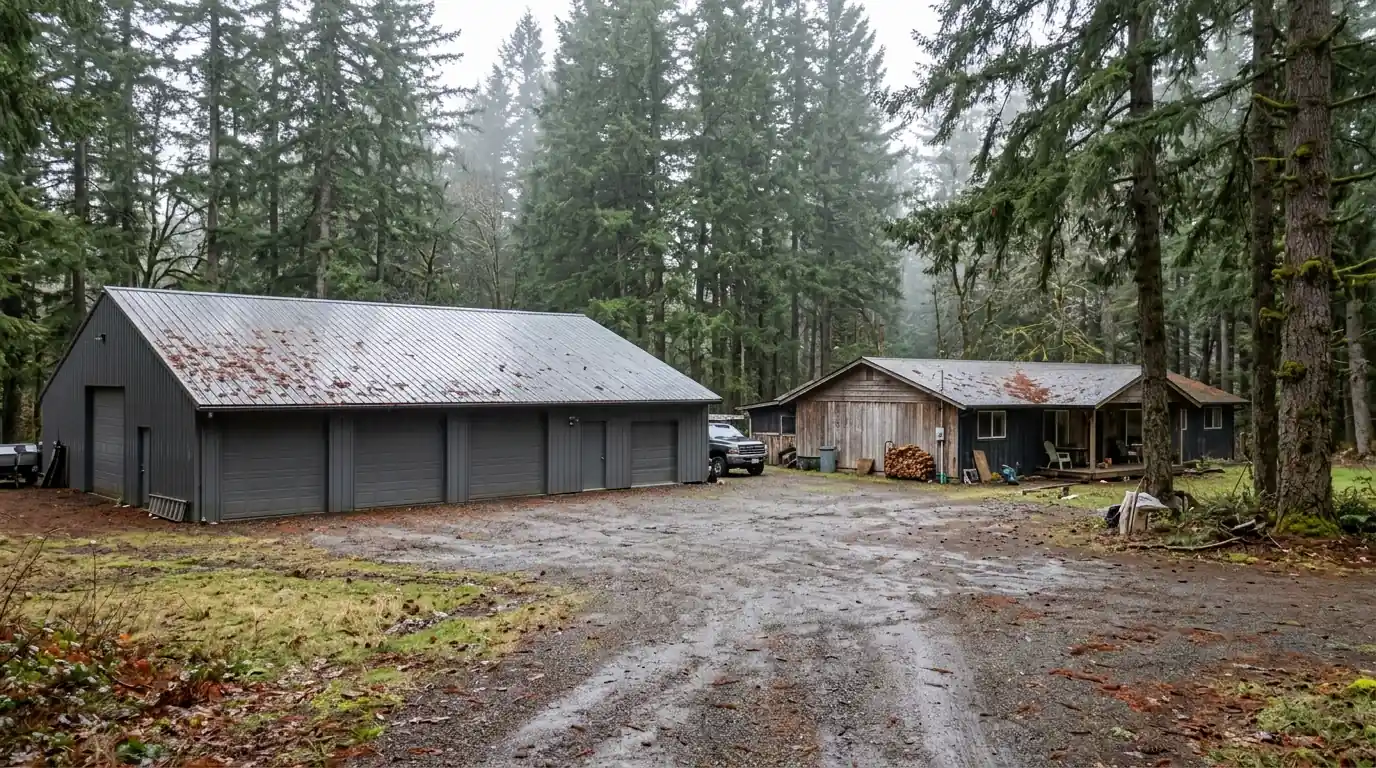
Houses, shops and barns on Brush Prairie acreage
Many Brush Prairie homes were built in the 1970s through the 1990s on lots of one to five acres, and a good number still have cedar shake or a first-generation composite roof that is due for replacement. When we convert shake to architectural shingles, we usually replace the old spaced boards with solid sheathing first. Newer custom homes in the area often pair a shingle main roof with standing-seam metal over porches or a wraparound deck. Those first-generation composite roofs often show curled edges, bare spots where granules washed off, and soft decking near the eaves.
The outbuildings matter just as much to most owners. Large shops store trucks, tractors, boats and tools, and a leak there can ruin a lot more than drywall. Most have exposed-fastener metal roofs, sometimes with skylight panels that yellow and crack. We replace those with new clear panels that match the rib profile. Horse barns and hay storage add open-sided roofs that take wind from below as well as above, so fastening at the eaves and rakes matters.
How big firs and winter storms affect Brush Prairie roofs
Tall Douglas firs give Brush Prairie its feel, and they also shape every roof under them. Shade keeps north and east slopes wet for most of the winter, which lets moss grow thick enough to lift shingle edges. Needles collect in valleys and behind chimneys, building dams that push water sideways under shingles. The bigger danger comes in an ice storm or a strong wind, when heavy limbs, or a whole tree, can land on a roof or punch through a shop panel. Those calls come all at once after a storm, and we prioritize tarping homes with open roofs first.
Our process on Brush Prairie properties
We start by walking the property with you and looking at both the roofs and the trees over them. If a limb is clearly threatening the roof, we will say so, and you can have it handled by a tree crew before we install anything new. We price the house, shop and barn separately. For full replacements we check with Clark County about permit needs. After storm damage, call our 24/7 line and we will tarp first, then document everything for your homeowner's insurance claim.
What homeowners in Brush Prairie call us for
Fallen Tree Roof Damage Repair
Mature firs over Brush Prairie homes drop heavy limbs in ice and wind, and a quick response limits water damage inside.
See the detailsGarage & Shop Roofing
Large shops on Brush Prairie acreage protect vehicles and tools, and their metal roofs need sound fasteners and sealed laps.
See the detailsCedar Shake to Composite Conversion
Many 1970s to 1990s Brush Prairie homes still carry worn cedar shake that is ready to be converted to composite.
See the detailsMoss Removal & Roof Cleaning
Deep fir shade keeps Brush Prairie roofs wet through winter, so moss builds quickly and starts lifting shingle edges.
See the detailsRoof Valley Repair
Fir needles pile up in valleys on wooded Brush Prairie lots and force runoff under shingles during heavy rain.
See the detailsRoof Insurance Claim Help
When a tree lands on a Brush Prairie roof, clear photos and measurements help the homeowner's insurance claim go smoothly.
See the detailsRoofing questions from Brush Prairie
What does a new metal roof on a Brush Prairie shop typically cost?
For a common 30 by 40 to 40 by 60 foot shop, a new exposed-fastener metal roof with new trim usually runs about $8,940 to $19,760, and standing seam costs more. These are typical ranges only. We give a real number after we measure the building and check the framing and existing panels.
Should I trim trees before replacing my Brush Prairie roof?
Usually it helps. Limbs hanging directly over the roof keep it shaded and damp, drop needles into valleys, and can damage new shingles in a storm. Having a tree crew thin or raise those limbs before replacement protects the new roof. We can point out which branches matter most while we are on site.
What happens after a tree falls on a house in Brush Prairie?
Call our 24/7 line. Once the tree is off the roof, we tarp the opening to stop rain getting in, photograph the damage, and check the rafters and decking. We then give a repair price you can share with your homeowner's insurance adjuster. Structural damage may need framing repair before roofing.
Nearby areas we also roof
Roof trouble in Brush Prairie?
Call any time. We will set a time to look and give you a straight price.