Vancouver, WA manufactured and mobile home roofing
Manufactured homes often have shallow metal or low-slope roofs that leak at seams and vents, and their light framing limits which repairs and new roofs will work.
- 24/7 phones
- Commercial and specialty
- Vancouver office on Main St
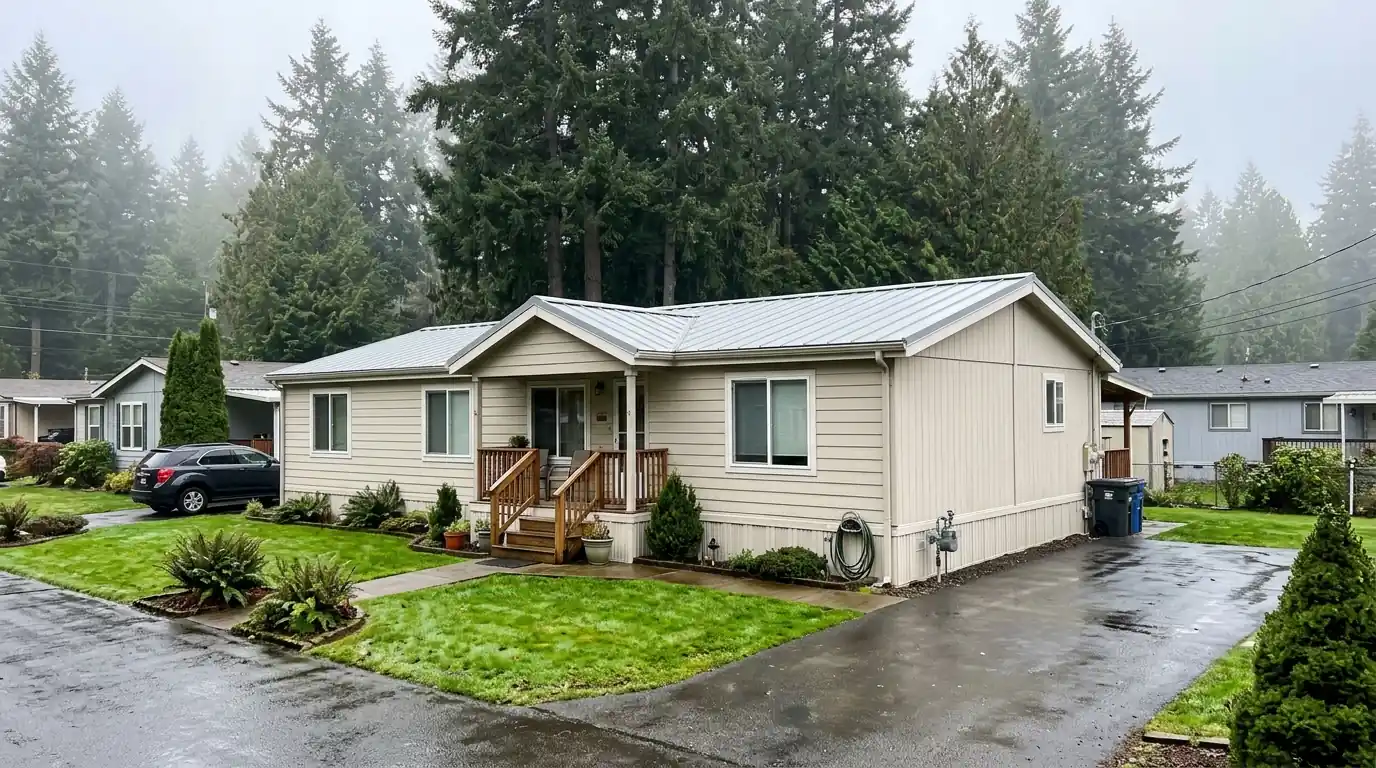
Most manufactured home roofs can be repaired, coated or covered with a lightweight roof-over rather than torn off. Metal roofs often get resealed and coated; low-slope roofs may get a new membrane or a raised metal roof-over that adds pitch. Weight and framing set the limits, so we check the home's construction before recommending anything.
Manufactured homes are built differently from site-built houses, and their roofs are too. Older single-wides and double-wides often have a shallow metal roof or a low-slope roof with a rolled membrane over thin decking. Newer homes may have a steeper pitch with shingles. The framing is lighter, the trusses are spaced and sized for the original roof, and the ceiling sits close under the roof. All of that changes which materials make sense.
Our crews work on manufactured homes in parks and on private lots around the county. We handle leak repair at seams and vents, recoating of metal roofs, metal or membrane roof-overs that add a new layer over the old roof, and full replacements on homes with pitched shingle roofs. Every job starts with understanding how the home was built, because a roof that is too heavy can strain the structure below.
Common manufactured home roof types
Many older manufactured homes have a metal roof made of long, thin aluminum or steel sheets running from side to side, with a slight crown in the middle. These roofs leak at seams, around vents and where the roof meets the walls, and they are noisy in rain. Others have a low-slope roof with a rolled membrane or a rubber layer over thin decking. Over time those surfaces crack and pull away at the edges, and water gets into the ceiling below.
Newer manufactured homes often have a pitched roof with composite shingles, much like a site-built house but with lighter framing. These roofs age the same way any shingle roof does here, with moss, curled tabs and worn flashing. Some older homes also had a pitched roof added later, built on top of the original. We look at what is up there now before planning any work. Each layer changes the weight on the framing.
Repair and roof options
The right fix depends on the roof's type and condition, the home's framing and the owner's plans. A home that is in good shape with one leaking seam may only need a careful repair. A home with a worn-out metal roof and plans to stay for many years may be better served by a roof-over that adds a new surface and some pitch for drainage. We walk through the options and their costs side by side.
- Seam, vent and edge leak repair
- Reseal and coat aging metal roofs
- Membrane roof-over on low-slope homes
- Raised metal roof-over with added pitch
- Shingle replacement on pitched-roof homes
- Ceiling stain and soft decking repairs
Why weight and framing matter
Manufactured homes are built to carry their original roof plus a set snow and wind load, and not much more. Adding heavy material, like a second layer of shingles or a full new roof built on top without care, can push the trusses past what they were designed to hold. In a rare heavy snow or ice storm, that extra weight shows up as sagging ceilings and cracked panels. Damage like that is costly to fix.
That is why we lean toward lightweight options. Coatings add almost no weight. Membrane roof-overs and metal roof-overs with light framing spread their load and are designed for these homes. Before any roof-over, we check the trusses and connections, and we check with the local building department, since rules for manufactured homes can differ from those for site-built houses. We pull permits where they are required and keep copies for the owner.
Parks, lots and access
Homes in parks often sit close together, with carports, sheds and neighbors' homes just a few feet away. We plan access carefully, protect nearby structures, and keep debris contained. If the park has its own rules on work hours, parking or exterior colors, we follow them. For homes on private rural lots, we plan around driveways, outbuildings and septic areas before bringing in materials. Septic drain fields and soft ground in the wet season are a real concern for heavy trucks.
Signs a manufactured home roof needs work
Ceiling panel stains
Brown spots or sagging in the ceiling panels usually mean water has been getting in at a seam or vent.
Rumble during wind
A metal roof that rattles or rumbles in wind may have loose fasteners or seams that have come apart.
Water at the walls
Stains where the ceiling meets the outside walls point to leaks along the roof edge or J-rail.
Rust on metal sheets
Rust spots or streaks on a metal roof show the coating has worn away and the metal is exposed.
Cracked roof coating
Old coatings that have cracked, peeled or chalked away no longer protect the roof below them.
Soft spots underfoot
Areas that flex when pressed from a ladder can mean the decking or framing below has been wet.
How we handle manufactured home roofing
Check the home's build
We look at the roof type, framing and ceiling inside to understand how the home was built and what it can carry.
Find leak sources
Seams, vents, edges and penetrations get checked closely, since leaks on these roofs often travel before they show.
Recommend a path
You get repair, coating, roof-over or replacement options with prices, matched to the home's framing and your plans.
Do the work
Crews make the repairs or install the new roof, protecting nearby homes, carports, sheds and yards throughout the job.
Seal and confirm
We seal every penetration and edge, clean up the site and confirm the roof is draining properly before we leave.
Typical manufactured home roofing costs
Manufactured home roof costs depend on the home's size, roof type, the option chosen and any repairs to decking or framing. Single-wides cost less than double-wides. These are typical Vancouver-area ranges; the real number comes after we look at your roof and the ceiling below it.
| Job | Typical range |
|---|---|
| Seam and vent leak repair | $345 to $985 |
| Metal roof reseal and coating | $2,285 to $4,960 |
| Membrane roof-over, single-wide | $4,670 to $8,390 |
| Raised metal roof-over, double-wide | $11,450 to $19,780 |
Home size, soft decking or framing that needs repair, and the type of roof-over chosen move the price the most. See every service side by side in the roofing price guide.
Manufactured homes in Clark County's wet weather
Manufactured-home parks and lots are spread around Clark County, from parks in central and east Vancouver to homes on rural acreage near Battle Ground, La Center and Yacolt. Many were set in the 1970s through the 1990s and still have their original metal or low-slope roofs. Months of steady rain from October through May find every loose seam and worn vent seal, and the long wet season gives a small leak plenty of time to soak a ceiling panel before anyone notices.
Out in the north county foothills around Yacolt, homes see more snow and heavier tree cover than in town. Fir limbs and needles collect on shallow roofs, and a rare heavy snow puts real weight on light framing. That is where lightweight roof-overs with added pitch earn their keep, shedding water and debris instead of holding them. Closer to town, east winds also work on loose metal seams, so we refasten them as part of every repair.
Manufactured Home Roofing questions
Can manufactured home roofing go over the existing roof?
Often, yes. Many manufactured homes are good candidates for a roof-over, where a new membrane or metal roof is installed over the old one. The key is weight and attachment. We check the trusses and connections first, and choose a lightweight system the home's framing can carry safely.
Is coating a good option for manufactured home roofing?
For a metal roof that is still sound, a coating can seal seams, cover rust and quiet the roof in rain, while adding almost no weight. It is not a fix for a roof with rusted-through metal or soft decking. We check the roof first and only recommend a coating where it makes sense.
How do I stop a manufactured home roof leak at the walls?
Leaks where the ceiling meets the walls often come from the roof edge, J-rail or gutter area. We reseal the edge, replace failing seals and fix any loose or damaged trim. If the edge keeps leaking because the roof is too flat to drain, a roof-over with added pitch can solve it.
Do you handle manufactured home roofing inside mobile home parks?
Yes. We work in parks around Vancouver and Clark County and follow each park's rules on work hours, parking and exterior colors. Homes in parks are often close together, so we plan access and protect nearby homes, carports and sheds from debris throughout the job.
Work that often goes with it
Roof Coatings
Silicone and acrylic coatings rolled over sound low-slope and metal roofs to seal small leaks and add years before a tear-off.
See the detailsMetal Roof Repair
Fixes for loose screws, leaking seams, worn panel laps and bent trim on standing seam and exposed-fastener metal roofs.
See the detailsRoof Leak Repair
Leak tracing and repair for stains, drips and attic moisture. We follow the water back to where it actually enters the roof.
See the detailsManufactured Home Roofing around Vancouver
Our crews do this work across Clark County and the Portland side, including:
Call about manufactured home roofing
Phones are answered 24/7. Tell us what you are seeing and we will set a time to look.