Rotted siding repair and replacement in Vancouver, WA
Siding that swells, cracks or turns soft near the roofline usually means water has been running behind it for a while, and the damage underneath is bigger than what shows.
- 24/7 phones
- Gutters, skylights and roofline
- Vancouver office on Main St
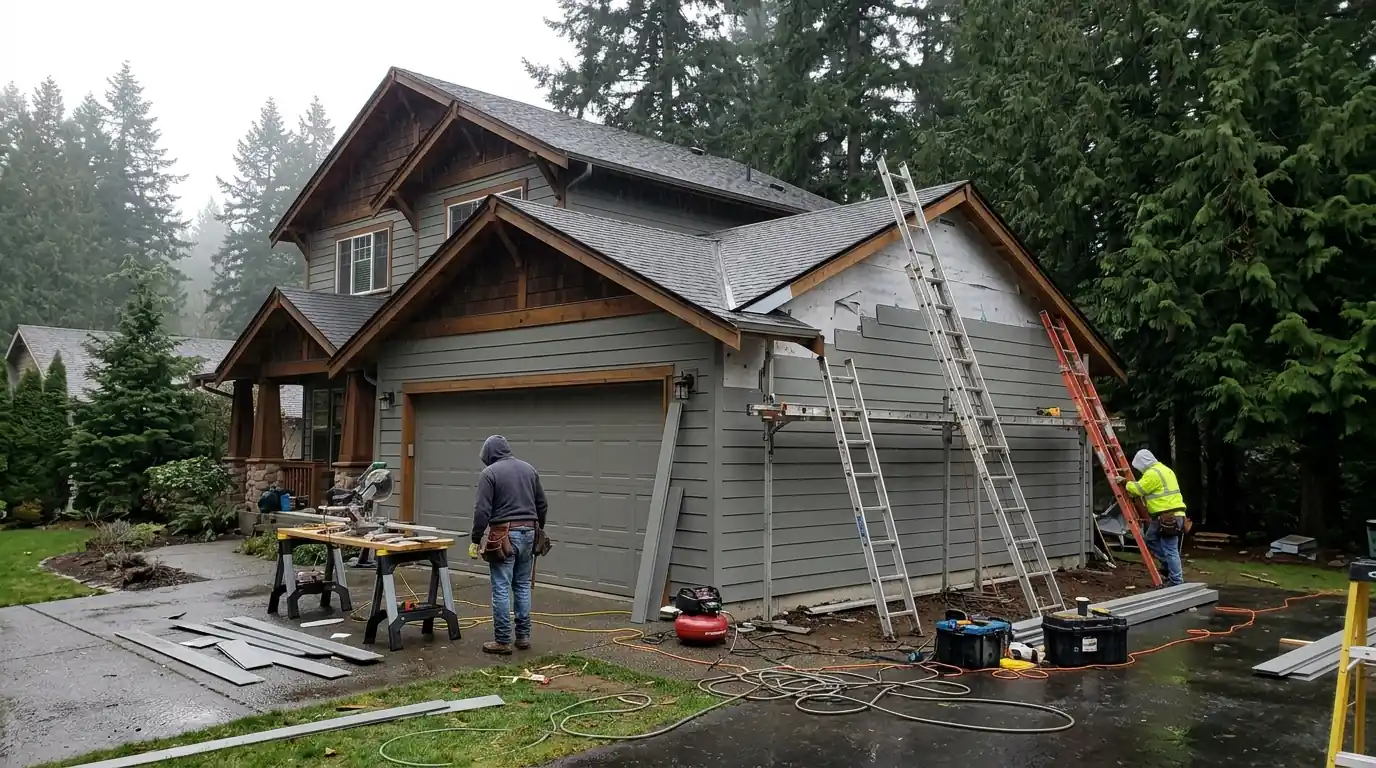
Small areas of rot or wind damage can usually be repaired by cutting out the bad boards, fixing the sheathing and flashing behind them, and patching in matched siding. Full replacement makes sense when damage is spread across several walls, the siding is a failing product like old hardboard, or the house is due for a complete exterior update.
Most of the siding damage we see starts at the roof. Water comes off a lower roof section, hits a wall, and if the flashing at that joint is missing or bent, it runs behind the siding instead of into the gutter. The boards look fine for a few winters, then the bottom edges swell, the paint peels in strips, and a screwdriver sinks into the wood. Replacing those boards without fixing the water path only buys a few seasons.
Because we work on roofs every day, we treat siding as part of the same water system. We open the wall, check the sheathing and the weather barrier, rebuild any step or kickout flashing, and then install new siding that matches or replaces what you have. That can be a few boards under a dormer, one full wall that faces the weather, or the whole house when the old product has reached the end of its life.
Why siding fails near the roofline
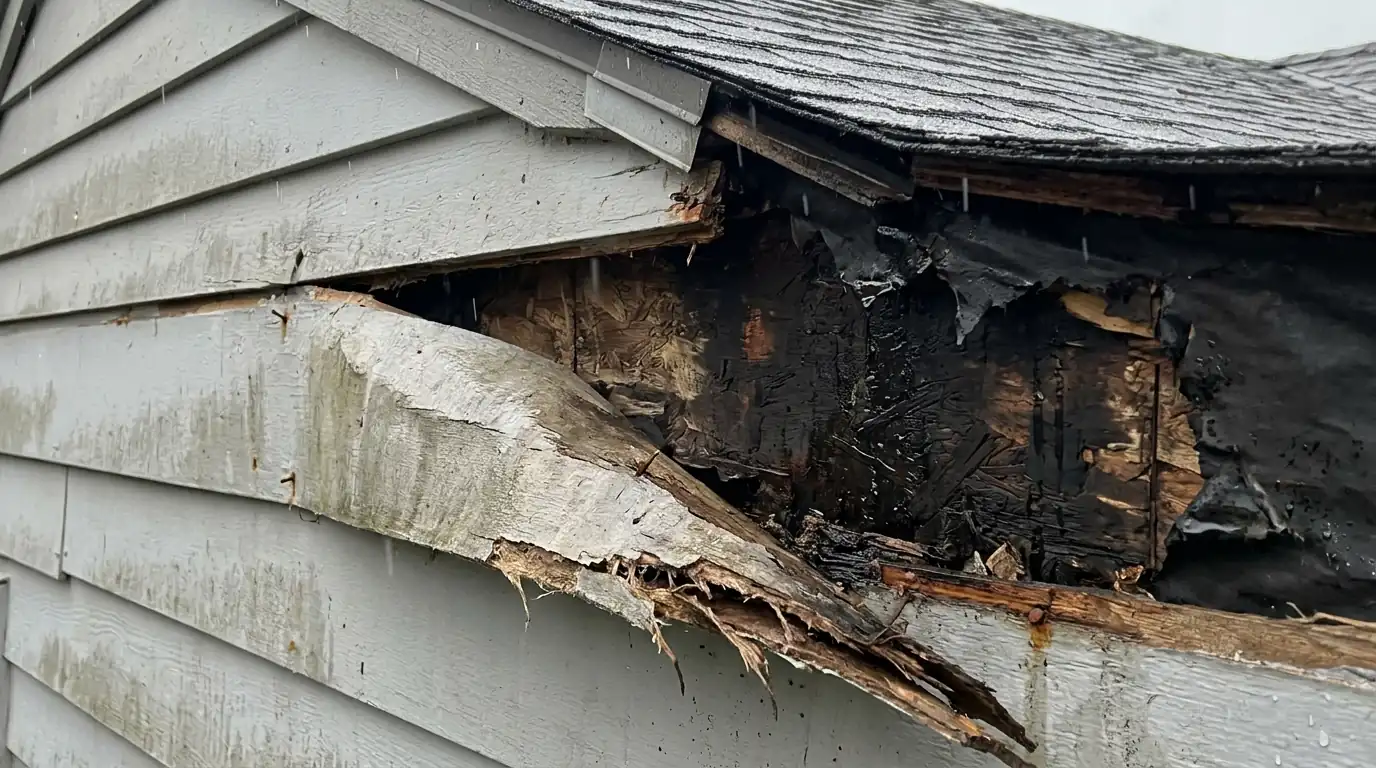
The most common spot is where a sloped roof dies into a wall, like a garage roof meeting a two-story wall or a porch roof against the house. Without a kickout flashing at the bottom of that joint, all the water running down the step flashing dumps straight behind the siding. We find soft sheathing, black stains on the framing and sometimes mold on the drywall below these spots, even when the siding face looks only a little swollen.
Other causes are less dramatic but steady. Gutters that overflow splash water against the upper wall every storm. Sprinklers and soil piled against the bottom course keep the lowest boards wet. Old caulk at window trim shrinks and opens a gap. East wind drives rain sideways into butt joints that were never flashed. Each of these lets water in slowly, so the damage grows quietly behind the paint for years before anyone notices it.
Siding materials we repair and install
Most Vancouver-area homes have one of a few products, and each fails in its own way. We match what is there for repairs and talk through options when a wall or the whole house needs new material. Fiber cement is the common pick for replacements because it holds paint well and does not swell in our damp winters, but engineered wood and cedar still make sense on certain homes.
- Fiber cement lap and panel siding
- Engineered wood lap siding
- Cedar lap, bevel and shingle siding
- T1-11 and other plywood panel siding
- Vinyl siding on newer subdivisions
- Older hardboard siding, repaired or replaced
Repair or full replacement
A repair is the right call when the damage is local and the rest of the siding is sound. If most walls are tight and painted and only the area under a roof joint is soft, we cut back to solid material, replace sheathing and weather barrier, fix the flashing, and lace in new boards. Matching profile and reveal matters more than people expect; a mismatched board stands out from the street even after paint.
Replacement starts to make more sense when soft spots show up on several sides of the house, when the siding is an older hardboard product that swells wherever paint wears thin, or when the paint has failed so many times that it no longer bonds. Doing a full wall or the whole house also lets us add a rain screen gap and flash every window properly, which is hard to do piece by piece.
Timing siding work with a roof project
If you are planning a new roof in the next year or two, look at the siding at the same time. Roof-to-wall flashing is tucked behind the bottom course of siding, so a reroof often means pulling those boards anyway. Doing both together means the step flashing, kickouts and weather barrier get lapped in the right order, and you only pay once for the setup, staging and cleanup on that wall.
Signs your siding is holding water
Swollen bottom edges
Lap boards that flare out or look puffy along their lower edge have been soaking up water from behind.
Paint peeling in strips
Long strips of peeling paint on one wall, especially under a roof joint, point to moisture pushing out from inside.
Soft spots under rooflines
Siding that gives when pressed near where a roof meets the wall often hides rotted sheathing underneath.
Stains inside below a wall
Brown marks on drywall or baseboards under an exterior corner can trace back to a missing kickout flashing outside.
Boards missing after wind
A gust that tears off a board or cracks a panel leaves bare sheathing open to the next rain.
Moss on the lower course
Green growth on the bottom row of siding means it stays wet from soil, plants or sprinkler spray.
How we handle siding repair & replacement
Look from roof to ground
We start at the roofline and gutters, then work down each wall, probing soft spots and noting every place water could be getting in.
Open the damaged area
Bad boards come off so we can see the sheathing and framing; we photograph what we find and price any hidden rot before going further.
Fix the water path
We replace wet sheathing, lap new weather barrier in the right order and install step, kickout or head flashing wherever it is missing.
Install matched siding
New boards are cut to match the profile and reveal, fastened to the maker's spacing, and sealed at the ends and trim joints.
Prime, paint and clean up
Cut ends and new boards get primed and painted or prepped for your painter, and we clear nails and debris from the yard.
What siding repair and replacement cost
Siding prices swing widely with the material, how high the wall is and how much rot sits behind it. A few boards near a garage roof are a short job; a full house of fiber cement is a large project with staging and painting. These are typical ranges in Vancouver and the Portland metro, and the real number comes after we open the wall and look.
| Job | Typical range |
|---|---|
| Patch a few boards with a flashing fix | $615 to $1,480 |
| Rebuild one roof-to-wall section with sheathing | $1,385 to $3,270 |
| Replace one full wall | $4,160 to $9,830 |
| Whole-house fiber cement replacement | $21,450 to $43,900 |
Hidden sheathing rot, two-story walls that need staging and the choice of siding material move the price more than anything else. See every service side by side in the roofing price guide.
Siding damage patterns around Clark County
Wind-driven rain is the main siding problem here. East winds out of the Columbia River Gorge push rain sideways into the east and north walls of homes in Cascade Park, Fishers Landing, Camas and Washougal, and that water finds every unflashed butt joint and tired caulk line. Many 1980s and 1990s subdivisions in east Vancouver were built with hardboard or plywood panel siding that swells once paint wears thin, so we often see one weather-facing wall in bad shape while the other three are fine.
Older homes near downtown, in Hough and the Esther Short area, tend to have cedar lap siding under many coats of paint. Those walls can usually be repaired board by board. Out in Brush Prairie and Hockinson, shops and barns with panel siding take a beating at the base, where water drips off a roof with no gutter and soaks the bottom edge every winter.
Siding Repair & Replacement questions
Can siding repair match the old boards on my house?
Usually, yes. Most lap siding comes in standard profiles and reveals, and we bring samples to compare against your boards. Older cedar or discontinued hardboard can be harder; in those cases we may pull matching boards from a hidden wall and put the new material there. Paint finishes the match, so plan to repaint the patched wall.
Why is siding rot worst below the spot where my garage roof meets the wall?
That spot needs a kickout flashing, a small bent piece that turns water away from the wall and into the gutter. Many homes were built without one, so every storm sends water down the step flashing and straight behind the siding. Siding repair there always includes adding the kickout, or the new boards rot the same way.
Should I do siding replacement and a new roof in the same project?
It often makes sense. The roof-to-wall flashing sits behind the lowest siding boards, so a reroof means pulling those boards anyway. Doing both together lets us lap the weather barrier and flashing in the right order and share the staging, dumpster and cleanup costs. If budget only allows one, we will tell you which matters more first.
Is fiber cement better than engineered wood for siding replacement in Vancouver?
Both hold up well here when installed right. Fiber cement does not swell when wet and takes paint well, which suits our long rainy season. Engineered wood is lighter, easier to cut and has a more wood-like look, but its cut ends and bottom edges need careful sealing. We help you pick based on the house, the budget and any HOA rules.
Work that often goes with it
Fascia & Soffit Repair
Replacing rotted fascia boards and damaged soffit panels at the roof edge, then sealing the gaps that let in water and pests.
See the detailsFlashing Repair
Repair and replacement of step, wall, headwall and drip-edge flashing where the roof meets walls, dormers and edges.
See the detailsGutter Repair
Fixes for leaking seams, sagging runs, loose hangers and pulled-off downspouts, so the gutters you have keep working longer.
See the detailsSiding Repair & Replacement around Vancouver
Our crews do this work across Clark County and the Portland side, including:
Call about siding repair & replacement
Phones are answered 24/7. Tell us what you are seeing and we will set a time to look.