Emergency roof tarping in Vancouver, WA that holds through the wind
Part of your roof is open after a storm or tree strike, the repair cannot happen tonight, and you need a cover that will actually stay put.
- 24/7 phones
- Roof repair
- Vancouver office on Main St
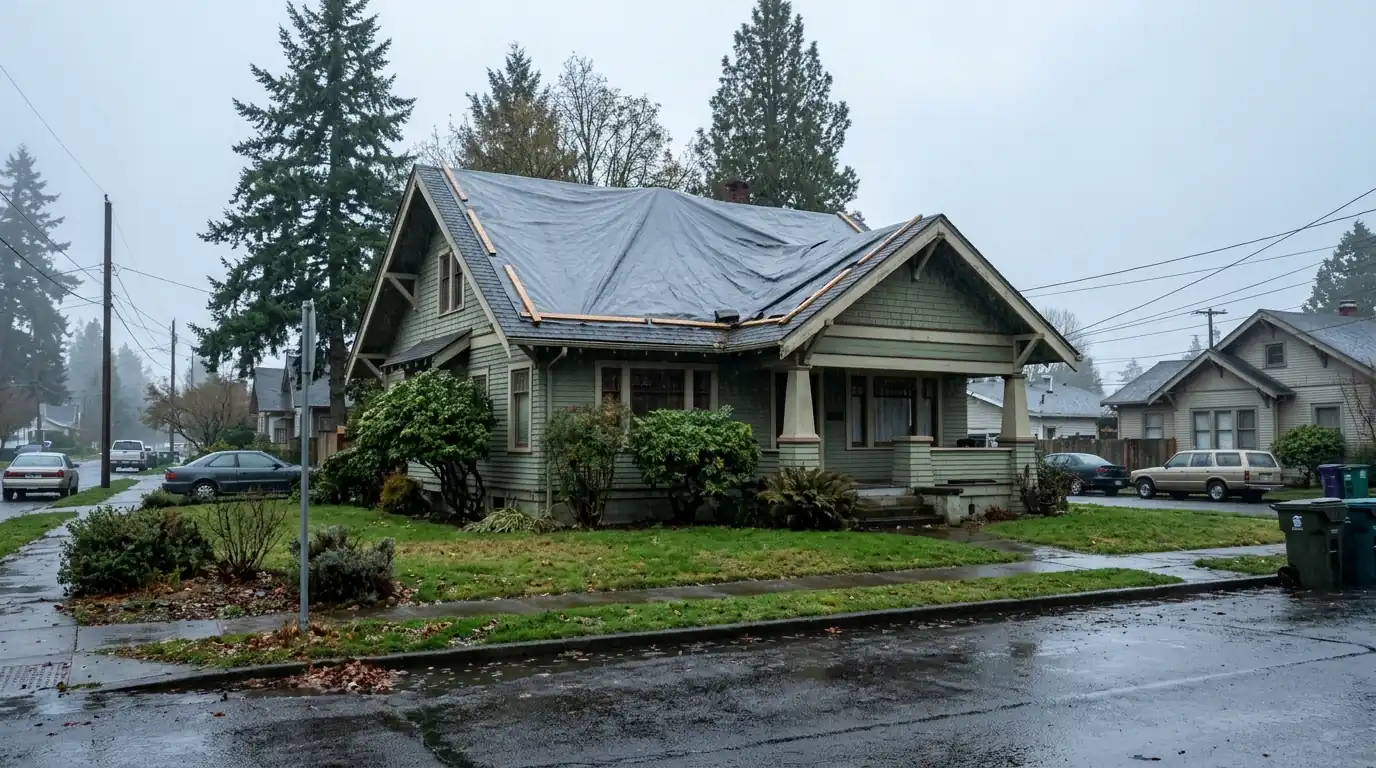
Emergency roof tarping is a temporary cover fastened over damaged roofing to keep water out until permanent repairs are done. In the Vancouver area, a properly battened tarp typically costs $590 to $1,640. It should go over the ridge when possible, extend several feet past the damage, and stay up for weeks, not months.
A roof tarp sounds simple, but a badly installed one can blow off in the first gust or channel water straight into the house. Proper tarping means using a heavy-duty tarp sized well beyond the damage, running it over the ridge when possible so water sheds down and away, and fastening it with wood battens so wind cannot get under the edges. Done right, it holds through weeks of Northwest rain.
This page is about the tarp itself: when it makes sense, how we install it, and how long it should stay up. If you need the full emergency response, including leak sealing and interior checks, see our emergency roof repair page. Either way, our phones are answered 24/7, and we send a crew when your roof is open to the weather.
When a tarp is the right call
A tarp is the right move when an area of the roof is open or badly damaged and the permanent repair cannot happen right away. That can be because it is night, the weather is too wet or windy for shingle work, framing needs repair first, or you are waiting on an insurance adjuster to see the damage. A tarp buys time without making the eventual repair harder. It also keeps insulation and drywall dry in the meantime.
A tarp is not the right move for a small leak at a pipe boot or flashing seam. Those can usually be sealed or repaired directly, even in wet weather, for less than the cost of a tarp. We ask about the damage when you call, and if a direct repair makes more sense, we tell you. A tarp covering a large area for a small leak just adds cost and wind risk.
How we install a tarp that stays on
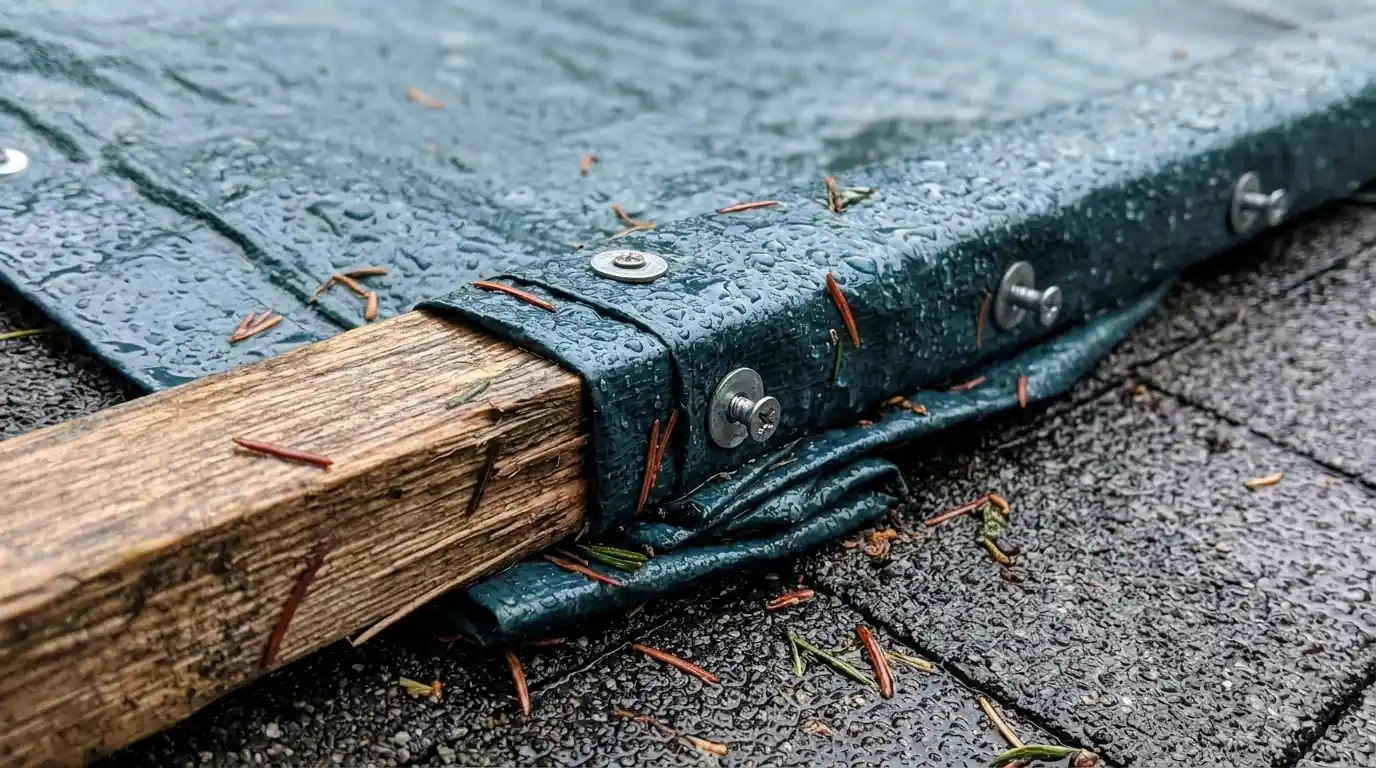
We use heavy-duty, reinforced tarps, not lightweight hardware-store versions that shred in a few days of wind. The tarp runs over the ridge to the other side when the layout allows, so water cannot get under the top edge. Edges are wrapped around wood battens and fastened through to the roof, which keeps wind from catching them. We extend the tarp at least several feet beyond the damage on every side.
- Heavy-duty reinforced tarp sized past the damage
- Run over the ridge when the layout allows
- Edges wrapped and fastened with wood battens
- Fasteners placed to limit new holes
- Checked so water sheds off, not under
How long a roof tarp can stay up
A well-installed tarp can last several weeks, sometimes a couple of months, but it is not meant to be permanent. Sun breaks down the material, wind works on the edges, and any fastener holes become small risks over time. In the Vancouver rainy season, we aim to replace the tarp with a permanent repair as soon as conditions and approvals allow. The goal is a short bridge to a real repair, with as few weeks under plastic as possible.
If your tarp has to stay up longer, for example while waiting on an insurance decision, we can check it after major storms and re-fasten edges or replace a worn tarp. A loose or torn tarp that flaps in the wind can damage the shingles around it, so it is worth a quick check. Call us if you see the tarp lifting or water pooling on top. We would rather catch it early than replace more shingles.
What to avoid with a do-it-yourself tarp
We understand the urge to throw a tarp over the roof yourself, but climbing a wet roof at night is how people get hurt. Common DIY mistakes include tarps that stop below the ridge so water runs under them, edges held only with bricks that slide off, and nails driven through the tarp without battens, which tears in the first gust. If you already put up a tarp, we can check it and redo it properly if needed.
When your roof needs an emergency tarp
Open hole in roof
Any opening where daylight shows through needs covering before the next rain, even if water has not come in yet.
Missing shingle section
A large patch of shingles torn away leaves bare underlayment that will not hold up to steady rain for long.
Waiting on an adjuster
If your insurer wants to see damage before repairs, a tarp keeps rain out while preserving the evidence.
Framing needs repair
Cracked rafters or trusses need structural work first, so a tarp protects the house while that is planned.
Weather too rough
When steady rain or high winds rule out shingle work, a battened tarp is the safest way to close the roof.
DIY tarp failing
A homemade tarp that is lifting, torn or letting water under it needs a proper reinstall before more damage happens.
How we handle emergency roof tarping
Call with the details
Call (360) 803-6405 and describe the damage and roof shape. That helps us bring a tarp and battens sized for the job.
Clear and assess
We clear loose debris and broken shingles from the damaged area and check footing and framing before covering it.
Lay out the tarp
We position the tarp to extend well past the damage and over the ridge where possible, so water runs off the top.
Batten and fasten
We wrap the edges around wood battens and fasten them through to the roof deck, keeping wind out from under the tarp.
Check and schedule repair
We confirm water sheds properly, photograph the tarped area for your records, and schedule the permanent repair with you.
Emergency roof tarping costs near Vancouver
Tarping costs depend on the size of the damaged area, roof height and pitch, and whether the work happens at night or during a storm. A small single-story section costs far less than a tall two-story slope. The ranges below are typical for 2026 in the Vancouver and Portland-metro area. Your real price comes after we see the roof.
| Job | Typical range |
|---|---|
| Small tarp, single-story roof | $590 to $935 |
| Large tarp or two-story roof | $960 to $1,640 |
| After-hours or storm surcharge | $185 to $460 |
| Tarp check and re-fasten visit | $215 to $390 |
Tarp size, roof height, steepness and whether the call comes during an active storm move the price the most. See every service side by side in the roofing price guide.
Tarping through a Vancouver rainy season
In Clark County, a tarp has to handle two things at once: weeks of light, steady rain and sudden gusts out of the Columbia River Gorge. A tarp held down with bricks might survive a calm week, but a strong east wind across east Vancouver or Washougal will lift it in minutes. That is why we use battens fastened through to the deck and run the tarp over the ridge, so neither the rain nor the wind can get under it.
Fir needles and small branches land on tarps too, and they can trap water in folds. After a few weeks, we can clear the surface and check the edges. In north county towns like Yacolt, we also plan for the extra weight of snow if a cold snap is in the forecast. Heavy wet snow can stretch a tarp and pull its fasteners, so we add battens.
Emergency Roof Tarping questions
How long can emergency roof tarping stay on my house?
A properly installed tarp can usually last several weeks, sometimes up to a couple of months, depending on sun and wind exposure. It is meant to protect the house until the permanent repair, not replace it. If you need it longer, we can check and re-fasten it after storms so it keeps doing its job.
Will emergency roof tarping damage my roof further?
A careful install limits new damage. We place fasteners through battens in areas that will be repaired or replaced anyway when possible, and we avoid driving nails through good shingles more than needed. A loose, flapping tarp causes far more damage than a well-fastened one, which is why we batten every edge.
Does homeowner's insurance cover emergency roof tarping?
Many policies cover tarping as a reasonable step to prevent more damage after a covered event like wind or a falling tree. Keep the invoice and our photos for your claim. Policies vary, so check with your insurer, but tarping is a common part of storm damage claims in our area.
Can you do emergency roof tarping during a windstorm?
It depends on how strong the wind is. In moderate wind and rain, our crews can install a tarp safely. In very high gusts, lightning or ice, going on the roof is too dangerous, so we protect what we can from inside and return as soon as the wind drops enough to work.
Work that often goes with it
Emergency Roof Repair
Water coming through the ceiling at night or on a weekend? We answer 24/7 and send a crew to stop the leak and protect your home.
See the detailsFallen Tree Roof Damage Repair
When a fir limb or whole tree hits your roof, we secure the opening, repair the framing and decking, and restore the roof.
See the detailsWind & Storm Damage Repair
Repairs after Gorge windstorms and heavy rain: lifted tabs, peeled ridge caps, torn flashing and storm-loosened shingles.
See the detailsEmergency Roof Tarping around Vancouver
Our crews do this work across Clark County and the Portland side, including:
Call about emergency roof tarping
Phones are answered 24/7. Tell us what you are seeing and we will set a time to look.