Rebuilding worn roof valleys in Vancouver, WA
A leak keeps showing up below the spot where two roof slopes meet, and the valley is packed with needles, worn thin or patched with tar.
- 24/7 phones
- Roof repair
- Vancouver office on Main St
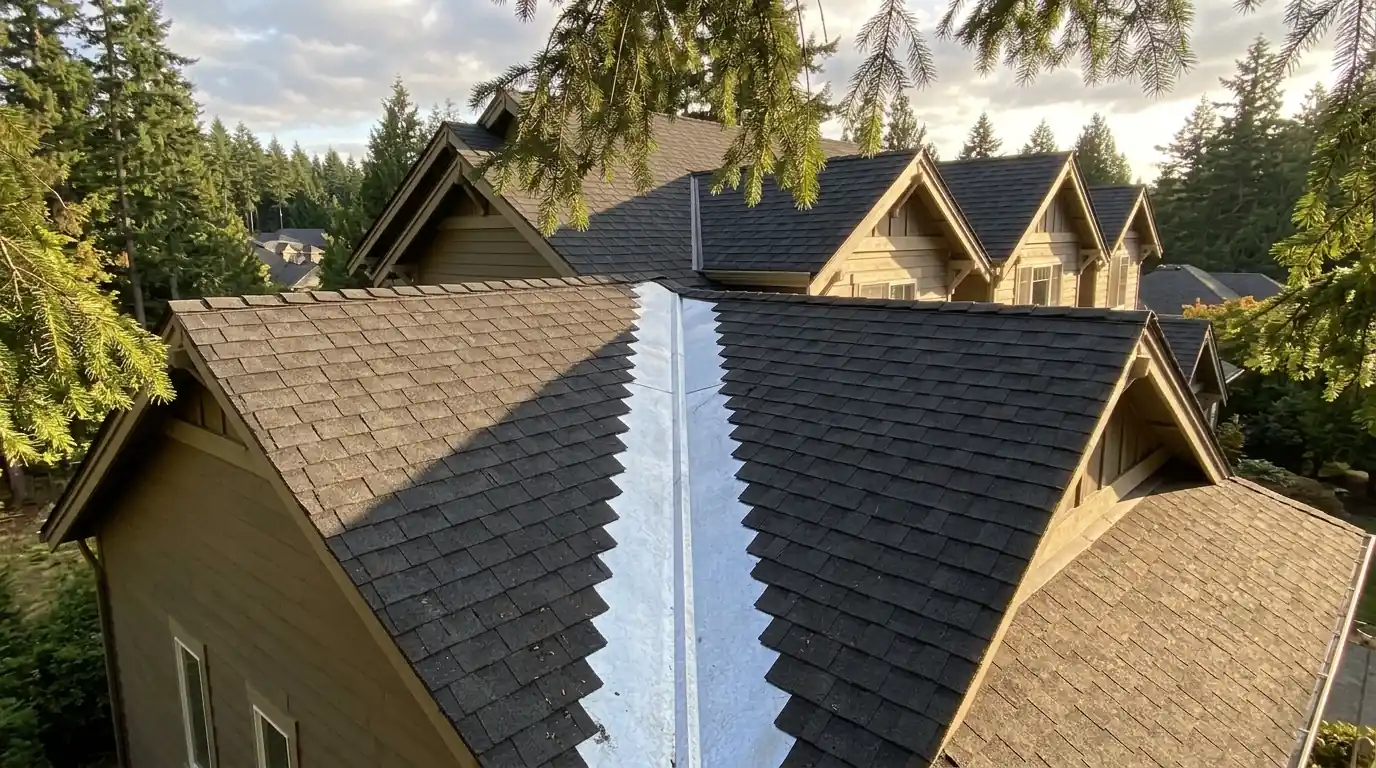
Roof valley repair rebuilds the channel where two roof slopes meet, which carries the most water on any roof. In the Vancouver area, a typical valley repair runs $780 to $2,380. Most valley leaks come from worn shingles, debris buildup, nails driven too close to the center, or underlayment that has failed underneath.
A roof valley is the inside corner where two slopes meet, and it carries more water than any other part of the roof. Every drop from both slopes funnels into it on the way to the gutter. That concentrated flow wears shingles faster, and any debris that collects there slows the water down and pushes it sideways under the shingle edges. Valleys are one of the most common leak sources we see.
Roof valley repair usually means more than replacing a few shingles. We strip the valley back to the decking, check for soft or rotted wood, install new ice-and-water underlayment down the full length, and rebuild it with either open metal flashing or a closed-cut shingle valley. The right choice depends on your roof, the amount of tree cover, and how the rest of the roof was built.
Why valleys wear out first
Water volume is the main reason. On a typical gable-and-valley roof, a single valley may drain the runoff from two large slopes. During a long Vancouver downpour, that water runs fast and steady, scrubbing granules off shingles in the valley center. Over years, the shingles there wear thin while the rest of the roof still looks fine. Valleys also see more foot traffic from gutter cleaning and roof work, which adds wear.
Installation errors play a big part too. If nails were driven too close to the valley center, every one of them is a potential leak. If the underlayment in the valley was standard felt instead of self-sealing membrane, it has less protection when water gets past the shingles. And a closed-cut valley with the top shingle cut wrong can direct water under the lower slope instead of over it. We see all three often.
Open metal vs closed-cut valleys
There are two common ways to finish a valley. An open valley uses a strip of shaped metal flashing down the center, with shingles cut back on each side so water flows over bare metal. A closed-cut valley runs shingles from one slope across the valley, then cuts the shingles from the other slope along a line just off center. Both work well when installed correctly over proper underlayment. We help you pick the one that fits.
- Open metal valleys shed needles and debris more easily
- Closed-cut valleys blend in with the shingle color
- Both need self-sealing membrane underneath
- Nails stay well back from the valley center
- We match the style to your roof and tree cover
How we rebuild a valley
We remove shingles several feet out on each side of the valley, pull old underlayment, and expose the decking along the full length. Soft or water-stained decking is cut out and replaced. Then we install self-sealing ice-and-water membrane down the valley, which seals around nails and holds back water that gets under the shingles. For an open valley, shaped metal flashing goes on top of the membrane. That layer is the real backstop.
Shingles go back on in the chosen style, with nails kept well back from the center line and the cut edge sealed where the method calls for it. We make sure the valley drains cleanly into the gutter at the bottom, since an overflowing gutter can push water back up under the lowest shingles. Before we leave, we clear debris from the valley and nearby roof surfaces and check the gutter below.
Keeping valleys clear after repair
Even a new valley will leak if it fills with needles, cones and moss. In heavily treed parts of Clark County, valleys can pack full in a single fall. Keeping them clear is the simplest way to protect the repair. Many homeowners pair a valley rebuild with routine gutter and roof debris cleaning, especially before the wettest months. We can point out the trees that drop the most on your valleys so you can plan trimming with an arborist.
Signs a roof valley needs repair
Leak below the valley
Ceiling stains or attic wetness directly below where two slopes meet usually point straight to a failing valley.
Needles packed in valley
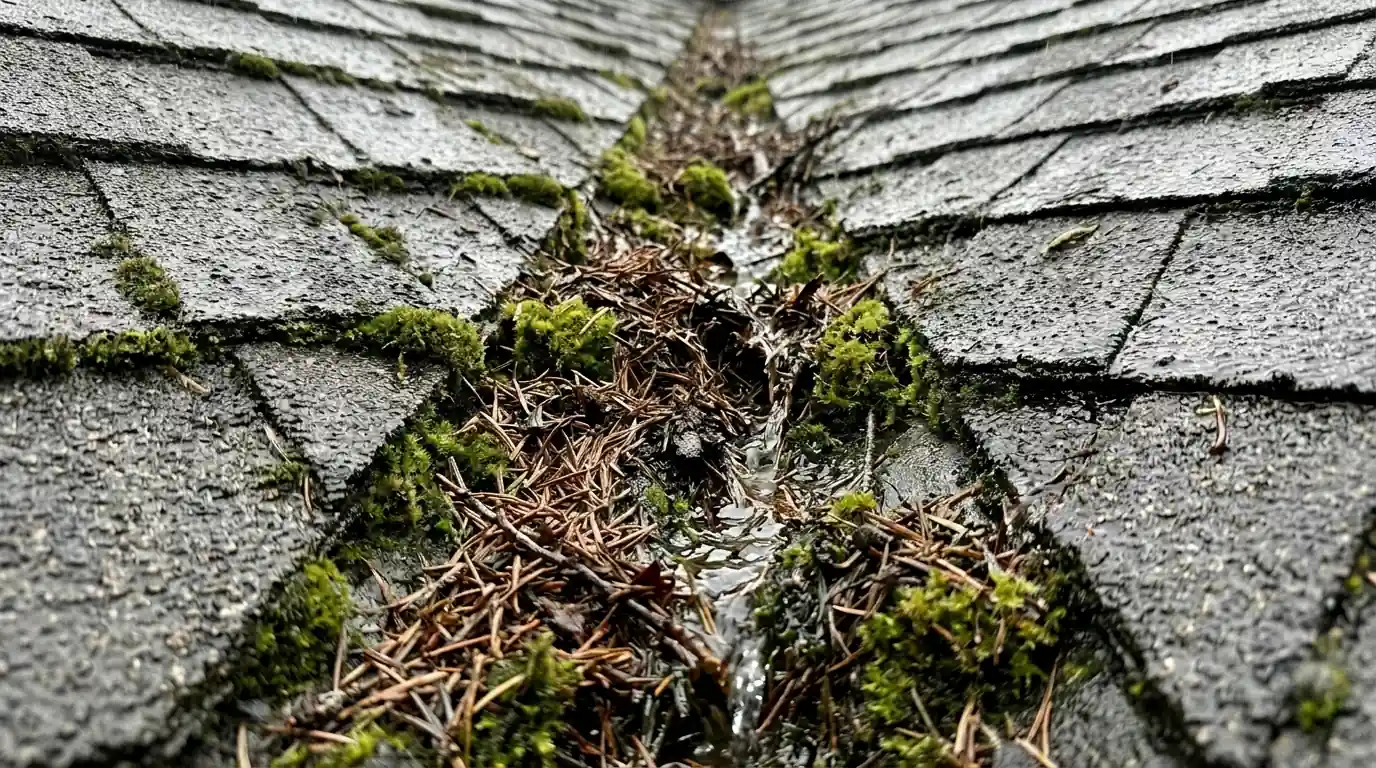
Thick mats of fir needles and moss in the valley slow water and push it sideways under shingle edges.
Worn bare shingles
Shingles down the valley center with granules worn away show the black mat and will not shed water much longer.
Tar smeared on valley
Roofing tar or sealant painted along a valley is a sign of past leaks that were patched instead of rebuilt.
Overflowing gutter corner
Water spilling over the gutter at the bottom of a valley can back up under shingles and soak the eave.
Cracked valley shingles
Shingles cracked along the valley crease from foot traffic or age open a direct path into the underlayment.
How we handle roof valley repair
Call and describe the leak
Call (360) 803-6405 and tell us where the stain is and whether the valley is clogged, worn or has been patched before.
Inspect valley and attic
Our roofer checks the valley surface, nail placement and the attic below for wet wood or staining along the valley line.
Strip to the decking
We remove shingles several feet out from the center, pull old underlayment and replace any soft or rotted decking we find.
Install membrane and finish
Self-sealing membrane goes down the full valley, then we install open metal or a closed-cut shingle finish to suit your roof.
Clear and check drainage
We clean the valley and gutter, confirm water drains cleanly at the bottom, and show you photos of each stage.
Roof valley repair costs near Vancouver
Valley repair costs depend on the valley's length, the roof pitch, whether decking is rotted, and which finish you choose. A short valley over a porch is a smaller job than a long valley on a steep two-story roof. The ranges below are typical for 2026 in the Vancouver and Portland-metro area. Your actual price comes after we inspect it.
| Job | Typical range |
|---|---|
| Short valley rebuild (closed-cut) | $780 to $1,360 |
| Long valley rebuild (open metal) | $1,290 to $2,380 |
| Decking replacement along valley | $365 to $1,050 |
Valley length, roof pitch and height, finish style and any rotted decking found underneath move the price most. See every service side by side in the roofing price guide.
Fir needles, rain and Clark County valleys
Valleys take a beating in Clark County because two local conditions stack up: steady rain from October through May and heavy tree cover. Douglas firs shed needles year-round, and in neighborhoods like Felida, Salmon Creek and Prune Hill in Camas, valleys can fill with needles and moss within months. That debris holds water against the shingles and slows the flow enough for rain to creep sideways under the shingle edges. Over a few winters, it wears through. Gorge winds then add more needles every storm.
Many 1990s and 2000s homes in east Vancouver have complex roofs with several valleys. When those roofs were built, felt underlayment in valleys was common. A rebuild with self-sealing membrane gives far better protection against the long soakings our winters bring. Homes in Cascade Park and Fishers Landing often have three or four valleys meeting near a single gutter corner, so we also check that the downspout below is big enough to carry what those valleys deliver in a heavy storm.
Roof Valley Repair questions
Is roof valley repair possible without replacing the whole roof?
Yes. A valley can be rebuilt on its own by removing shingles several feet out on each side, installing new underlayment and flashing, and weaving new shingles into the existing courses. If the rest of the roof is in good shape, a valley rebuild is a smart repair that adds years of service.
Which is better for roof valley repair, open metal or closed-cut?
Both work when done right. Open metal valleys shed needles and debris more easily, which helps under heavy fir cover. Closed-cut valleys look cleaner because the valley matches the shingle color. We look at your tree cover, roof pitch and how the rest of the roof was built, then recommend the one that suits it.
How do I know if I need roof valley repair or just cleaning?
If water drains cleanly once the debris is gone and the shingles are intact, cleaning may be enough. If shingles are worn bare, cracked, patched with tar, or the attic shows staining below the valley, the valley needs repair. We can clean it and inspect it in the same visit to tell you which.
Can roof valley repair be done in winter?
Yes, on dry days or during breaks in the rain. Self-sealing membrane bonds best above certain temperatures, so we watch the forecast and may schedule around cold snaps. If the valley is actively leaking in the middle of winter, we can make a temporary repair right away and return for the full rebuild when conditions allow.
Work that often goes with it
Roof Leak Repair
Leak tracing and repair for stains, drips and attic moisture. We follow the water back to where it actually enters the roof.
See the detailsGutter Cleaning
Hand cleaning of gutters and downspouts to clear packed fir needles and moss, with a flush test and photos of any roof edge issues.
See the detailsMoss Removal & Roof Cleaning
Hand removal of moss, lichen and needle debris from shingle, shake and tile roofs, with gentle cleaning that protects the roofing.
See the detailsRoof Valley Repair around Vancouver
Our crews do this work across Clark County and the Portland side, including:
Call about roof valley repair
Phones are answered 24/7. Tell us what you are seeing and we will set a time to look.