Cracked pipe boots and vent leaks fixed in Vancouver, WA
Water is dripping near a plumbing vent, bathroom fan or roof vent, and the rubber collar or vent cap on the roof above has probably cracked or loosened.
- 24/7 phones
- Roof repair
- Vancouver office on Main St
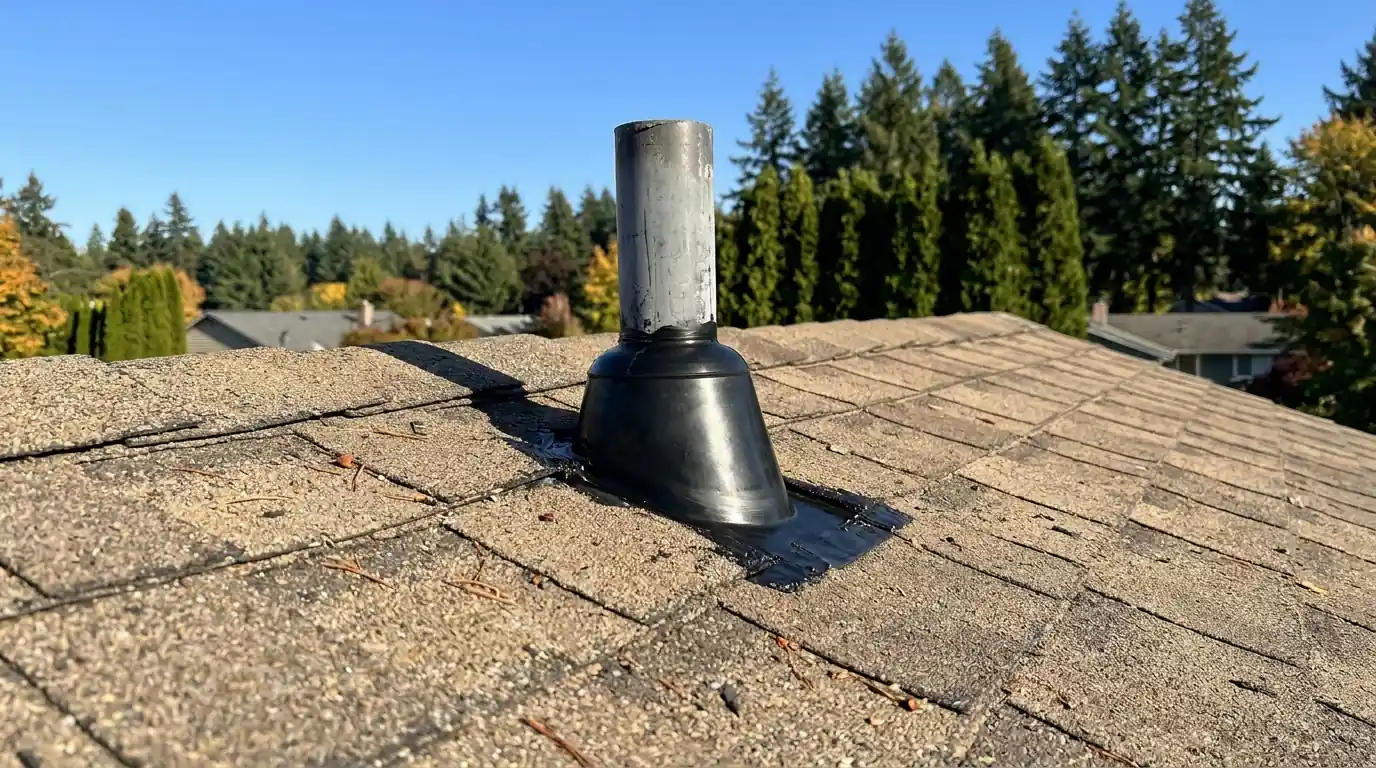
Pipe boot and roof vent repair replaces the cracked rubber collars, brittle vent caps and loose flashing around roof openings. In the Vancouver area, a single boot replacement typically runs $235 to $465, with discounts per boot when several are done in one visit. Cracked boots are among the most common roof leaks we find.
Every roof has several openings for plumbing vents, bath and kitchen exhaust fans, attic vents and sometimes furnace or water heater flues. Each one is sealed with a boot, collar or vent cap that has to keep water out for as long as the shingles last. Many do not. Rubber pipe boots dry out and crack in the sun, plastic vent caps get brittle, and exposed nails around them back out over time.
Pipe boot and roof vent repair is often a quick fix with a big payoff. We replace the failed boot or vent, weave the new flashing into the shingles correctly, and seal the fasteners. While we are on the roof, we check every other opening, because if one boot has cracked, the others of the same age are usually close behind. Replacing them together saves a second trip.
Why pipe boots and vents fail
Most pipe boots are a metal or plastic base with a rubber collar that hugs the vent pipe. The rubber is exposed to sun every day, and over years it dries, shrinks and cracks, often well before the shingles around it wear out. Once the collar splits, water runs straight down the outside of the pipe and into the attic. On many Vancouver homes, the original boots fail long before the roof does.
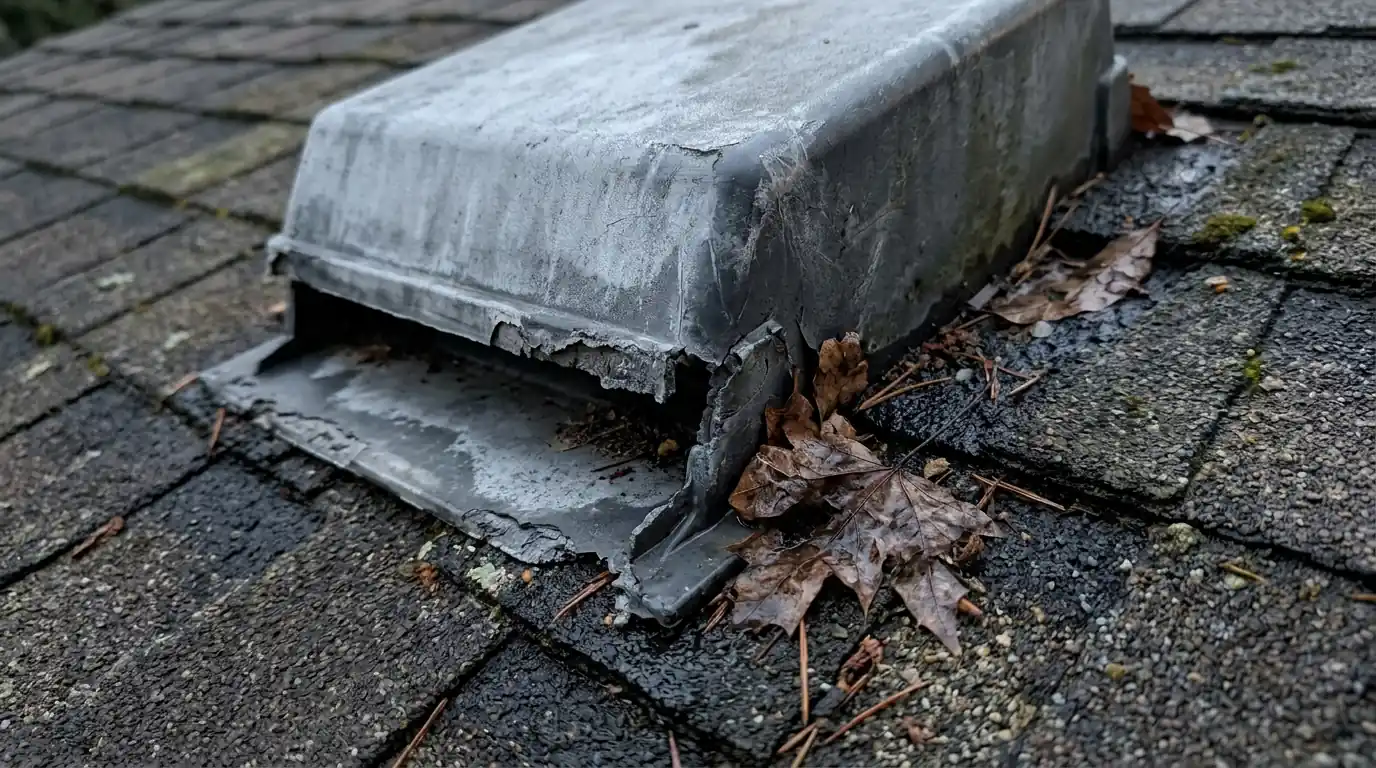
Box vents and exhaust caps fail differently. Plastic vent hoods get brittle and crack, especially on south and west slopes that take the most sun. Metal vent caps rust at the seams. Dampers on bath and kitchen fan caps stick open, letting wind-driven rain in. And the nails holding vents down can back out, lifting the shingle above them and leaving a hole that drips every time it rains. Each one is a small, cheap fix.
What we replace and how
For pipe boots, we lift the shingles around the boot, remove the old one, slide on a new boot sized to the pipe, and weave its base into the shingles so the upper part sits under the course above and the lower part sits on top. For vents and exhaust caps, we follow the same lapping rule. All fasteners are placed where the next course covers them, and any exposed heads are sealed.
- Rubber-collar or all-metal pipe boots
- Lead boots for older cast iron vent stacks
- Box vents and ridge-adjacent attic vents
- Bath and kitchen exhaust caps with dampers
- Storm collars on furnace and water heater flues
Choosing longer-lasting boots
Standard rubber-collar boots are inexpensive but can crack in sunny exposures within a decade or so. Upgraded options include boots with thicker, UV-resistant collars, all-metal boots with a separate sealing gasket, and soft lead boots that fold over the top of the pipe. Lead boots last a long time but can attract squirrels that chew them. We explain the options and recommend what fits your roof and budget. There is no single best boot.
For bath and kitchen exhaust, we use caps with working backdraft dampers sized to the duct. A cap that is too small restricts airflow, and moisture then condenses in the duct and drips back into the attic, which can look like a roof leak. If we find a bath fan venting straight into the attic instead of through the roof, we point it out, since that causes moisture problems of its own.
Replacing boots during other roof work
If you are planning a roof replacement soon, there is no need to replace boots separately, since all new flashing goes in with the new roof. But if the roof has years left, replacing every aging boot at once makes sense. It costs less per boot than calling us out one at a time, and it stops the pattern of a new leak every winter as each boot fails in turn.
Signs a pipe boot or vent is leaking
Stain near a fan
A water ring on the ceiling around a bathroom fan often means the exhaust cap or its flashing on the roof is leaking.
Cracked rubber collar
Visible splits in the rubber around a plumbing vent pipe let rain run straight down the pipe into the attic.
Wet wood around pipe
Dark staining on the decking or framing right around a vent pipe in the attic is a sign the boot has failed.
Brittle vent hood
A plastic box vent that is faded, cracked or chipped at the edges will soon let wind-driven rain inside.
Lifted shingle at vent
A shingle that is raised next to a vent often has a nail backing out beneath it, leaving a hole for water.
Rusty flue collar
Rust on the storm collar around a furnace or water heater flue means its seal is failing and may leak.
How we handle pipe boot & roof vent repair
Call about the drip
Call (360) 803-6405 and tell us where the leak is and whether it is near a bathroom, kitchen or plumbing wall.
Check every opening
Our roofer inspects all pipe boots, vents, exhaust caps and flue collars on the roof, plus the attic around the leaking one.
Price the replacements
We show you photos and give you a price for the leaking item and any others that are close to failing, so you can choose.
Replace boots and vents
New boots and vents are installed and woven into the shingles in the correct order, with fasteners covered and sealed.
Check attic, clean up
We confirm the area is sealed, check the attic below where accessible, and remove old boots and debris from the roof.
Pipe boot and vent repair costs near Vancouver
Pipe boot and vent repairs are among the most affordable roof repairs, and doing several at once lowers the cost per item. Prices depend on the type of boot or vent, roof pitch, and how many openings need work. The ranges below are typical for 2026 in the Vancouver and Portland-metro area. Your real price comes after we inspect the roof.
| Job | Typical range |
|---|---|
| Single pipe boot replacement | $235 to $465 |
| Each added boot, same visit | $95 to $185 |
| Box vent or exhaust cap replacement | $285 to $590 |
| Flue storm collar reseal or replace | $195 to $415 |
The number of openings, boot or vent type, roof steepness and any decking rot around the pipe move the price most. See every service side by side in the roofing price guide.
Sun, rain and boot failures in Clark County
Vancouver summers are dry and sunny, and that sun is what wears out rubber pipe boots. On south and west slopes, collars dry and crack years before the shingles around them. Then the rainy season arrives in October, and the first long soaking finds every split. That is why so many of our pipe boot calls come in the first few weeks of fall rain, from Hazel Dell ranches to newer homes in Battle Ground and Ridgefield. Catching boots in late summer avoids that rush.
Gorge winds in east Vancouver and Camas add another problem: they push rain sideways into exhaust caps with stuck dampers. Swapping in a cap with a working damper usually stops that leak in a single visit. Under heavy fir cover in Felida or around Lacamas Lake, needles also pile up on the uphill side of each pipe, holding water against the collar. We clear them and check the boot base while we are there, since that trapped debris shortens a boot's life.
Pipe Boot & Roof Vent Repair questions
How long do pipe boots last before needing pipe boot and roof vent repair?
Standard rubber-collar boots often last 10 to 15 years, sometimes less on sunny south-facing slopes. That is shorter than most architectural shingles, so boots commonly fail while the roof is still in good shape. Upgraded boots with thicker collars or all-metal designs last longer. We can recommend the right type for your roof's exposure.
Can pipe boot and roof vent repair be done without replacing shingles?
Usually, yes. We lift the surrounding shingles carefully, swap the boot or vent, and lay the shingles back down and reseal them. If shingles around the opening are cracked or brittle, we may replace a few, but most boot and vent repairs reuse the existing shingles.
Why is my bathroom ceiling wet if pipe boot and roof vent repair was just done?
If the roof opening is sealed, the moisture may be condensation inside the fan duct. Warm, wet air from showers cools in an uninsulated duct running through a cold attic and drips back down. Insulating the duct, fixing its slope, or adding a proper cap with a damper usually solves it. We check for this during the visit.
Should I replace all my boots during pipe boot and roof vent repair, or just the leaking one?
If the boots are all the same age, replacing them together usually saves money, since the per-boot cost drops after the first one and you avoid a new leak each winter. If the roof will be replaced within a year or two, fixing only the leaking boot makes more sense.
Work that often goes with it
Roof Leak Repair
Leak tracing and repair for stains, drips and attic moisture. We follow the water back to where it actually enters the roof.
See the detailsAttic Ventilation
Balanced intake and exhaust venting that keeps attic air moving, cuts winter condensation and helps shingles last longer.
See the detailsShingle Repair
Spot replacement of cracked, missing or lifted shingles on composition roofs, with tabs woven in and sealed to match.
See the detailsPipe Boot & Roof Vent Repair around Vancouver
Our crews do this work across Clark County and the Portland side, including:
Call about pipe boot & roof vent repair
Phones are answered 24/7. Tell us what you are seeing and we will set a time to look.