Roofs under the trees in Lake Oswego, OR 97034
Lake Oswego's tall firs and deep shade keep many roofs wet for most of the year, so moss, needle buildup and aging cedar drive most calls here.
Lake Oswego, OR at a glance
- ZIP codes
- 97034, 97035
- Common homes
- Custom homes on wooded lots, mid-century ranches, lake houses
- Roofs we see most
- Cedar shake, heavy architectural composite, some metal
- Weather to plan for
- Deep shade, constant damp, limb drops in wind and ice
- Nearest office
- Vancouver office, 610 Main Street
Lake Oswego is a short drive south of Portland, and from our Vancouver office we usually take I-205 across the river and around to the west side. The city is known for heavy tree cover, winding streets and homes set on wooded lots around Oswego Lake and up into the hills. Many houses sit under a full canopy of Douglas fir, cedar and big-leaf maple, and some roofs see direct sun for only a few hours a day.
That shade is part of why people love living here, and it is also hard on roofs. Wet shingles grow moss, needles pile into valleys, and cedar shake roofs that never dry out wear down faster. Many owners also want the trees left alone, so the work has to fit the lot instead of the other way around. That means planning ladder spots between root zones, keeping tarps over planting beds, and timing cleanings for drier weeks when the surface can be worked safely.
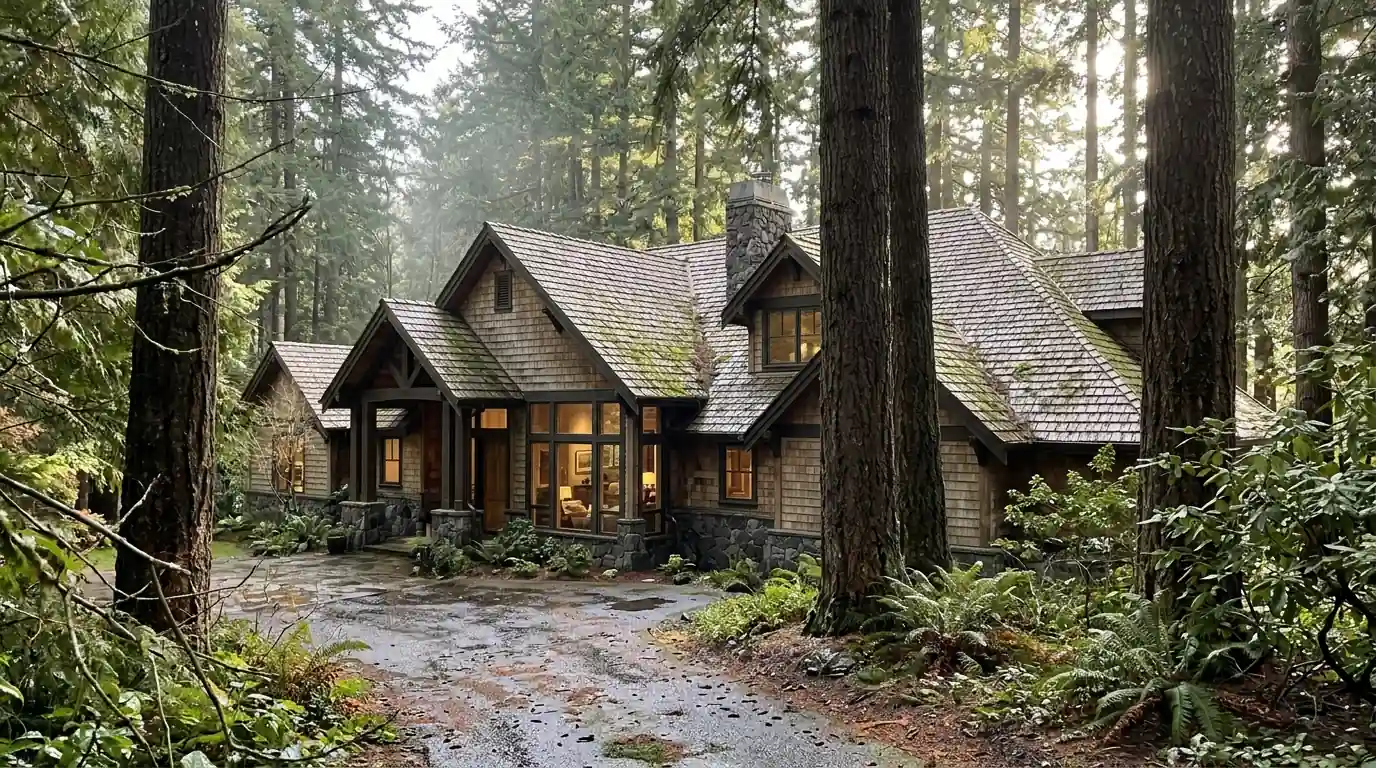
Lake Oswego homes and the roofs on wooded lots
Lake Oswego has a large share of custom and semi-custom homes, and cedar shake was a common choice on them for decades. Under constant shade, shakes stay damp, turn dark, split, and grow moss in the gaps between them. Once a shake roof reaches that stage, repairs get harder because each replaced shake has to sit among brittle neighbors. Some owners keep cedar and do a full replacement. Others switch to a heavy architectural composite or a designer shingle with a shake look. Both can suit these houses, so we price each option.
Composite roofs here have their own problem. Moss roots work under the shingle edges and lift them, and needles packed in valleys hold water against the seams. A roof that looks fine from the street can be soft underneath. Pressure washing makes it worse by stripping granules and forcing water under the laps, so we avoid it. Instead we lift moss by hand, treat what remains, and check the decking at the eaves where rot usually starts first. Where moss has sat for many seasons, a band of shingles along the gutter line often needs replacing.
What constant shade and tall firs do to Lake Oswego roofs
The biggest weather factor here is not one storm. It is that roofs under trees rarely dry between October and May. Rain drips off branches for hours after the sky clears, and fog and cool nights keep surfaces wet. Moss, lichen and algae grow fastest on north faces and anywhere branches hang over. When a windstorm or ice event does hit, the same trees drop limbs. Even a small branch falling from high up can puncture shingles or crack a shake, and a large limb can break rafters. Pollen and leaf litter in spring add a second layer of debris.
Our work on Lake Oswego roofs and lots
We remove moss by hand and with soft-wash methods that do not tear up shingles, then clear valleys and gutters. On many jobs we add zinc strips near the ridge to slow regrowth. We protect gardens, decks and lake-side landscaping during tear-offs. Where branches touch or overhang the roof, we point them out so you can have an arborist trim them. We check Lake Oswego permit rules and pull permits where required.
What homeowners in Lake Oswego call us for
Moss Removal & Roof Cleaning
Lake Oswego roofs under deep fir shade grow thick moss that lifts shingles and holds water against seams.
See the detailsZinc Strips & Moss Prevention
Zinc strips near the ridge slow moss regrowth on shaded Lake Oswego roofs between cleanings.
See the detailsCedar Shake Roofing
Many custom Lake Oswego homes keep cedar shake, and worn shake roofs here need full replacement when they split.
See the detailsCedar Shake to Composite Conversion
Owners tired of shake upkeep in the shade often switch to a heavy composite with a similar look.
See the detailsGutter Guards
Fir needles and maple leaves fill Lake Oswego gutters many times a season, and guards cut down the clogging.
See the detailsFallen Tree Roof Damage Repair
Tall trees over Lake Oswego homes drop limbs in wind and ice, puncturing shingles and cracking rafters.
See the detailsRoofing questions from Lake Oswego
How often should I have moss removed from my Lake Oswego roof?
Under heavy shade in Lake Oswego, many roofs need moss cleared every one to two years. Sunnier roofs can go longer. Adding zinc strips after a cleaning slows regrowth. The goal is to remove it before roots lift shingle edges. We look at how much sun each slope gets and suggest a schedule that fits your roof.
Should I replace my Lake Oswego cedar shake roof with cedar or composite?
Both work. New cedar keeps the original look but needs regular cleaning and treatment in deep shade. A heavy architectural or shake-look composite needs less care and handles damp better. Cost, HOA rules and how long you plan to stay all matter. We price both for your Lake Oswego home so you can compare.
What does moss removal cost on a shaded Lake Oswego home?
Moss removal with gutter and valley clearing on a typical Lake Oswego home often runs $585 to $1,340. Steep roofs, very thick growth or adding zinc strips raise it. These are typical ranges, and the real number comes after we look at the roof, its pitch and how much growth is there.
Nearby areas we also roof
Roof trouble in Lake Oswego?
Call any time. We will set a time to look and give you a straight price.