Cedar shake roof repair and new shake roofs in Vancouver, WA
Cedar shakes look great for years, then cup, split and grow moss until rain gets past the interlayment and the roof starts leaking in odd places.
- 24/7 phones
- New roofs and materials
- Vancouver office on Main St
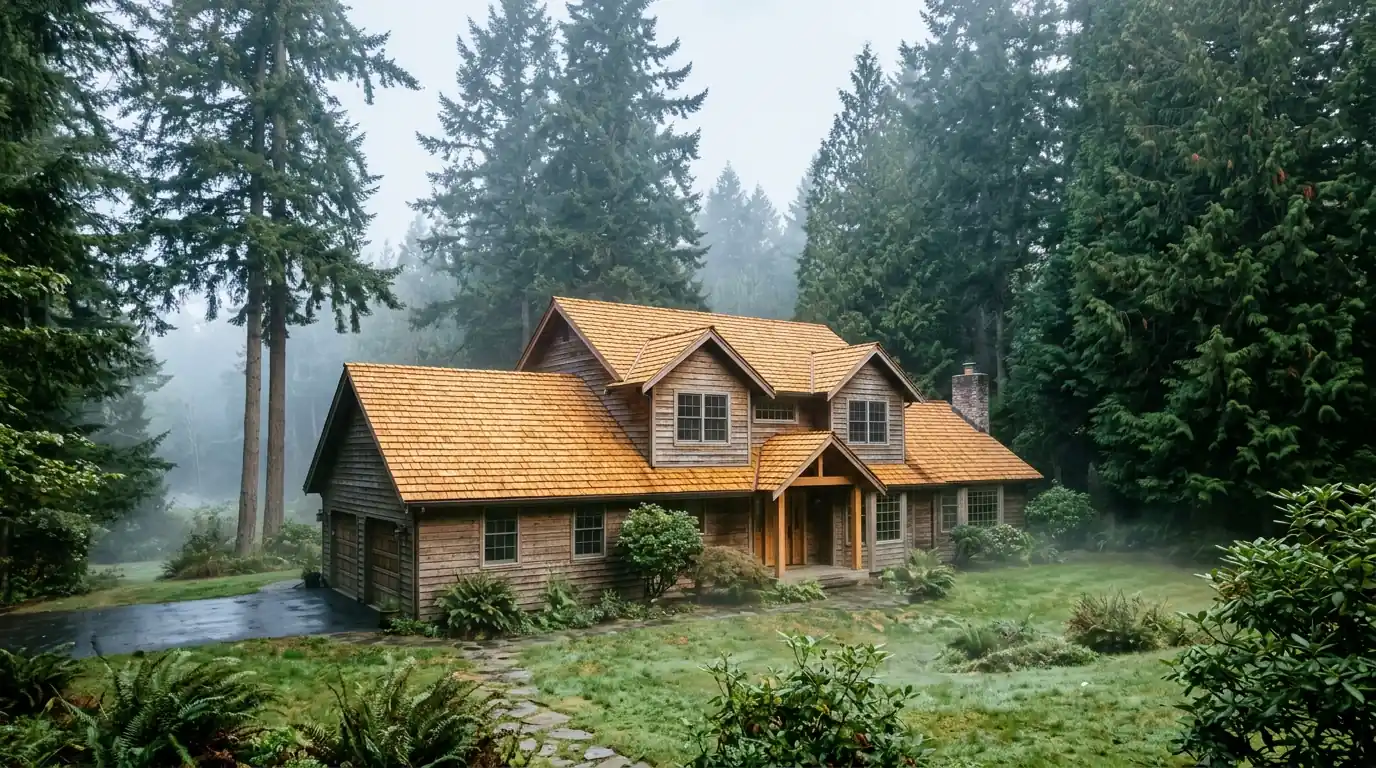
A cedar shake roof can be repaired if most of the shakes are still thick and solid. Our roofers slip in new shakes where old ones split or blew off, fix the ridge and valleys, and clear moss. If shakes are worn thin across whole slopes, or the felt underneath has rotted, a full new shake roof or a conversion to composite is the better spend.
Many Clark County homes built from the 1970s through the 1990s went up with cedar shake roofs, and plenty of owners still want that look. A shake roof works by layering thick split wood over strips of felt interlayment, so each course sheds water onto the one below. When shakes thin out, split down the middle or curl, those overlaps stop lining up and water finds the felt underneath.
We repair aging shake roofs, replace sections that took tree or wind damage, and install complete new shake roofs for owners who want to keep real wood. We also tell owners plainly when a shake roof has reached the point where repair money is being wasted. For homes that want the look without the upkeep, we discuss composite conversion as a separate option.
How shake roofs wear out
Wood on a roof goes through constant wet and dry cycles. In winter the shakes soak up rain for weeks; in July and August they bake dry. That swelling and shrinking causes splits, and the splits widen each season. Shaded slopes stay damp so long that moss and lichen take root in the grain, which holds even more water and softens the wood. Eventually the butts of the shakes thin to the point that you can see light through the courses from the attic.
Fasteners matter too. Older shake roofs were often nailed with plain steel that rusts in the wood, so shakes slide down and open gaps. Ridge shakes, which take the most wind, usually fail first. When we look at a shake roof, we pull a few loose pieces to check nail condition and felt quality. That tells us far more about remaining life than looking at the surface alone. It also shows whether the roof was installed correctly to begin with.
Shake repair and replacement work we do
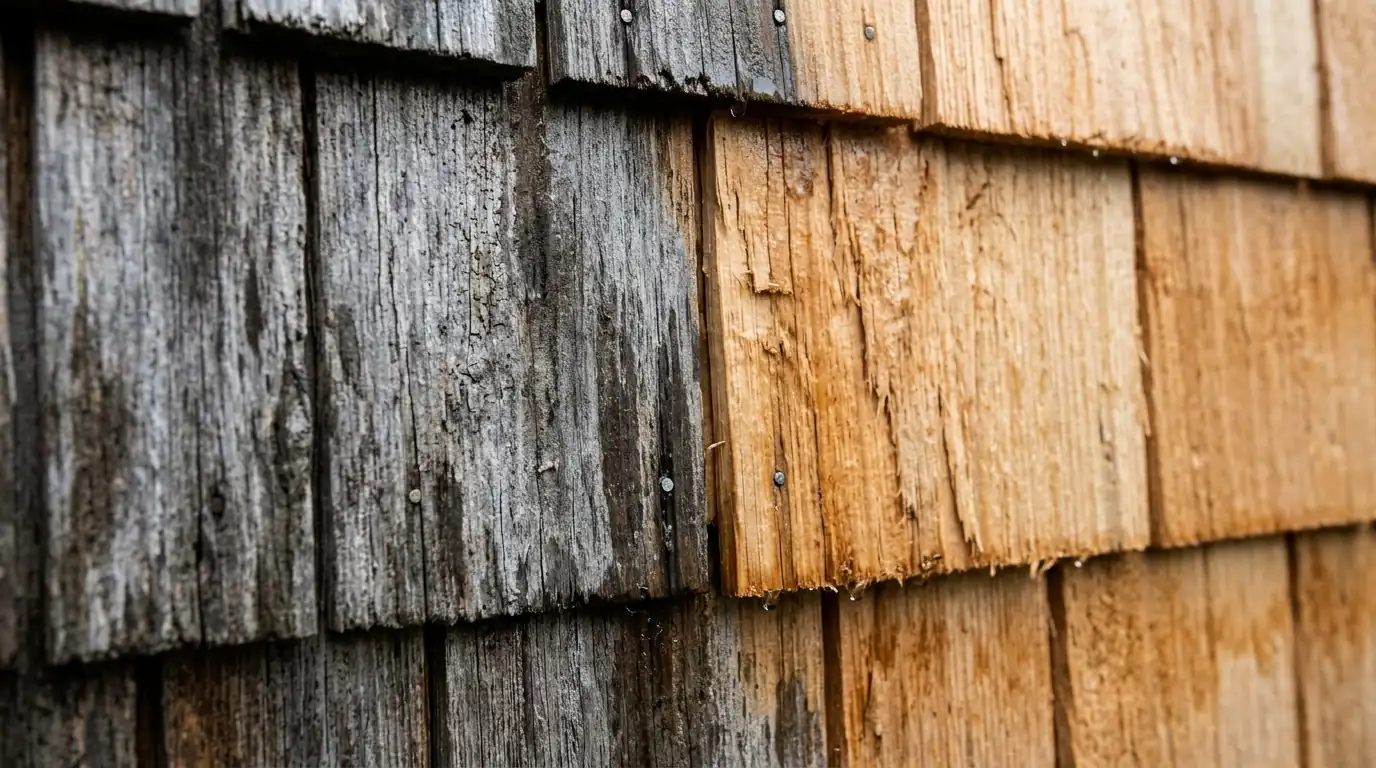
Repairs on shake roofs are hand work. Each damaged shake is split out, the old nails are cut with a shingle ripper, and a new shake of matching thickness and length slides in. We use stainless or hot-dipped galvanized nails and keep the spacing between shakes so wood has room to swell. New shakes start out lighter than the weathered ones around them, then darken within a season or two.
- Replacing split, missing or wind-lifted shakes
- Rebuilding cedar ridge and hip caps
- Replacing worn metal valleys under shake slopes
- Repairing shakes around chimneys and skylights
- Section replacement after tree or limb damage
- Complete tear-off and new shake roofs
Choosing shakes for a new roof
Not all cedar is equal. Hand-split and resawn shakes have a rough face and thick butt, while tapersawn shakes are cut smooth on both sides for a cleaner look. Thicker, heavier shakes last longer in our climate because they have more wood to lose before they leak. Grade matters as well: the best grade is all heartwood with vertical grain, which resists splitting. We show samples so you can see and feel the difference before choosing.
Treated shakes are also worth considering on shaded lots. Some products are pressure-treated to slow rot and moss growth, and they hold up better under heavy fir cover than untreated wood. They cost more up front. We also install the interlayment in the right pattern so it sits above the butt line, and we keep a vented space where the roof design calls for it, so the wood can dry between storms.
Is a shake roof still worth repairing?
Spot repairs make sense on a roof that is generally solid with damage in a few places, such as a slope hit by a falling limb or a ridge that took the brunt of a windstorm. They make less sense when every slope shows splits and thin butts. At that stage new leaks keep appearing faster than we can fix them. We give owners the honest numbers for repair, new cedar, and composite conversion so the choice is clear before money goes into it.
Signs your cedar shake roof needs attention
Splits through shakes
Cracks running the full length of a shake let water drop straight onto the felt interlayment below.
Cupped or curled pieces
Shakes that curl at the edges no longer lie flat, so wind can lift them and rain can get under.
Thick moss on courses
Moss holds water in the wood grain for weeks and speeds up rot on shaded slopes.
Shakes sliding downslope
Pieces that have slipped out of line usually mean the old nails have rusted through.
Daylight in the attic
Seeing light between shake courses from the attic means the wood has thinned past the overlap.
Broken ridge caps
Missing or cracked ridge shakes leave the top of the roof open to wind-driven rain.
How we handle Cedar Shake Roofing
Inspect the wood
We check shake thickness, splits, moss, nails and felt on every slope, pulling a few loose shakes to see what is underneath.
Lay out options
You get photos and prices for spot repair, section replacement, a full new shake roof and composite conversion where it applies.
Protect the property
Tarps go over landscaping and decks, and magnets or catch tarps collect the cedar debris and old nails.
Install new cedar
Shakes go in with proper spacing, interlayment, offset joints and corrosion-resistant nails, with new metal at valleys and walls.
Clean up and walk
We sweep for nails, haul off wood waste and walk the finished work with you, explaining what to watch for later.
Cedar shake roofing price ranges
Cedar is one of the more expensive roofing choices because both the wood and the hand labor cost more. These are typical ranges for homes around Vancouver. Your number depends on roof size, pitch, shake grade, whether old layers must come off, and how much decking needs replacing. We price it after we have been on the roof.
| Job | Typical range |
|---|---|
| Shake repair, small area | $480 to $1,370 |
| Ridge and hip rebuild | $1,260 to $3,180 |
| Section replacement after damage | $2,940 to $7,650 |
| Full new shake roof, average home | $27,800 to $46,300 |
Shake grade, treated versus untreated wood, steep pitch and rotted decking under the old roof move the price most. See every service side by side in the roofing price guide.
Cedar shakes under Clark County firs
Neighborhoods like Felida, Salmon Creek and Cascade Park have many shake roofs from the original builds, often shaded by tall Douglas firs. That shade is what wears the wood fastest here. The north and east slopes stay wet for most of the October to May rain season, moss grows thick, and the butts soften. On those homes the south slope can look fine while the shaded side is close to failing. We often suggest regular moss control on those slopes to buy time.
Gorge winds add another stress on the east side of the county. Weathered shakes are light and brittle, and strong gusts snap them off at the nail line. Some HOAs still ask for wood or a wood look, so we check the rules with owners before planning a new roof. If the rules allow other materials, we price both cedar and composite so you can compare them side by side.
Cedar Shake Roofing questions
How long does a new cedar shake roof last in Vancouver's climate?
It depends heavily on shade, grade and upkeep. A thick, heartwood shake roof in full sun with regular moss control can last much longer than a thin shake roof under heavy fir cover. We set expectations based on your lot and the product you choose, rather than quoting one figure for every home.
Can you replace just a few shakes on my cedar shake roof?
Yes. We split out the damaged shakes, cut the old nails, and slide matching new ones into place. The new wood will be lighter in color for a season or two before it weathers to match. This works well when the rest of the roof is still thick and sound.
Should I treat or seal my cedar shake roof after moss removal?
Treatments can slow moss and help shed water, but they do not restore wood that is already thin or split. On a roof with years left, cleaning and a treatment can help. On a roof near the end, the money is usually better put toward replacement. We tell you which applies.
Does a cedar shake roof need special underlayment or ventilation?
Yes. Shakes are installed with felt interlayment between courses, and many roofs benefit from solid decking plus good attic venting so the wood dries out. Skipping interlayment or covering it wrong is a common reason new shake roofs leak early. We install it to the manufacturer's pattern.
Work that often goes with it
Cedar Shake to Composite Conversion
Tear off a worn cedar shake roof and replace it with architectural composite shingles over new solid decking and underlayment.
See the detailsMoss Removal & Roof Cleaning
Hand removal of moss, lichen and needle debris from shingle, shake and tile roofs, with gentle cleaning that protects the roofing.
See the detailsRoof Replacement
Full tear-off and replacement with new underlayment, flashing, vents and your choice of shingle, metal or other roofing.
See the detailsCedar Shake Roofing around Vancouver
Our crews do this work across Clark County and the Portland side, including:
Call about Cedar Shake Roofing
Phones are answered 24/7. Tell us what you are seeing and we will set a time to look.