Skylight leaks and shake re-roofs on Tigard homes, OR 97223
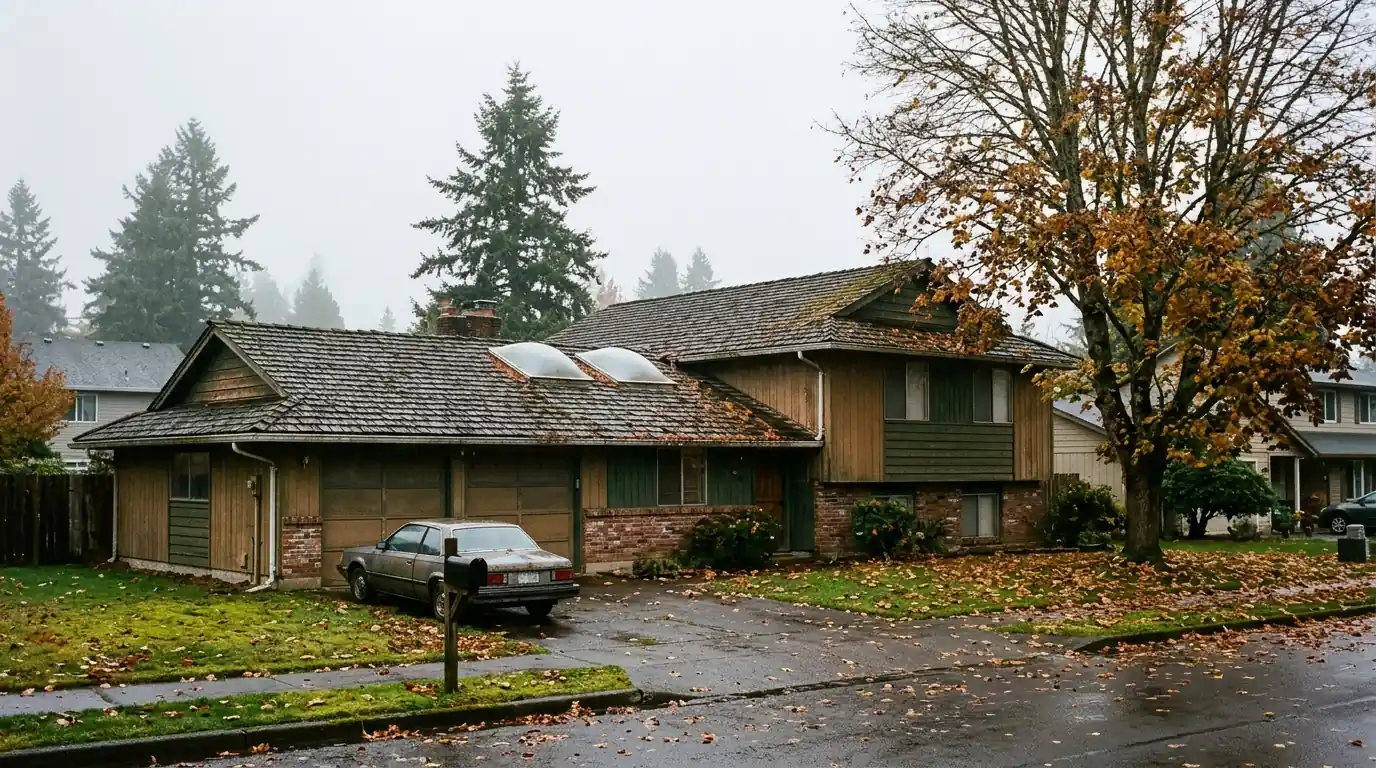
Tigard roofs split into two groups: 1970s and 1980s split-levels with old skylights and tired shake, and newer hillside homes on Bull Mountain that catch the wind.
Tigard, OR at a glance
- ZIP codes
- 97223, 97224
- Common homes
- 1970s split-levels and ranches, newer Bull Mountain homes
- Roofs we see most
- Aging cedar shake, composite, older acrylic skylights
- Weather to plan for
- Southwest storms, wind on hilltops, long wet winters
- Nearest office
- Vancouver office, 610 Main Street
Tigard sits in the southeast corner of Washington County, between Highway 217 and I-5, a straight shot south through Portland once we cross the Interstate Bridge from our Vancouver office. Much of the city filled in during the 1960s, 1970s and 1980s with ranches and split-levels on quiet streets off Pacific Highway. Many of those houses were built with cedar shake and acrylic dome or flat-glass skylights, and most of those original materials have now reached the end of their life.
Up the slopes of Bull Mountain, the picture changes. Homes there mostly date from the 1990s onward, sit higher and more exposed, and have larger, more complex roofs. Their problems are less about age and more about wind on ridges and long valleys that carry a lot of water. We cover both parts of Tigard, and the first visit usually tells us which set of fixes a house needs.
Tigard split-levels, skylights and tired shake
The split-level is a Tigard classic, and its roof is trickier than it looks. Two roof planes at different heights meet a tall wall in the middle, and that wall joint depends on step flashing and counterflashing that were often done with a single strip and sealant. Add a skylight or two over the kitchen and family room, popular when these homes were built, and you have several places for water to get in. Old acrylic domes turn cloudy and brittle, and the curbs under them rot when the flashing fails. Many owners first notice a stain around the skylight well and assume the whole roof is gone.
Cedar shake roofs on these homes are mostly past saving. Shakes split, cup and grow moss, and the spaced board decking under them was designed for wood, not for composite. Converting means new plywood sheathing over or in place of those boards, then underlayment and architectural shingles. It is a good moment to replace or remove the old skylights too, rather than flashing new shingles around units that will fail in a few years.
Tigard weather from the valley floor to Bull Mountain
Most of Tigard sits on lower ground where winter weather means steady rain from storms moving up from the southwest. Those storms push water sideways against the tall middle walls of split-levels and test every flashing joint on the windward side. On Bull Mountain the same storms hit harder, because homes sit higher and more exposed, and ridge caps and hip shingles take most of the beating. Street trees and backyard firs across the lower neighborhoods drop needles that clog gutters and keep shaded slopes wet, which feeds moss on the north faces.
What a Tigard roof visit covers
We start at the problem spots this housing stock is known for: the middle wall on split-levels, every skylight, the chimney and the valleys. We go into the attic to check for stains and soft sheathing, then lay out repair and replacement options with prices. For conversions we note how much decking needs replacing and whether skylights stay, change or go. We check City of Tigard or Washington County permit rules for your address and pull permits where required.
What homeowners in Tigard call us for
Skylight Replacement & Leak Repair
Original skylights on 1970s Tigard split-levels are often cloudy, brittle and leaking at rotted curbs.
See the detailsCedar Shake to Composite Conversion
Many Tigard shake roofs from the 1970s and 1980s are past repair and convert well to architectural composite.
See the detailsRoof Decking Replacement
Spaced board decking under old Tigard shake roofs needs new sheathing before composite shingles can go on.
See the detailsChimney Cap & Crown Repair
Brick chimneys on older Tigard homes often have cracked crowns that let rain soak in from the top.
See the detailsWind & Storm Damage Repair
Bull Mountain homes sit high and exposed in Tigard, so ridge and hip shingles lift in strong southwest storms.
See the detailsGutter Guards
Street trees and firs in lower Tigard neighborhoods fill gutters each fall, and guards cut down the cleanup.
See the detailsRoofing questions from Tigard
Should I keep or remove the old skylights when I reroof my Tigard split-level?
If the skylights are original to a 1970s or 1980s Tigard home, we usually suggest replacing them during the reroof so new flashing kits go in with the new underlayment. If you rarely use the light, removing a skylight and framing over the opening is another option. Replacement typically runs $1,265 to $2,980 per unit as part of a reroof, confirmed after we measure.
How much does a shake to composite conversion cost on a Tigard house?
For a typical Tigard split-level or ranch, tearing off shake, adding new sheathing and installing architectural composite often runs $15,480 to $27,300. Steep sections, chimneys and skylights push it up. These are typical ranges, and we give you the real price after we see the roof and check the decking from the attic.
Why does my Tigard house leak at the wall where the two roof levels meet?
That joint on a split-level is one of the most common leak spots in Tigard. Water running down the upper wall needs step flashing behind the siding and counterflashing over it. Many original homes used sealant instead, which cracks over time. We open the siding at the joint, install proper flashing, and repair any rotted sheathing before closing it up.
Nearby areas we also roof
Roof trouble in Tigard?
Call any time. We will set a time to look and give you a straight price.