Clearing moss and debris from Vancouver, WA roofs
Thick green moss is spreading across the shaded side of your roof, lifting shingles and holding water against the roof every day of the rainy season.
- 24/7 phones
- Inspections and roof care
- Vancouver office on Main St
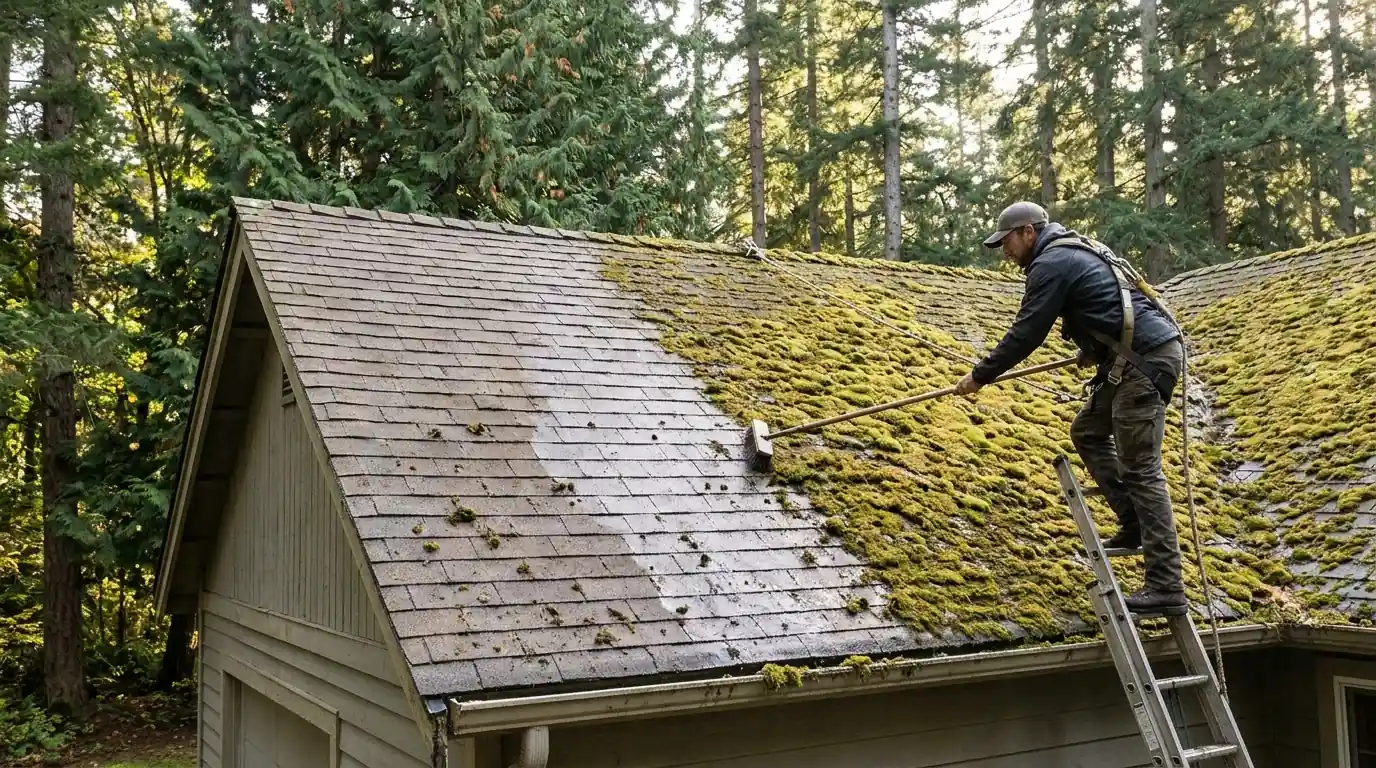
The safe way to remove roof moss is by hand, using brushes and plastic scrapers to lift it from the surface, followed by a moss-killing treatment. High-pressure washing should be avoided on shingles because it strips granules and forces water under the laps. On most roofs here, moss removal is needed every year or two.
Moss is the most common roof problem in western Washington and Oregon. It grows fastest on north slopes, under tall firs and anywhere the roof stays damp for long stretches. As it thickens, moss lifts shingle edges, wicks water up under the laps and holds moisture against the roofing for months. Fir needles and debris pile up behind it, feeding more growth and blocking valleys and gutters.
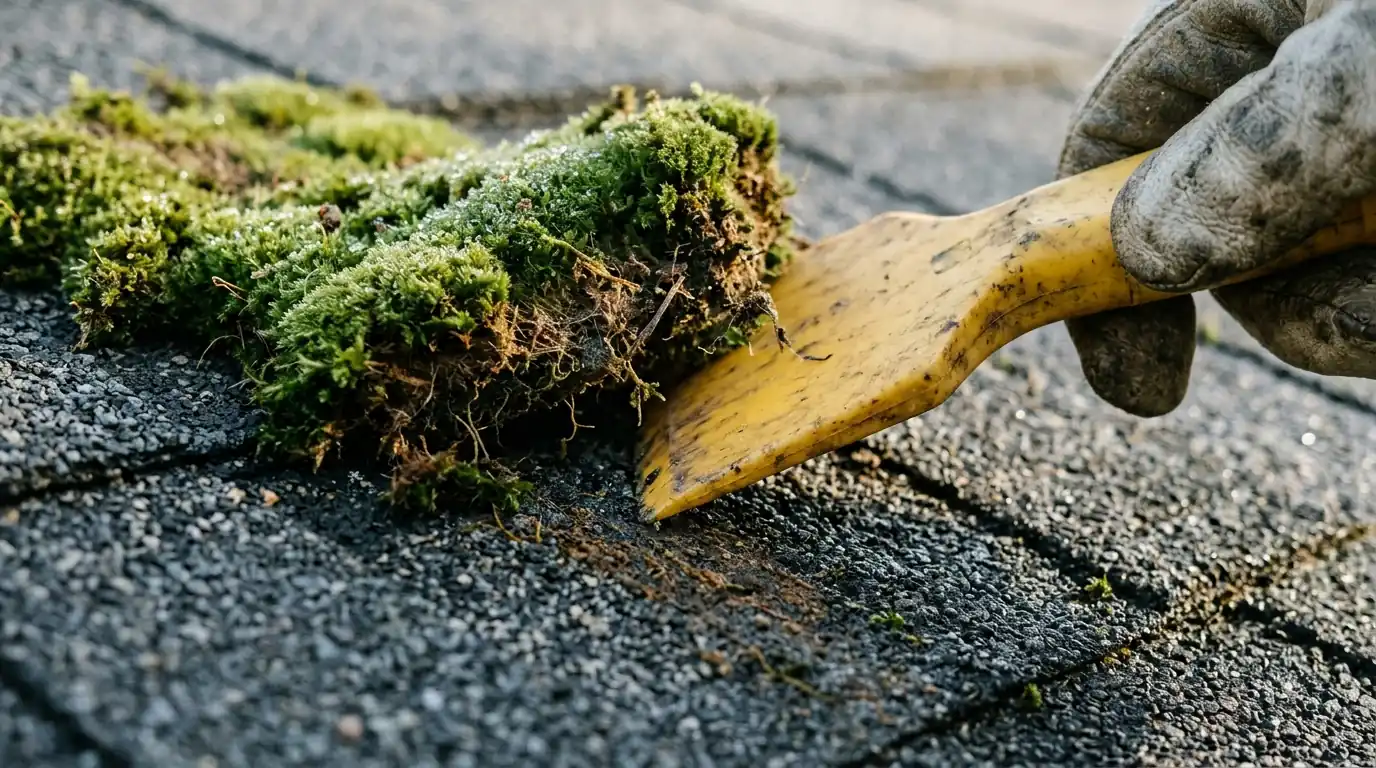
Removing moss correctly matters as much as removing it at all. High-pressure washing strips granules off shingles and can force water under the laps, which shortens the life of the roof. Our crews remove moss by hand with brushes and plastic scrapers, use low-pressure rinsing only where it is safe, and apply a moss treatment that keeps killing roots for weeks after the visit.
Why moss is a roofing problem, not just a looks problem
Moss acts like a sponge on the roof. Each clump holds water against the shingles long after rain stops. On composite shingles that constant moisture breaks down the asphalt and loosens granules. As moss grows under shingle edges, it lifts them slightly, letting wind-driven rain slip underneath. On cedar shakes it softens the wood and speeds rot. On concrete tile it fills the gaps tiles use to drain and pushes water sideways.
Moss also drives other problems. Clumps break loose in rain and wash into gutters, where they block downspouts and cause overflows. Debris builds up in valleys and behind chimneys, building dams that hold water against flashing. Over time, a mossy roof leaks in places that seem unrelated to the moss itself, which makes the cause hard to trace. Clearing it early is far cheaper than repairing the damage it causes, and the roof dries faster afterward.
How our crews clean a roof
Our process is designed to remove moss without taking life out of the roof. We work from the top down so loosened moss falls away from clean areas, and we protect landscaping and siding below from debris and runoff. Treatment products are chosen for the roofing type, and we use the minimum needed to do the job. Our roofers wear soft-soled shoes and use roof anchors on steep slopes, so the cleaning itself does not damage shingles.
- Hand brushing and plastic-scraper removal
- Low-pressure rinse only where it is safe
- Moss treatment applied after cleaning
- Valleys and chimney backs cleared of debris
- Gutters and downspouts flushed afterward
- Photos of any damage found under the moss
Different roofs, different cleaning methods
Composite shingles need the gentlest approach. We brush and scrape moss off in the direction of the shingle laps so we do not lift tabs, and we avoid pressure washing entirely. Concrete tile and metal can take a light rinse in most cases, since the surface is harder, but tiles still need careful footing. Cedar shakes are often cleaned with brushes and a mild treatment, as aggressive scraping can thin already worn wood.
Lichen is different from moss. It grips the surface tightly and cannot be scraped off without damaging shingles. We treat lichen and let it die back over time, so it releases on its own with rain. Black streaks from algae are a third issue. They look bad but do less harm, and treatment can lighten them over a few months. We explain which growth is on your roof and what to expect from each.
What we find under the moss
Moss often hides damage. Once it is removed, we sometimes find cracked or lifted shingles, granule loss, nail pops or soft spots in the decking. Those are easier to repair right away than after another rainy season. We photograph any damage we uncover and give you a price for the repair. On roofs that are near the end of their life, we will tell you so, and suggest whether moss control or replacement makes more sense.
Signs your roof needs moss removal
Green clumps on shingles
Visible moss mounds, especially on north and shaded slopes, mean roots are already working into the roofing.
Edges lifting slightly
Shingle edges that look raised or wavy often have moss growing underneath them.
Moss in the gutters
Clumps washing into gutters and downspouts show the roof is shedding moss every time it rains.
Valleys full of debris
Needles and moss packed into valleys slow drainage and can push water under the flashing.
Dark streaks spreading
Black or green streaks that spread each year show the roof is staying damp and needs treatment.
Roof stays wet longer
A slope that stays wet for days after rain usually has enough growth to hold water.
How we handle moss removal & roof cleaning
Check the roof first
Our roofer looks at the roofing type, moss depth and any obvious damage before deciding on the cleaning method.
Protect below
We cover plants and walkways near the house and plan how debris and runoff will leave the roof safely.
Remove moss by hand
Moss and debris are brushed and scraped off from the top down, working with the shingle laps rather than against them.
Treat and rinse
A moss treatment suited to the roofing is applied, and valleys, gutters and downspouts are cleared and flushed.
Report what we found
We share photos of the cleaned roof and any damage found under the moss, with a price for needed repairs.
Typical moss removal and roof cleaning costs
These are typical ranges for homes around Vancouver. The price depends on roof size, pitch, how thick the moss is, the roofing type and whether the gutters need full cleaning. Heavily shaded roofs with years of growth take more time. We give the real number after looking at the roof.
| Job | Typical range |
|---|---|
| Light moss, single-story home | $385 to $760 |
| Moderate moss, two-story home | $615 to $1,240 |
| Heavy growth or steep roof | $980 to $2,170 |
| Add zinc strips at ridge | $345 to $890 |
Steep pitch, cedar shakes, years of buildup and heavy debris in valleys and gutters push cleaning prices higher. See every service side by side in the roofing price guide.
Moss under Clark County firs
The Vancouver area has nearly perfect moss weather: long, mild, wet winters with roughly 40 inches of rain a year and steady drizzle that keeps roofs damp for weeks. Tall Douglas firs add shade and a steady supply of needles. Neighborhoods with mature trees, such as Felida, Salmon Creek, Hazel Dell and parts of Cascade Park, see heavy moss on north and east slopes every year. Lake Oswego and West Linn on the Oregon side have the same issue under their thick tree cover.
The best time to clean is late summer or early fall, when roofs are dry and moss is easier to lift. A treatment applied before the rains start keeps working through the wet months. We often pair cleaning with zinc strips to slow regrowth. Cleaning in the middle of winter is possible, but wet moss is heavier, roofs are slick, and the treatment can wash off before it works, so we usually save winter visits for urgent cases such as moss blocking a valley.
Moss Removal & Roof Cleaning questions
Is pressure washing safe for moss removal on a shingle roof?
No. High-pressure water strips granules off composite shingles and can force water under the laps, which shortens the life of the roof. We remove moss by hand with brushes and plastic scrapers, then apply a treatment. Low-pressure rinsing is used only on surfaces that can handle it, such as metal and some tile.
How often does my roof need moss removal and roof cleaning?
On most shaded roofs around Vancouver, every one to two years. Sunny roofs may go longer. Adding zinc strips and keeping branches trimmed back from the roof slows regrowth. We can tell you how fast moss is likely to return on your roof based on shade and slope.
Will moss removal damage my older roof?
Careful hand removal is the gentlest option, but an older roof may already have weak or brittle shingles. We check the roof first and adjust our method. If we find damage under the moss, we photograph it and give a repair price, so nothing is hidden.
Is the moss treatment safe for my plants and gutters?
We use products made for roofs and apply only what is needed. We cover nearby plants, avoid overspray and flush gutters afterward. If you have a rain barrel, a koi pond or plants right under the eaves, tell us before the visit so we can plan around them.
Work that often goes with it
Zinc Strips & Moss Prevention
Zinc or zinc-coated strips installed near the ridge, plus tree and gutter steps, to slow moss regrowth after a roof is cleaned.
See the detailsGutter Cleaning
Hand cleaning of gutters and downspouts to clear packed fir needles and moss, with a flush test and photos of any roof edge issues.
See the detailsRoof Maintenance Plans
Scheduled fall and spring roof visits that clear debris, reseal small gaps and catch moss before it lifts shingles.
See the detailsMoss Removal & Roof Cleaning around Vancouver
Our crews do this work across Clark County and the Portland side, including:
Call about moss removal & roof cleaning
Phones are answered 24/7. Tell us what you are seeing and we will set a time to look.