Swapping worn cedar shakes for composite shingles in Vancouver, WA
Your shake roof is splitting, mossy and leaking again, and you are ready for a roof that does not need cedar repairs every winter.
- 24/7 phones
- New roofs and materials
- Vancouver office on Main St
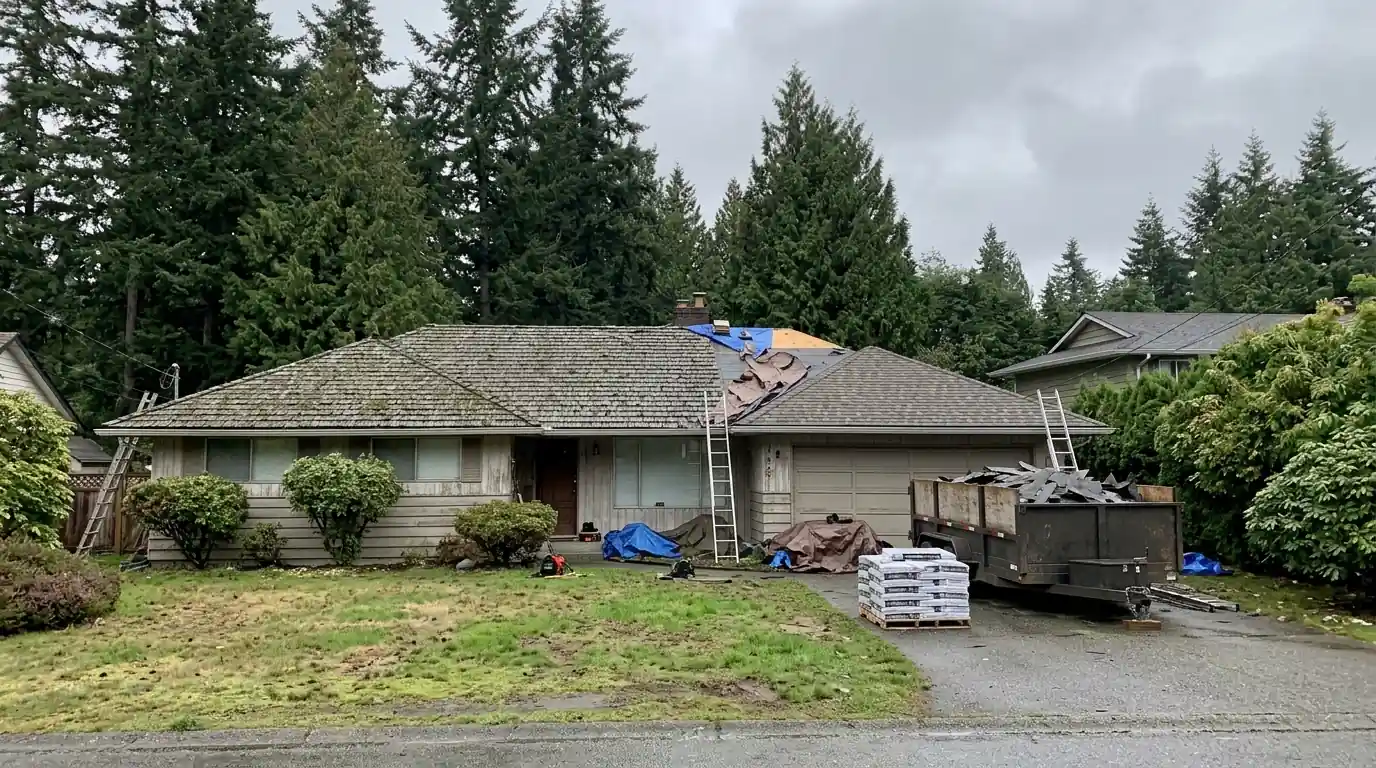
A shake to composite conversion means we remove the cedar shakes, cover the old spaced boards with new solid sheathing, add underlayment and new flashings, then install architectural composite shingles. It usually costs more than a shingle-over-shingle replacement because of the added decking and the heavier tear-off, but the finished roof needs far less upkeep.
Converting from cedar shakes to composite is one of the most common roofing jobs in Clark County right now. A wave of homes built from the 1970s to the 1990s got shake roofs, and many have reached the end of their life together. Owners want a roof that sheds rain, resists moss better, and does not need hand repairs after every windstorm. Architectural composite shingles do that and still give a dimensional look.
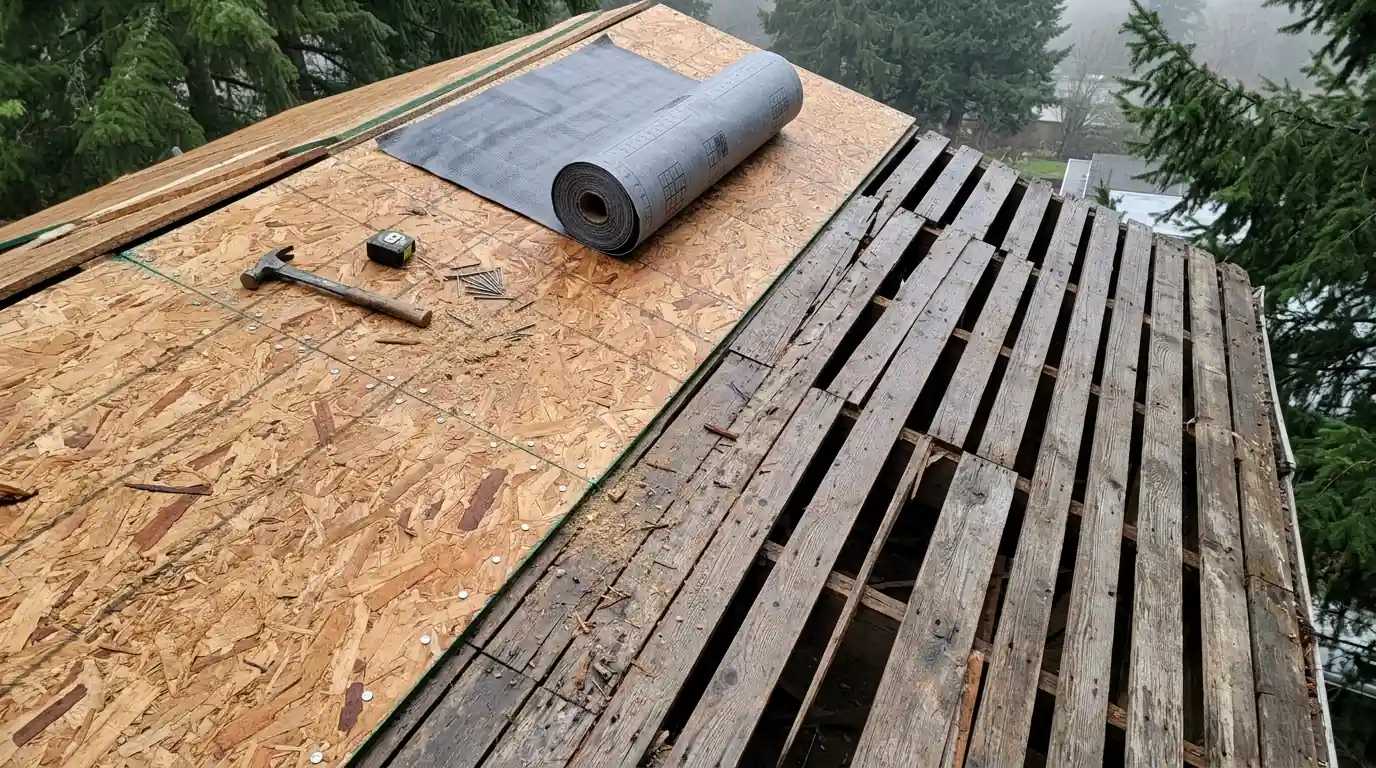
The job is more involved than a standard shingle re-roof. Shake roofs are usually nailed to spaced boards with gaps between them, which works for wood but cannot support composite shingles. So after tear-off, our crews cover the old boards with new plywood or OSB sheathing to create a solid deck. That step is what makes this its own service, and it is why the price differs from a normal replacement.
Why the decking has to change
Cedar shakes were designed to breathe, so builders nailed them to one-by boards spaced a few inches apart. Air moves through the gaps and helps the wood dry. Composite shingles need the opposite: a continuous, flat surface to nail into and to support them across the whole slope. Laying shingles straight over spaced boards leaves unsupported spans where nails miss and shingles sag or crack. Leaks and blow-offs tend to follow within a few seasons.
Our approach is to strip the shakes and felt, check every board for rot, replace the worst ones, and then sheath over the top with new panels. This adds height at the eaves and rakes, so drip edge and trim need adjusting. In some homes, older boards are in such poor shape that pulling them and sheathing directly to the rafters is cleaner. We decide that once the shakes are off and the boards are visible.
What is included in a conversion
A conversion is a complete roof system, not just new shingles. We install the parts that keep the roof dry for the long term, and we change details that suited wood but not composite. Every penetration gets new flashing, and the attic ventilation is set up to match the new, tighter deck. If we find rotted fascia boards at the eaves once the old roof is off, we show you the damage and the price before replacing them.
- Full tear-off of shakes, felt and old ridge
- New plywood or OSB sheathing over spaced boards
- Ice and water barrier at eaves and valleys
- Synthetic underlayment across the whole deck
- New drip edge, step flashing and pipe boots
- Ridge and soffit venting balanced for the attic
Picking a composite shingle to replace shakes
Owners leaving cedar often want a roof that still looks textured from the street. Architectural shingles have a layered, shadowed look that reads well on Craftsman and Northwest contemporary homes. Darker browns and weathered wood tones keep the warm feel of cedar, while grays and blacks give a cleaner modern look. We bring full-size sample boards and suggest viewing them against your siding in daylight. Lighter colors tend to show moss and streaks sooner.
For shaded lots, we suggest shingles with algae-resistant granules, which slow the dark streaks that show up on north slopes. Heavier designer shingles mimic the depth of shakes more closely but cost more. If your HOA has a color or material list, we work from it. Manufacturer warranty terms vary by product, and we walk through what each one covers in plain terms before you choose, and we leave the paperwork with you.
Planning the conversion day
Shake tear-offs produce a lot of heavy debris and thousands of nails. We place tarps over plants and decks, set a dumpster or trailer close to the house, and run magnets across the lawn and driveway afterward. Most average homes take two to four working days, depending on size, pitch and how much decking is needed. We keep the roof dry each night with underlayment or tarps, and we check the forecast before starting during the rainy season.
Signs it is time to convert from shakes
Leaks in new places
When repairs on one slope are followed by drips somewhere else, the whole roof is wearing out at once.
Thin, worn butts
Shakes worn down to a thin edge no longer overlap enough to keep steady rain out.
Moss on every slope
Moss covering most of the roof means the wood stays wet nearly all winter and is softening.
Repeated wind losses
Shakes snapping off after each windstorm show the wood has turned brittle across the roof.
Rising repair bills
Spending more each year on shake repairs is often a sign that conversion costs less over time.
Selling soon
A worn shake roof can raise buyer concerns, and a new composite roof removes that issue from the sale.
How we handle Cedar Shake to Composite Conversion
Measure and inspect
We measure the roof, check shake and board condition from above and inside the attic, and look at ventilation and flashings.
Price the full system
You receive one price that covers tear-off, decking, underlayment, flashing, venting and shingles, with likely board repairs explained.
Tear off and deck
Shakes come off one section at a time, damaged boards are replaced, and new sheathing goes down the same day.
Underlay and flash
Ice and water barrier, synthetic underlayment, drip edge and new flashings are installed before any shingles go on.
Shingle and clean
Shingles and ridge vents are installed, debris is hauled away and magnets sweep the yard and driveway for nails.
What a shake to composite conversion costs
These typical ranges are for homes around Vancouver and the Portland metro. Your price depends on square footage, pitch, number of layers, shingle line and how many old boards need replacing. Re-sheathing is the main cost difference from a standard re-roof. We give the real number after measuring and looking at the roof and attic.
| Job | Typical range |
|---|---|
| Smaller ranch home | $16,450 to $24,800 |
| Average two-story home | $22,700 to $35,900 |
| Large or steep home | $34,600 to $52,300 |
| Added board repair, per sheet area | $95 to $185 |
Steep pitch, extra shake layers, rotted boards and upgraded designer shingles push conversion prices toward the high end. See every service side by side in the roofing price guide.
Why so many Clark County homes are converting now
East Vancouver subdivisions such as Cascade Park, Fishers Landing and Sifton, and north county neighborhoods like Felida and Mount Vista, have many original shake roofs from the 1980s and 1990s. These roofs have spent decades under fir shade and steady winter rain. Many are now at the point where moss, splits and thin wood make repairs a yearly expense. Composite shingles also handle the Gorge east winds better than brittle old cedar, which is a real benefit on the east side.
Many of these neighborhoods have HOAs that approve roof color and material. We help owners gather product specs and color samples to submit before work starts, so the project is not delayed by a last-minute rejection. Where HOA rules ask that neighbors be told ahead of roofing work, we plan for that too, and we place trucks and dumpsters so shared streets stay open.
Cedar Shake to Composite Conversion questions
Can composite shingles go over my existing cedar shakes?
No. Shakes are uneven and installed over spaced boards, so shingles would have nothing solid to nail into and would fail early. A proper shake to composite conversion means removing the shakes and felt, then adding solid sheathing before any underlayment or shingles go on. That is the method we use.
Does a shake to composite conversion change the look of my home?
It changes the texture, but architectural shingles still have depth and shadow lines. Wood-tone browns keep a warm look close to cedar, while grays give a cleaner finish. We bring full-size samples to hold against your siding and trim so you can see the result before deciding.
How long does a cedar shake to composite conversion take?
Most average homes take two to four working days. Tear-off and new sheathing take the most time, and larger, steeper roofs take longer. We work one section at a time and keep the roof covered each night, especially during the October to May rain season.
Will my HOA approve a shake to composite conversion?
Many Clark County HOAs do, but each has its own list of approved colors and products. We give you the product name, color and spec sheets to submit, and we schedule the work after approval comes through. Check your HOA documents early to avoid delays.
Work that often goes with it
Cedar Shake Roofing
Repair, partial replacement and full new cedar shake roofs, with proper interlayment, spacing and ventilation for wet winters.
See the detailsAsphalt Shingle Roofing
New architectural and designer asphalt shingle roofs, with algae-resistant options that hold up under fir shade and rain.
See the detailsRoof Decking Replacement
Replacement of soft, rotted or delaminated roof sheathing under the shingles, from a single sheet to whole slopes.
See the detailsCedar Shake to Composite Conversion around Vancouver
Our crews do this work across Clark County and the Portland side, including:
Call about Cedar Shake to Composite Conversion
Phones are answered 24/7. Tell us what you are seeing and we will set a time to look.