A slate look without the weight: synthetic slate roofing in Vancouver, WA
Homeowners who want the look of real slate often learn their framing cannot carry it; synthetic slate gives a similar look at a fraction of the weight.
- 24/7 phones
- New roofs and materials
- Vancouver office on Main St
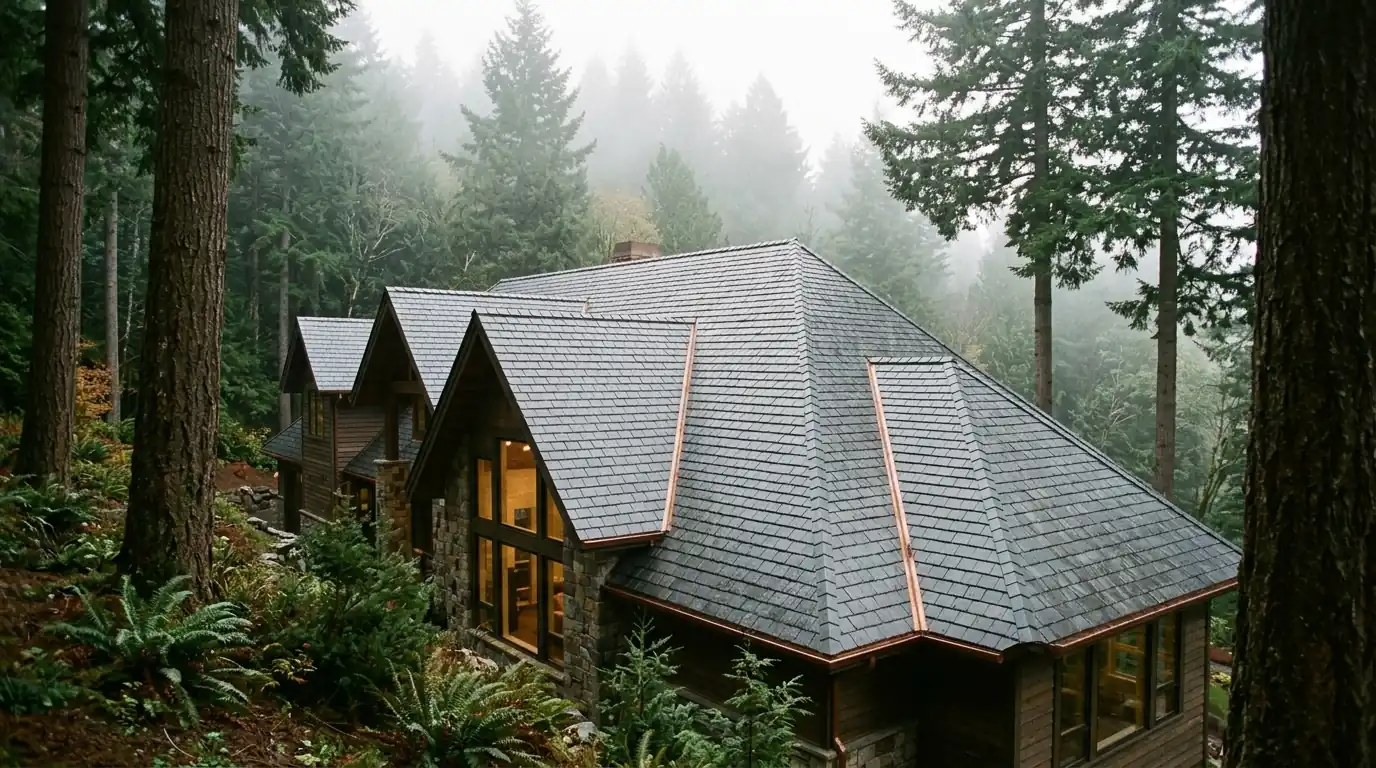
Synthetic slate costs more than architectural shingles but much less than natural slate, and it is light enough for most standard framing. It handles wind and rain well when installed over solid decking with full underlayment. Expect a longer install than a shingle roof, and confirm color and profile with your HOA first if you have one.
Synthetic slate is a roofing tile molded from polymers, rubber and other composites, shaped and colored to look like split stone. It is installed one piece at a time like real slate, with staggered joints and a deep shadow line, but it weighs far less and can be cut and nailed with roofing tools. For most homes here, that means a slate look without reinforcing the rafters.
We install synthetic slate on steeper roofs where the surface is visible from the street, often on custom homes, older houses being restored and homes where an HOA wants a high-end look. It is a different job from composite shingle roofing: each tile is placed by hand, valleys and hips take more detailing, and the deck and underlayment have to be in better shape because the roof is meant to last a long time.
How synthetic slate compares with real slate and shingles
Natural slate is heavy enough that many wood-framed homes need structural work before it can go on, and broken pieces are hard to match later. Synthetic slate weighs closer to a heavy architectural shingle, so the framing question rarely comes up. Individual tiles are also flexible enough to take a footstep or a falling fir cone without cracking, which matters on a roof that will need gutter and moss work over the years.
Compared with architectural shingles, synthetic slate costs a lot more and takes longer to install, and fewer crews do it regularly. What you get is a thicker, more dimensional surface with a stone look, wide color blends and tiles that do not shed granules into the gutters. Lifespan claims and manufacturer warranty terms vary by product, so we go over the specific product's terms with you before you choose.
What goes into a synthetic slate install
The tile itself is only part of the roof. Because each piece is nailed through a narrow area near its top, the deck has to be flat and solid, and the underlayment carries more of the waterproofing load in valleys and at walls. We plan the layout before the first tile goes on so courses stay straight across dormers and the hip and ridge pieces line up.
- Tear-off and full deck inspection
- Replacement of soft or uneven decking
- Ice and water membrane at eaves, valleys and walls
- Synthetic underlayment across the field
- Copper or painted metal valleys and step flashing
- Matching hip and ridge pieces with a vented ridge
Moss, wind and upkeep on composite slate
Synthetic slate is not immune to moss. On a shaded north slope under firs, moss will still find the joints between tiles, especially at the bottom edges where water lingers. The surface is smoother than a granulated shingle, so moss tends to take hold more slowly and brushes off more easily. Zinc or copper strips near the ridge help, and gentle cleaning is safer than pressure washing, which can scuff the tile surface.
Wind performance depends on fastening. Each tile is nailed in a set pattern, and for high-wind areas makers often call for extra nails or a different nail line. We follow the product's high-wind instructions on homes that face the Gorge winds. Hip and ridge pieces get the same care, because the ridge is where east wind usually starts peeling a roof apart.
Is synthetic slate right for your house
It suits steep roofs with lots of visible surface, homes with a historic or custom look, and owners who plan to stay long enough to get value from a higher upfront cost. It is a poor fit on low-slope roofs, which most slate products do not allow, and on a house you plan to sell soon, where the price gap over architectural shingles may not come back at sale.
Signs it may be time to consider synthetic slate
Shake roof at end of life
A curling, split cedar shake roof on a custom home often calls for a replacement with a similar high-end look.
Framing too light for slate
If you have been told your rafters cannot carry natural slate, a lighter composite tile avoids structural work.
Granules filling the gutters
Heavy grit in gutters from an aging shingle roof means a full replacement is coming and the material choice is open.
Broken natural slate pieces
Cracked or slipped real slates that are hard to match can be replaced with a full composite slate roof.
HOA prefers upscale looks
Some HOAs prefer slate, shake or tile looks, and composite slate may fit those guidelines once they approve the product.
Steep, visible roof slopes
A tall, steep roof seen from the street shows off a dimensional tile better than a flat-looking shingle.
How we handle synthetic slate roofing
Inspect and measure
We check pitch, deck condition and framing, measure every slope, and photograph dormers, chimneys and skylights that affect the tile layout.
Pick product and color
We bring tile samples and color blends to the house, and you confirm the choice with your HOA before we order material.
Tear off and prepare
The old roof comes off, soft decking is replaced, and membrane and underlayment go down the same day before any rain arrives.
Lay out and install tiles
We snap course lines, install metal valleys and flashing, then nail each tile by hand to the maker's fastening pattern.
Ridge, cleanup and walkthrough
Hip and ridge pieces finish the roof, magnets sweep the yard for nails, and we go over photos of the finished work with you.
What synthetic slate roofing costs
Synthetic slate is one of the higher-priced roofing choices, mainly because of the tile cost and the slower, hand-placed install. Price depends on pitch, the number of valleys and dormers, and how much decking needs replacing. These are typical ranges for Vancouver and the Portland metro; the real number comes after we look at the roof and measure it.
| Job | Typical range |
|---|---|
| Installed, per square (100 sq ft) | $1,085 to $1,740 per square |
| Typical 2,000 sq ft roof area | $23,600 to $37,850 |
| Large or complex custom home roof | $39,400 to $68,750 |
| Copper valleys and flashing upgrade | $2,860 to $7,215 |
Roof pitch, the number of hips, valleys and dormers, and the amount of rotted decking under the old roof move the price most. See every service side by side in the roofing price guide.
Synthetic slate on Vancouver and Camas homes
We see the most interest in synthetic slate on custom homes along the Columbia, on Prune Hill in Camas, and in established Felida neighborhoods where 1980s and 1990s cedar shake roofs are reaching the end of their life. Owners there often want more depth than a standard shingle, and the lighter weight means no framing changes on houses built for shake. Many of those neighborhoods have HOAs, so we help pull product details for the approval request.
Our climate shapes the install. Long wet stretches from October through May mean we plan tear-offs in dry windows and keep the deck covered every night. Homes on the east side, in Camas and Washougal, get the high-wind nailing pattern, and shaded slopes under Douglas firs get zinc strips near the ridge to slow moss in the joints.
Synthetic Slate Roofing questions
How long does a synthetic slate roofing install take on a Vancouver home?
Most homes take one to three weeks, compared with a few days for a shingle roof. Each tile is placed and nailed by hand, and valleys, dormers and chimneys need careful flashing. Rain can add days, since we only tear off as much as we can dry in and cover the same day.
Is synthetic slate roofing heavy enough to need extra framing?
Usually not. Most synthetic slate weighs about as much as a heavy architectural shingle, far less than natural slate or concrete tile, so standard framing handles it on most homes. We still check the rafters and decking during the inspection, especially on older houses, and tell you if anything needs reinforcing.
Will moss grow on synthetic slate roofing in the Northwest?
It can. Moss grows slower on the smoother composite surface than on granulated shingles, but shaded joints under firs still collect it. Zinc strips near the ridge, clear gutters and valleys, and a gentle brush cleaning every few years keep it under control. Avoid pressure washing, which can scuff the tile surface.
Can synthetic slate roofing replace an old cedar shake roof?
Yes, and it is one of the most common reasons owners choose it. Shake roofs often sit on spaced boards, so we add solid sheathing over or in place of them before installing the tiles. The result keeps a high-end look and works with many HOA guidelines, though you should confirm the product with your HOA first.
Work that often goes with it
Cedar Shake Roofing
Repair, partial replacement and full new cedar shake roofs, with proper interlayment, spacing and ventilation for wet winters.
See the detailsRoof Replacement
Full tear-off and replacement with new underlayment, flashing, vents and your choice of shingle, metal or other roofing.
See the detailsCedar Shake to Composite Conversion
Tear off a worn cedar shake roof and replace it with architectural composite shingles over new solid decking and underlayment.
See the detailsSynthetic Slate Roofing around Vancouver
Our crews do this work across Clark County and the Portland side, including:
Call about synthetic slate roofing
Phones are answered 24/7. Tell us what you are seeing and we will set a time to look.