Removing old chimneys and patching the roof in Vancouver, WA
An old brick chimney you no longer use can still crack, shed mortar and leak at the flashing, and it costs money to keep up every few years.
- 24/7 phones
- Gutters, skylights and roofline
- Vancouver office on Main St
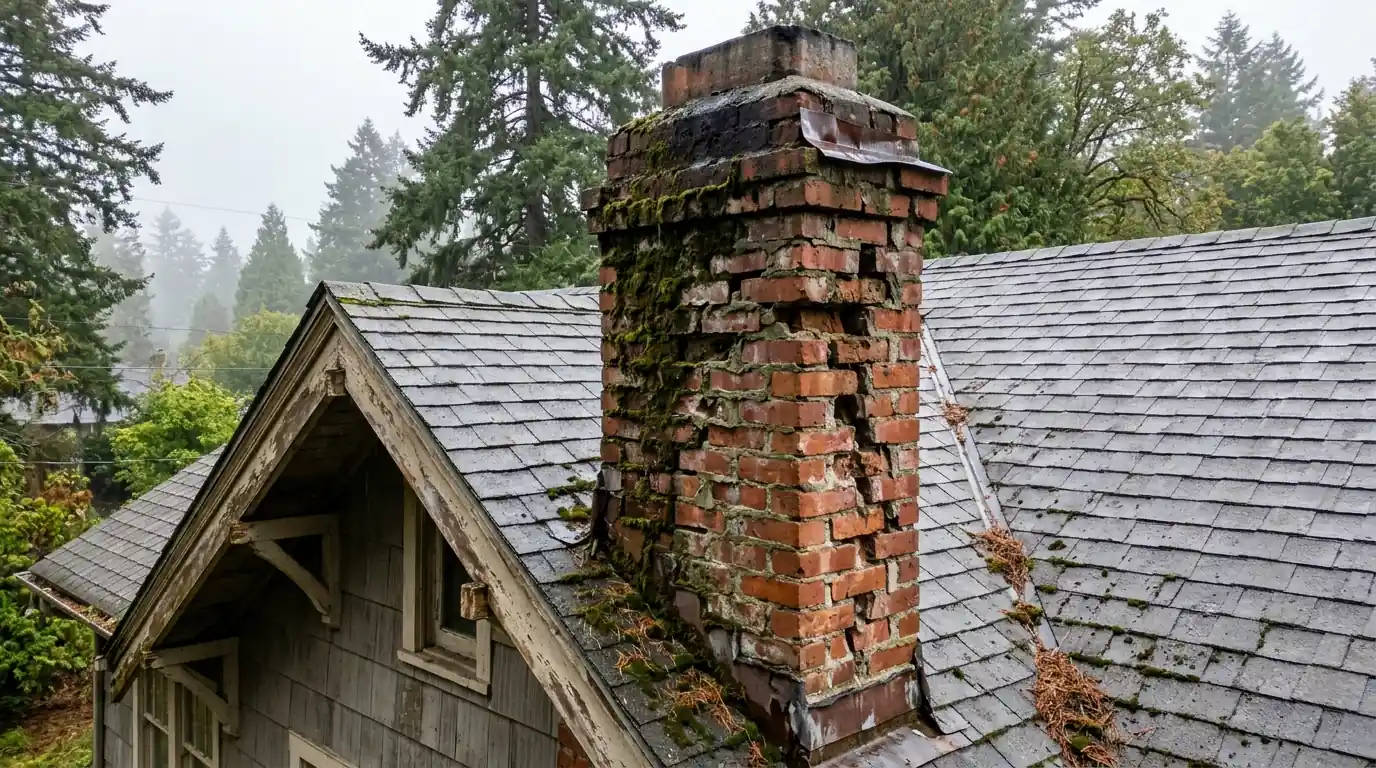
Chimney removal and roof patch means taking an unused chimney down to below the roof deck, capping the remaining masonry, framing and decking over the hole, and shingling the patch to blend in. It removes a common leak point and ends chimney upkeep. We first confirm no active appliance vents through it, since those need a new vent route.
Many older homes have a brick chimney that has not held a fire in decades. The furnace went to a sealed vent, the fireplace got a gas insert or was closed off, and the chimney just sits there. Meanwhile, its mortar keeps eroding, its crown cracks, and the flashing where it meets the roof gets older every winter. A chimney that does nothing still needs maintenance, and it is one of the most common leak sources on older roofs.
Removing it below the roofline takes that maintenance off the list. We take the chimney down brick by brick to below the roof deck or into the attic, cap what remains, then frame across the opening, add new decking and underlayment, and shingle it in to match the roof. From the street, the chimney simply is not there anymore, and the roof has one less spot to leak.
When removing a chimney makes sense
Removal is worth thinking about when the chimney no longer vents anything and is costing you money. Common signs are a cracked crown, spalling bricks, loose mortar, a leaning stack or flashing that has been patched over and over. Rebuilding the top of a chimney and reflashing it can cost nearly as much as taking it down, and the repaired chimney still needs care down the road. Taking it down ends that cycle.
Removal is also common during a reroof. With the old shingles off, taking down a chimney and decking over the hole fits right into the job, and the new roof goes on with no chimney flashing at all. Some homeowners keep the lower part of the chimney inside the house as an exposed brick wall, while removing the part above the attic and roof. That keeps the look inside and ends the leaks outside.
What the job includes
We plan the job before the first brick comes down. That includes checking for any flue still in use, protecting the roof and yard from falling debris, and deciding how far down to take the masonry. Most removals stop just below the roof deck, inside the attic, though some go down to the ceiling or further if the homeowner wants the space back. We lower brick in buckets or down a chute, never by tossing it off the roof.
- Checking for active flues and venting
- Hand removal of brick to below the roof deck
- Capping the remaining masonry inside the attic
- Framing and new decking across the opening
- Underlayment and shingles woven into the roof
- Hauling away brick, mortar and old flashing
If a furnace or water heater still uses it
Many chimneys that look unused still carry an exhaust flue for a gas furnace or water heater. You cannot just remove that chimney and cover the hole. The appliance needs a new vent path, usually a metal vent pipe through the roof with its own flashing and cap, or a sidewall vent if the appliance is replaced with a sealed, high-efficiency unit. That venting work has to be done correctly for safety.
We check for active flues on the first visit by looking in the attic, the basement and at the appliances themselves. If one is still in use, we will tell you plainly and explain the options. In many cases, replacing an aging water heater or furnace with a direct-vent unit at the same time makes the chimney removal much simpler. We coordinate the timing so the house is never without heat or hot water for long.
Matching the patch to the roof
The roof patch should be hard to spot. We weave new shingles into the existing courses rather than laying a square patch on top. Older shingles fade, so a perfect color match is not always possible, but placing the patch carefully and blending the edges makes it far less obvious. If a reroof is close, removing the chimney at that time gives a clean result with no patch at all.
Signs your chimney may be better gone
Crumbling mortar joints
Mortar washing out between the bricks means water is getting into the chimney and weakening it.
Cracked chimney crown
A cracked or broken top lets water straight into the masonry and the flue below it.
Recurring flashing leaks
Stains around the chimney that come back after repairs suggest the flashing and brick are both worn out.
Chimney no longer used
A chimney with no fireplace, stove or furnace using it is all upkeep and no benefit.
Leaning or loose stack
A chimney that leans or has loose bricks at the top is a safety risk during wind or a quake.
Moss on the bricks
Moss and staining on the shady side of the chimney mean the masonry is staying wet most of the year.
How we handle chimney removal & roof patch
Check flues and plan
We confirm nothing still vents through the chimney, look at the attic framing and decide how far down to take it.
Protect the property
Tarps and plywood go over the roof, gutters, windows and landscaping below to catch falling brick, mortar and dust.
Take it down by hand
Our crew removes the chimney brick by brick to below the roof deck, lowering debris safely to the ground.
Cap, frame and deck
We cap the remaining masonry in the attic, frame across the opening and install new decking flush with the roof.
Shingle and clean up
Underlayment and shingles are woven into the existing roof courses, and all brick, mortar and debris is hauled away.
Typical chimney removal and roof patch costs
Chimney removal costs depend on the chimney's size, how far down it comes, its height above the roof and how hard it is to get debris to the ground. A short single-flue chimney on a one-story home is a modest job. A tall, wide stack on a steep two-story roof takes much longer. These are typical Vancouver-area ranges.
| Job | Typical range |
|---|---|
| Small chimney removed below roof, patched | $1,865 to $3,640 |
| Large or multi-flue chimney, patched | $3,480 to $6,750 |
| Removal done during a full reroof | $1,290 to $2,860 |
| New metal vent for a remaining appliance | $565 to $1,380 |
Chimney size and height, steep or tall roofs, removal depth and any venting changes for appliances move the price most. See every service side by side in the roofing price guide.
Old chimneys on Vancouver's older homes
Early 1900s houses and Craftsman bungalows near downtown Vancouver, in Hough, Arnada and the Esther Short area, often have original brick chimneys that have been through a century of wet winters. Many were built for wood or coal heat that ended long ago. Their mortar has been soaked and dried thousands of times, and the shady sides grow moss under the firs. In mid-century neighborhoods like Hazel Dell, a lot of chimneys served oil furnaces that were later replaced, leaving an empty flue behind.
Old masonry also carries risk in a strong wind or an earthquake. Taking down a loose, unused stack above the roofline removes that risk along with the leak point. We check with the local building department and pull permits where the work requires one. On the Oregon side, Portland's older east-side neighborhoods have many of the same century-old chimneys, and we handle removals there as well.
Chimney Removal & Roof Patch questions
Do I need a permit for chimney removal and roof patch work?
It depends on the city or county and how much is being removed. Some areas require a permit for structural or roofing changes, and appliance venting changes may also need one. We check with the local building department before starting and pull permits where they are required.
How long does chimney removal and roof patch take?
Most single-flue chimneys come down and get patched in one to two days. Larger or taller chimneys, multi-flue stacks or jobs that remove masonry down into the house can take longer. The roof is decked and covered at the end of each day so the house stays dry even if rain moves in.
Can chimney removal be done if my water heater still vents through it?
Not without a new vent route first. A gas water heater or furnace that uses the chimney needs a safe new exhaust path, such as a metal vent pipe through the roof or a direct-vent unit. We check for active flues on the first visit and explain the options before planning the removal.
Will the roof patch after chimney removal match my shingles?
We weave new shingles into the existing rows rather than laying a square patch on top. Older shingles fade, so the color may be slightly different at first, but weathering usually narrows the gap. If you are replacing the roof soon, removing the chimney then avoids any patch at all.
Work that often goes with it
Chimney Flashing & Cricket Repair
New step, counter and apron flashing around brick or framed chimneys, plus crickets that stop water pooling behind them.
See the detailsRoof Decking Replacement
Replacement of soft, rotted or delaminated roof sheathing under the shingles, from a single sheet to whole slopes.
See the detailsRoof Replacement
Full tear-off and replacement with new underlayment, flashing, vents and your choice of shingle, metal or other roofing.
See the detailsChimney Removal & Roof Patch around Vancouver
Our crews do this work across Clark County and the Portland side, including:
Call about chimney removal & roof patch
Phones are answered 24/7. Tell us what you are seeing and we will set a time to look.