Help with a roof damage claim in Vancouver, WA
A windstorm or falling limb damaged your roof, and now you need clear proof of the damage and a repair scope your home insurer can work from.
- 24/7 phones
- Inspections and roof care
- Vancouver office on Main St
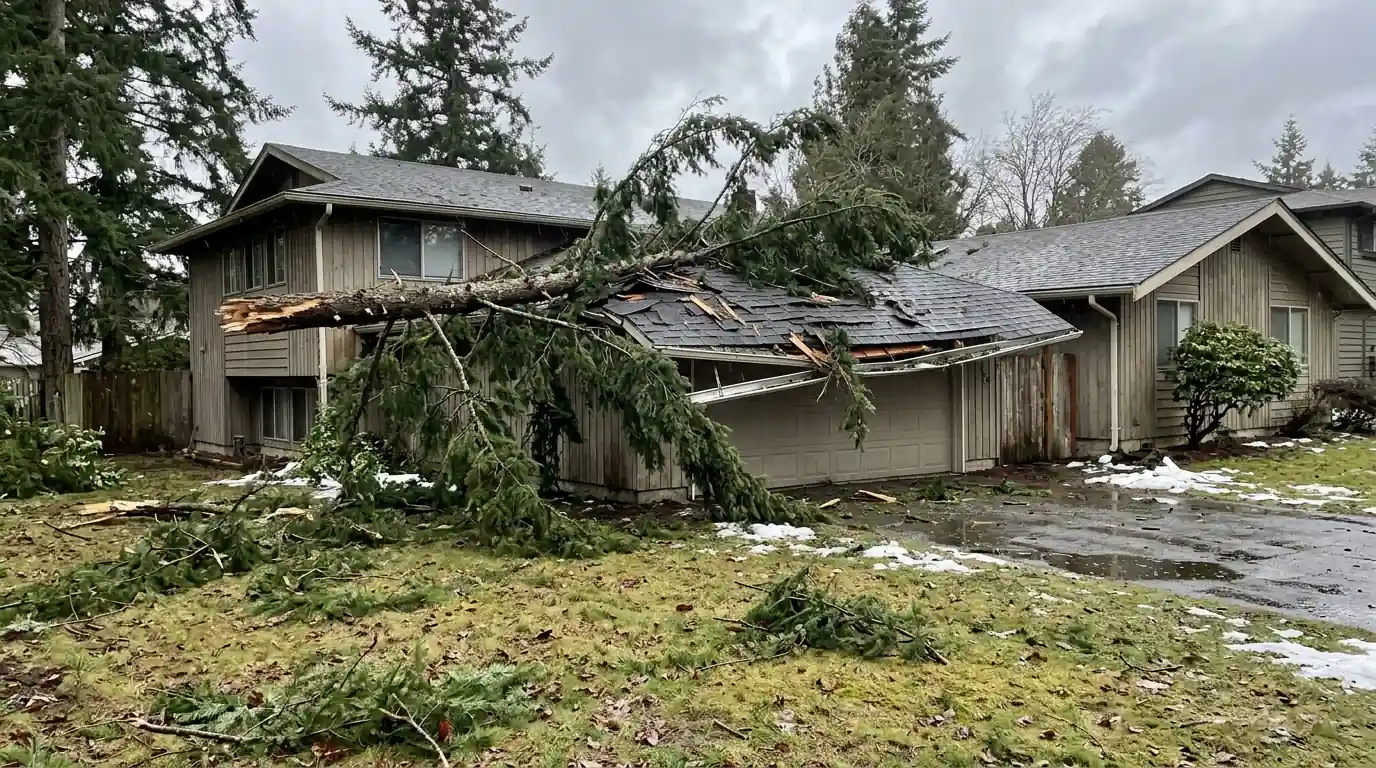
Our roof insurance claim help means documenting storm or tree damage with dated photos and measurements, writing a detailed repair scope, and meeting your adjuster on site if you want us there. You file the claim and handle your policy questions with your insurer. We handle the roof facts, temporary protection and the repair once the claim is settled.
After a storm, homeowners face two jobs at once: keeping water out of the house and dealing with their homeowner's insurance company. We help with both. Our crews secure the roof when needed, then document the damage with dated photos, measurements and notes. We write a detailed repair scope that lists the materials and labor needed to restore the roof, which you can share with your insurer and the adjuster assigned to your claim.
We are roofers, not public adjusters or attorneys. We do not negotiate your settlement or interpret your policy. What we do is show clearly what was damaged, what caused it as far as a roofer can tell, and what it takes to fix it properly. When the adjuster visits, we can meet them on the roof so they see the same damage we found.
What kinds of roof damage claims we see
Most roof claims around here come from wind and trees. Strong east winds lift shingle tabs, peel ridge caps and tear off sections of roofing. Falling fir limbs puncture decking, crack rafters and break shingles across a whole slope. Ice storms, while uncommon, bring down limbs and leave ice dams at the eaves. Heavy atmospheric-river rain can also expose weaknesses that were already there, which matters for how a claim is handled.
Insurers generally treat sudden damage differently from slow wear. A slope that blew off during a storm is different from shingles that have been failing for years. Our job is to tell those apart honestly. We photograph the fresh damage, note any older wear we see, and keep the two clearly separated in our notes. That honesty helps the claim move forward, and it protects you from later disputes over what caused what.
What our documentation includes
Adjusters see many claims, and a clear, organized package makes their job easier. We give you a set of files you can send to your insurer, keep for your records and use if questions come up later. Everything is dated and tied to your address, and the photos show both close detail and the wider slope so the location of each problem is clear to someone who has not been on the roof.
- Dated photos of each damaged area, close and wide
- Roof measurements and slope-by-slope notes
- Line-item repair scope with materials and labor
- Photos of interior water damage from the roof
- Notes on temporary tarping or emergency work
- Product details for matching existing shingles
Meeting the adjuster on the roof
Adjusters often inspect quickly, sometimes from the ground or with a drone. When you want us there, we meet them at the house and walk the roof together. We point out each damaged area we found, explain how it affects the roof system, and answer roofing questions. If the adjuster sees something differently, we discuss it based on what is on the roof, not on opinion. Many claims go more smoothly when the roofer and adjuster look at the same damage at the same time.
Matching is a common topic. If wind damaged one slope and the shingle line is discontinued, a patch may not match the rest of the roof. We document the shingle type and whether a match is available, so the insurer has the facts. Whether the policy covers matching is between you and your insurer, but clear information on the product makes that discussion easier. We include the shingle name and color where we can identify it.
Protecting the roof while the claim is open
Most policies expect homeowners to prevent further damage after a loss. That usually means getting a tarp on the roof or sealing an opening quickly. We handle emergency tarping and temporary repairs, document them with photos and keep receipts, which you can submit with your claim. Waiting for an adjuster before covering an open roof can let more water in. Keeping the house dry first, then waiting for the claim, is almost always the right order.
Signs your roof damage may be a claim
Shingles in the yard
Pieces of shingle or ridge cap on the ground after a windstorm usually mean the roof lost coverage somewhere.
Limb on the roof
Any tree limb that struck the roof can crack decking or rafters even if the shingles look intact.
New leak after a storm
A ceiling stain that appears right after a storm is a strong sign of fresh roof damage.
Creased or lifted tabs
Shingle tabs with a crease line across them were bent back by wind and have lost their seal.
Dented metal or vents
Fresh dents in vents, flashing or gutters can show impact damage from falling branches or ice.
Exposed underlayment
Visible felt or bare decking where shingles used to be means the roof needs protection right away.
How we handle roof insurance claim help
Secure the roof
If water is getting in, we tarp or temporarily seal the damaged area first and photograph it before and after.
Document the damage
Our roofer photographs each damaged area close up and wide, takes measurements and notes fresh storm damage separately from older wear.
Write the scope
We prepare a line-item repair scope listing materials, labor and any matching issues for you to send to your insurer.
Meet the adjuster
If you want us there, we walk the roof with the adjuster and show each damaged area we documented.
Complete the repair
Once the claim is settled, we schedule and complete the roof repair or replacement and provide final photos for your records.
Costs during a roof claim
Your deductible and coverage are set by your policy and your insurer, not by us. These are typical ranges for the roofing work that often comes up in a storm claim around Vancouver. The real repair price depends on the damage we find, and we put every item in the written scope so you can see exactly what it includes.
| Job | Typical range |
|---|---|
| Emergency tarping after storm damage | $465 to $1,390 |
| Wind damage repair, one slope | $1,180 to $4,260 |
| Limb impact repair with decking | $2,370 to $7,840 |
| Full roof replacement after major loss | $13,950 to $32,600 |
Decking and rafter damage, discontinued shingles that require more replacement, and steep roofs raise storm repair costs. See every service side by side in the roofing price guide.
Storm damage patterns in Clark County
Most roof claims we document here come from the cold east winds that blow out of the Columbia River Gorge in fall and winter, and from Douglas fir limbs that come down in those same storms. East Vancouver, Camas, Washougal and Fishers Landing see the strongest gusts, and that is where we find the most lifted tabs and peeled ridge caps. In wooded neighborhoods like Felida and Salmon Creek, falling limbs are the bigger issue, often puncturing the deck and cracking rafters.
When an ice storm hits, damage tends to spread across the whole county at once and roofers get busy fast. Getting your roof tarped and documented early, then filing the claim, keeps your place in line and limits interior water damage. Photos taken right after the storm, before cleanup, also help show what happened. If you can safely take a few pictures from the ground of debris and visible damage, keep them with our documentation.
Roof Insurance Claim Help questions
Do you file the roof insurance claim for me?
No. You file the claim with your insurer and handle policy questions with them. We provide the roofing facts: dated photos, measurements, a written repair scope and temporary protection. We can also meet your adjuster on the roof. This keeps the claim in your hands while giving it clear, accurate roof documentation.
Should I tarp my roof before the insurance adjuster comes?
In most cases, yes. Policies generally expect you to prevent further damage after a loss. We photograph the damage before and after tarping so the adjuster can still see what happened. Leaving a roof open while waiting for an inspection can let much more water into the house.
Will my insurer cover an old roof that leaked during a storm?
That depends on your policy and on whether the damage was sudden or from long-term wear, which is your insurer's call. We document fresh storm damage separately from older wear so the facts are clear. Being honest about both helps the claim move forward without later disputes.
Can you meet the adjuster during my roof damage claim inspection?
Yes, if you want us there. We walk the roof with the adjuster, show each damaged area we documented and answer roofing questions. Meeting on site often helps both sides see the same damage at the same time, which can make the process smoother.
Work that often goes with it
Wind & Storm Damage Repair
Repairs after Gorge windstorms and heavy rain: lifted tabs, peeled ridge caps, torn flashing and storm-loosened shingles.
See the detailsFallen Tree Roof Damage Repair
When a fir limb or whole tree hits your roof, we secure the opening, repair the framing and decking, and restore the roof.
See the detailsEmergency Roof Tarping
A properly fastened tarp that keeps rain out after storm or tree damage until the permanent roof repair can be done.
See the detailsRoof Insurance Claim Help around Vancouver
Our crews do this work across Clark County and the Portland side, including:
Call about roof insurance claim help
Phones are answered 24/7. Tell us what you are seeing and we will set a time to look.