Flat and low-slope roofs built to drain in Vancouver, WA
Water sits on a flat roof for days after every storm, and eventually it finds a seam, a crack or a corner where the membrane has pulled loose.
- 24/7 phones
- New roofs and materials
- Vancouver office on Main St
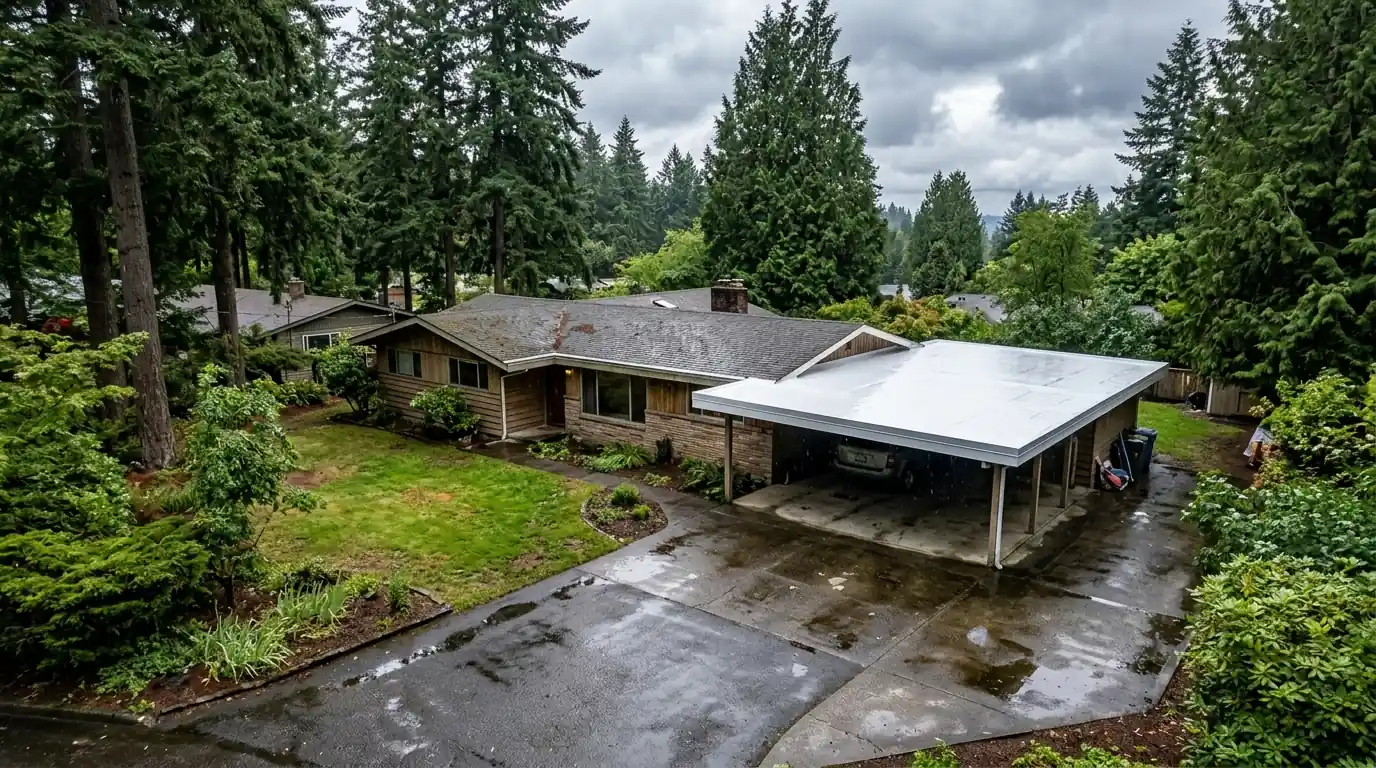
For most flat and low-slope roofs on homes in this area, a single-ply membrane like TPO or EPDM is a solid choice, installed over tapered insulation if the roof ponds. The most important part of the job is drainage: a membrane under standing water ages faster no matter which product you choose, so we fix the slope first.
Shingles cannot keep water out on a roof that is nearly flat. Below a certain pitch, rain moves too slowly and wind pushes it uphill under the shingle laps. These roofs need a continuous membrane instead. Around Vancouver we see them on mid-century ranches with flat sections over carports, modern homes with low-slope rooflines, porch roofs tied into a second story, and garage tops that double as decks.
Our crews install and repair the common membrane systems: single-ply TPO and PVC, EPDM rubber, and modified bitumen. Each has strengths. The right one depends on how much foot traffic the roof gets, how it drains, what it ties into, and whether the roof is visible from upstairs windows. Torch-applied systems have their own page, since that work carries its own safety steps.
Why flat roofs leak
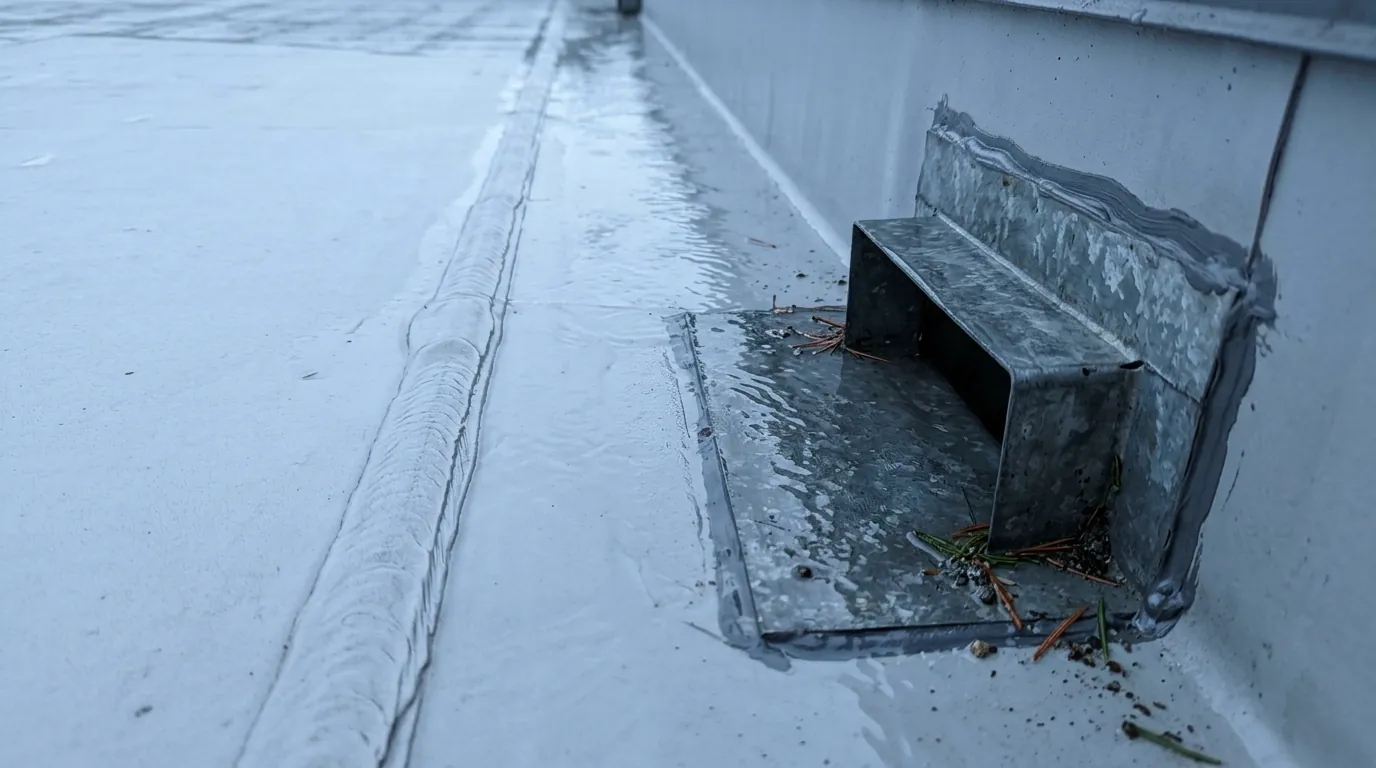
The main enemy of a flat roof is standing water. A low spot that holds an inch of water after rain stresses seams, grows algae, collects fir needles and turns to ice on cold nights. Over time the membrane wears faster in that spot than anywhere else. Ponding usually comes from sagging framing, a deck that was built dead level, or drains and scuppers clogged with needles and leaves. Fixing the cause matters more than patching the symptom.
The second common source is the edges. Where a flat roof meets a wall, a parapet or a pitched roof above it, the membrane has to turn up and be flashed. Those transitions are where shrinking rubber pulls away, sealant cracks and wind lifts loose corners. Penetrations such as vent pipes, skylight curbs and HVAC stands are the third weak point, and each needs its own detail rather than a smear of caulk.
Flat roof systems we install
Choosing a membrane is about matching it to the roof's use. A deck over a garage needs a surface that can take furniture and foot traffic under protective pavers. A hidden roof over a back addition may only need a reliable rubber sheet. We explain the tradeoffs for each roof and price more than one option where it makes sense, so you can weigh cost against expected service life and upkeep.
- TPO single-ply, heat-welded seams, white or gray
- PVC membrane for decks and chemical resistance
- EPDM rubber, fully adhered with taped seams
- Self-adhered modified bitumen, no open flame
- Tapered insulation to build slope toward drains
- New scuppers, drains and edge metal
Fixing drainage before replacing the membrane
Putting new membrane over a roof that ponds just repeats the problem. Where the deck is flat or sagging, we install tapered insulation boards cut to create a gentle fall toward the drains. On small roofs we sometimes add crickets, which are small raised triangles that divert water around a curb or toward a scupper. When framing has sagged badly, we open the deck and sister the rafters before covering it.
We also look at where the water goes after it leaves the roof. Scuppers that dump onto a lower roof, or downspouts that empty against the foundation, cause trouble of their own. Larger scuppers with conductor heads, or a new downspout run, are often part of the job. Owners are sometimes surprised that the drainage plan matters more to roof life than the brand of membrane. A well-drained roof dries out between storms, and that alone adds years.
Repair or replace a flat roof
A flat roof with one leaking seam or a single punctured spot is a good repair candidate. We clean the area, patch with matching membrane and heat-weld or adhere it in place. Replacement makes sense when the membrane is cracked across the field, seams are failing in several places, the insulation below is wet, or the roof has been coated and patched so many times that leaks cannot be traced. We use a moisture probe to check for wet insulation before deciding.
Warning signs on a flat or low-slope roof
Ponding after 48 hours
Water still sitting two days after rain shows the roof is not draining and the membrane is aging faster there.
Blisters in the membrane
Raised bubbles mean moisture or air is trapped under the surface and seams nearby may be letting go.
Seams lifting at edges
Open laps along walls or edges let wind push rain straight under the roofing membrane.
Cracking or alligatoring
A cracked, scaly surface on older roofs shows the material has dried out and lost its flexibility.
Ceiling stains under flat sections
Water marks below a carport roof or addition often point to wet insulation spreading under the membrane.
Clogged scuppers
Needles and leaves blocking scuppers or drains back water up against walls and flashings during storms.
How we handle flat & low-slope roofing
Survey the roof
We map ponding areas, check seams, edges and penetrations, and probe for wet insulation below the membrane in several spots.
Plan the drainage
We decide whether tapered insulation, crickets or new scuppers are needed, and pick the membrane that suits the roof's use.
Strip and prep
Old membrane and wet insulation come off, the deck is checked and repaired, and new insulation boards are fastened down.
Install the membrane
The membrane is rolled out, welded or adhered, flashed up walls and around penetrations, and finished with edge metal.
Test and walk through
We probe every welded seam, flood-test small areas where practical and walk you through care for the new roof.
Typical flat roof costs
Flat roof prices vary more than shingle prices because tear-off depth, insulation and drainage work change from roof to roof. These are typical ranges for residential flat and low-slope sections around Vancouver. We confirm your price after inspecting the roof, checking for wet insulation and measuring how much taper is needed.
| Job | Typical range |
|---|---|
| Seam or puncture repair | $415 to $1,180 |
| Small porch or carport roof | $2,960 to $6,840 |
| Addition or garage roof, full replacement | $7,350 to $15,600 |
| Tapered insulation added, per roof | $1,240 to $4,370 |
Wet insulation removal, framing repairs, wall flashing height and deck-grade membranes raise flat roof prices the most. See every service side by side in the roofing price guide.
Flat roofs and Clark County's long rainy season
Here, a flat roof is tested by months of steady light rain rather than short, heavy bursts. From October through May, a roof that ponds may never fully dry, so algae and moss grow on the membrane and in the low spots. Fir needles drift into corners and scuppers and pack into wet mats. Many mid-century homes in Hazel Dell, Minnehaha and Lake Shore have flat or very low sections over carports and family-room additions, and we often find those were built dead flat with no taper at all.
On newer homes with modern low-slope rooflines in Camas or Ridgefield, the issue is usually details at walls and windows. We check those transitions carefully, since a small gap there can soak a wall for an entire winter before it shows inside. Where a low-slope roof meets a taller wall, we also make sure the siding has enough clearance above the membrane, so water does not wick up behind it and rot the sheathing. Small details like that decide whether the roof stays dry.
Flat & Low-Slope Roofing questions
Which membrane is best for a flat or low-slope roof on a house?
There is no single winner. TPO is light-colored, heat-welded and economical. EPDM is flexible and has a long track record. PVC handles decks and grease well. Self-adhered modified bitumen avoids open flame. We match the membrane to how the roof drains, how it is used and what it ties into.
Can a flat roof be repaired instead of replaced?
Yes, when the damage is limited to a seam, a puncture or one flashing. We patch with compatible membrane and seal it properly. If the membrane is cracked across the field or the insulation underneath is wet, a repair will not last, and replacing the roof is the better use of money.
How do you stop water from ponding on a low-slope roof?
We add slope. Tapered insulation boards build a gentle fall toward drains or scuppers, and crickets steer water around curbs. Where framing has sagged, we repair it before covering. We also clear and resize drains so water leaves the roof quickly instead of backing up.
Can I walk on or put furniture on my flat roof deck?
Only if the roof was built for it. Deck roofs need a membrane suited to foot traffic plus a protective layer such as pavers on pedestals. Standard single-ply roofs can be damaged by chairs, grills and planters. If you plan to use the roof as a deck, tell us before we choose the system.
Work that often goes with it
Torch-Down Roofing
Two-ply torch-applied modified bitumen for flat roofs, decks over living space and tie-ins, installed with strict fire-safety steps.
See the detailsRoof Coatings
Silicone and acrylic coatings rolled over sound low-slope and metal roofs to seal small leaks and add years before a tear-off.
See the detailsPatio Cover & Porch Roofing
Roofs over porches, patio covers and covered decks, tied into the house wall with flashing that keeps water out of the siding.
See the detailsFlat & Low-Slope Roofing around Vancouver
Our crews do this work across Clark County and the Portland side, including:
Call about flat & low-slope roofing
Phones are answered 24/7. Tell us what you are seeing and we will set a time to look.