Finding and fixing roof leaks in Vancouver, WA
A stain keeps coming back on the ceiling, or water drips only during certain storms, and nobody has been able to find where it is actually getting in.
- 24/7 phones
- Roof repair
- Vancouver office on Main St
Most roof leaks come from openings and joints, not the flat field of shingles: pipe boots, flashing, valleys, skylights and vents. In the Vancouver area, a typical leak repair runs $415 to $1,290 once the source is found. Tracing the water back to the true entry point is what keeps the leak from coming back.
Roof leaks are rarely where they look. Water enters at one spot, runs along the top of a rafter or the underside of the decking, and drips through the ceiling several feet away. That is why so many leak repairs fail: someone patches the area directly above the stain while the real entry point keeps letting water in. Our leak repair work starts with tracing, not guessing.
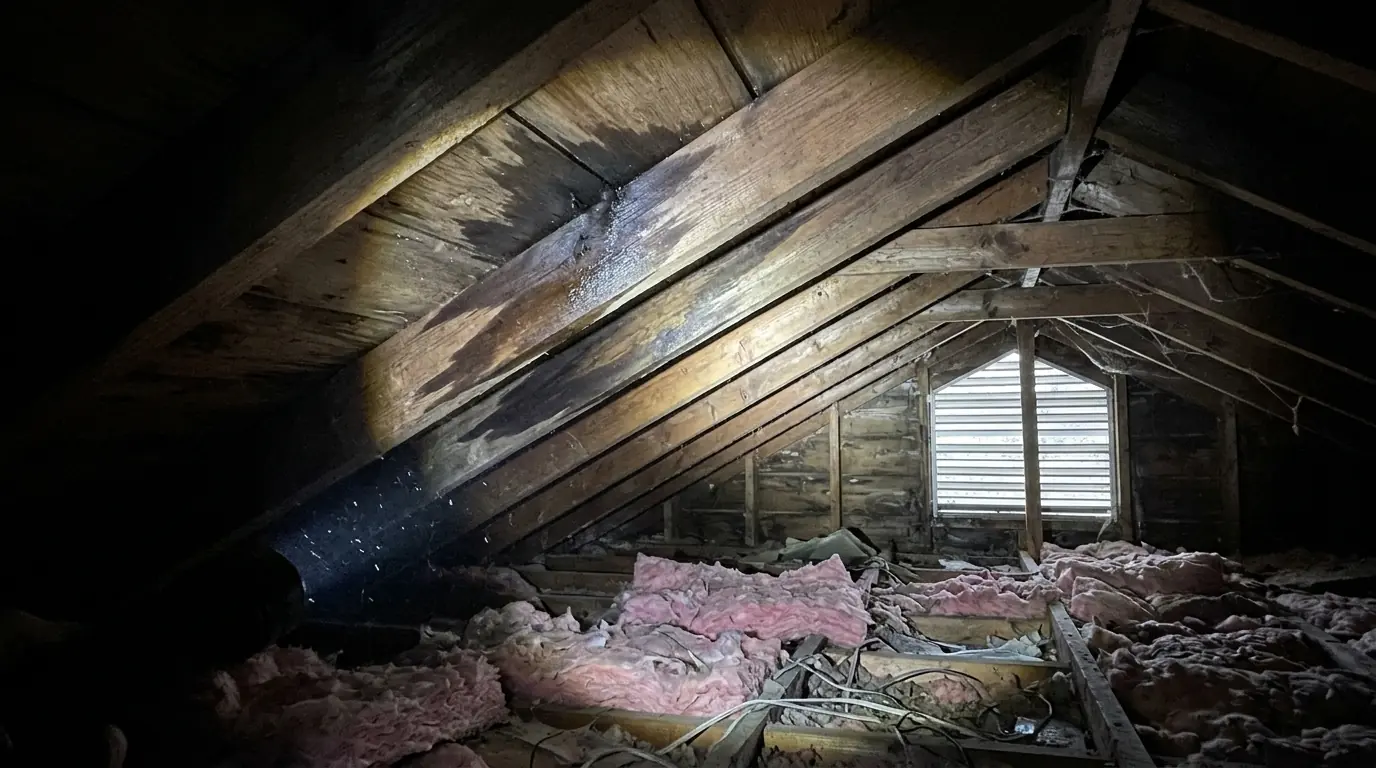
We look for water trails, darkened wood and nail tips with rust in the attic, then match them to what we see on the roof. Common culprits include pipe boots, step flashing, chimney flashing, valleys and exposed nails. Once we find the entry, we fix it and confirm that the path is dry. If the source is not obvious, we may run a controlled water test.
Why the stain is rarely under the leak
Water follows gravity and surface tension. Once it gets past a shingle or flashing, it moves downhill along the underlayment, wicks along the decking or runs down the side of a rafter until it finds a low point. On a typical Vancouver ranch with a shallow attic, the drip can show up six or eight feet from where the water entered. On a vaulted ceiling, it may travel even farther before it shows.
Wind changes the picture too. A leak that shows up only during a strong east wind usually means rain is being pushed sideways under shingle tabs, past a ridge vent or behind wall flashing, not that there is a hole in the roof. A leak that appears only in long, steady rain points more toward a worn valley, a split pipe boot or a flashing seam that slowly lets water through.
How we trace a leak to its source
We start in the attic when there is safe access, because that is where the water leaves its trail. We look for stained wood, wet insulation, rusty nail tips and dark streaks on rafters. We measure from fixed points, like a vent pipe or a wall, so we can find the same spot from the roof. Up top, we check every opening and seam uphill of that point before we decide what to fix.
- Attic inspection for stains and wet insulation
- Measured layout from attic to roof surface
- Check of every penetration uphill of the stain
- Controlled water test for hard-to-find leaks
- Moisture check after the repair
The parts that leak most often
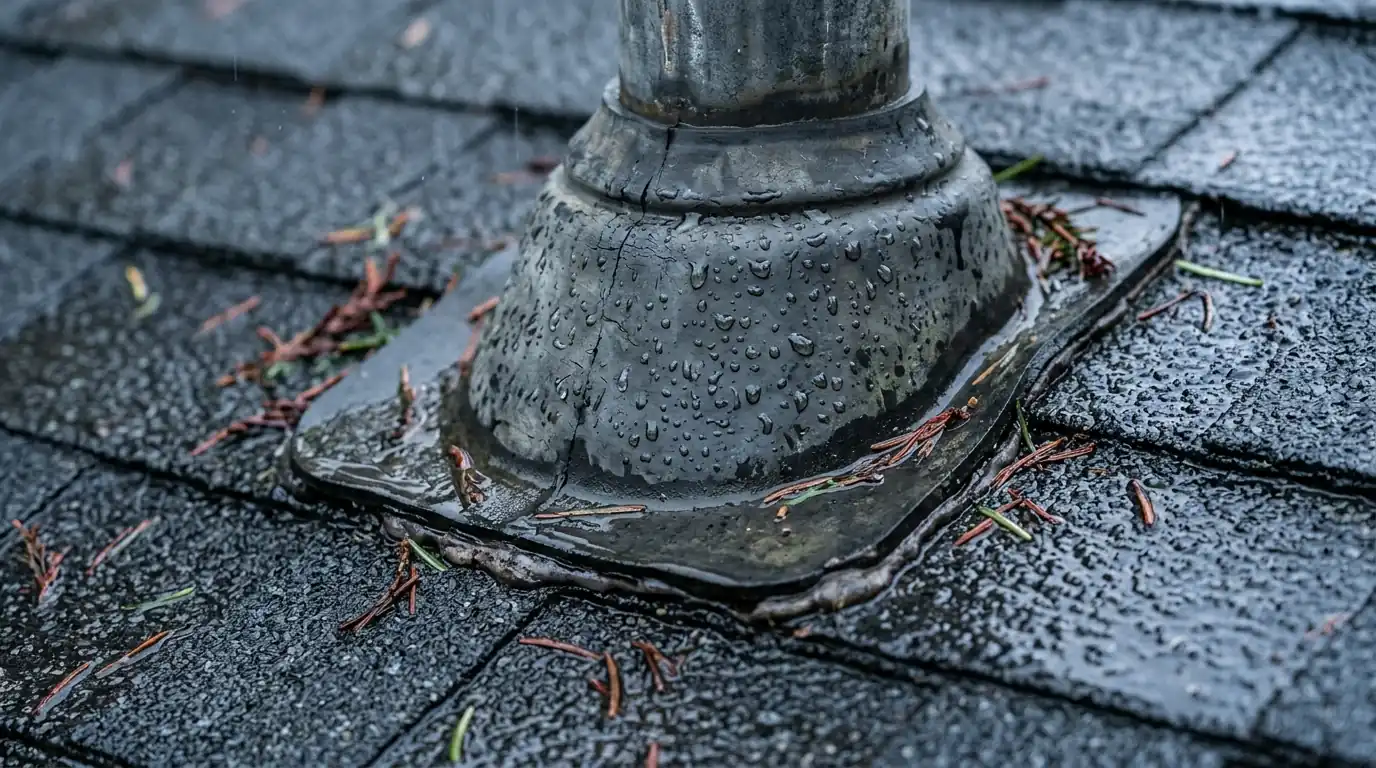
Pipe boots are near the top of the list. The rubber collar around plumbing vents dries out and cracks after years of sun, and water runs straight down the pipe into the attic. Step flashing along walls, dormers and chimneys is next, especially where siding or stucco work disturbed it. Valleys, where two roof planes meet, carry more water than any other part of the roof and wear faster, particularly when fir needles pack in.
Other common sources include exposed nail heads that were never sealed, skylight curbs, bath and kitchen exhaust vents, and satellite dish mounts screwed straight through the shingles. Ice dams cause leaks in the occasional cold snap, but they are less common here than condensation. If your attic is poorly vented, moisture from the house can condense on the decking and drip, which looks like a leak but needs a ventilation fix instead.
When the leak is really a ventilation problem
Not every wet attic has a roof leak. In winter, warm, moist air from bathrooms, kitchens and laundry rises into the attic. If the attic does not vent well, that moisture condenses on the cold underside of the decking and drips onto insulation, often in many spots at once. We check for beads of water on nail tips, blocked soffit vents and bath fans venting into the attic. If that is the cause, we tell you and point you to a ventilation fix instead of selling a roof repair.
Signs you have a roof leak
Stain that keeps growing
A ceiling ring that gets bigger or darker after each storm means water is still getting in somewhere above it.
Drip only in wind
A leak that appears only during strong gusts often points to wind-driven rain under tabs, flashing or ridge vents.
Peeling paint near ceiling
Bubbling or peeling paint high on a wall can mean water is running down inside the wall from a flashing gap.
Musty attic smell
A damp, earthy odor in the attic or an upstairs closet is often the first sign of a slow leak or trapped moisture.
Rusty nail tips
Rust or dark rings around the nail points poking through the attic decking show repeated contact with water.
Water along a pipe
Moisture or staining around a plumbing vent pipe in the attic usually means the pipe boot on the roof has failed.
How we handle roof leak repair
Gather the leak history
On the call, we ask when the leak shows up, what weather brings it on, and where the stain is, which narrows down likely sources before we arrive.
Trace it in the attic
Our roofer follows the water trail on rafters and decking, marks the highest wet point, and measures it to a fixed reference.
Inspect the roof above
We check every pipe, vent, flashing seam, valley and nail head uphill of that point, and photograph anything suspect.
Repair the entry point
We replace the failed boot, flashing or shingles and seal the area properly, instead of smearing sealant over the symptom.
Confirm it is dry
Where it makes sense, we water-test the repaired area and recheck the attic, and we tell you what to watch for in the next storm.
Roof leak repair costs around Vancouver
Leak repair cost depends mostly on the source. A cracked pipe boot is a quick fix. A leak behind chimney flashing or in a worn valley takes more labor and material. The ranges below are typical for 2026 in the Vancouver and Portland-metro area. Your real price comes after we trace the leak and see the roof.
| Job | Typical range |
|---|---|
| Pipe boot or vent leak | $415 to $735 |
| Step or wall flashing leak | $585 to $1,290 |
| Valley or skylight leak | $740 to $1,960 |
| Leak with damaged decking | $1,180 to $2,870 |
The leak source, how much wood is damaged, and how steep or high the roof is move the price the most. See every service side by side in the roofing price guide.
How Vancouver weather finds every weak spot
Vancouver gets roughly 40 inches of rain a year, most of it from October through May, and much of it falls as long, light, steady rain. That kind of weather is hard on roofs in a quiet way: water sits on the surface for days, finds the smallest gap at a pipe boot or flashing seam, and slowly works inward. Then an atmospheric river or a hard Gorge wind arrives and pushes water sideways into places that stay dry the rest of the year.
Shade from tall firs keeps north slopes damp long after a storm, and moss growing on shingle edges lifts them enough to let water creep under. In older Hough and Arnada homes with plaster ceilings, a leak can run for weeks before a stain finally shows, which is why the attic is where we look first and why we ask how long the stain has been there.
Roof Leak Repair questions
Why does roof leak repair sometimes fail and the stain come back?
Usually because the patch went over the stain instead of the entry point. Water can travel several feet along the decking before it drips, so the real source is often uphill near a pipe, flashing seam or valley. Sealant smeared over a symptom can also crack within a season. Tracing the water first prevents repeat repairs.
Can you do roof leak repair when it is not raining?
Yes. Dry weather is actually better for the repair itself. To find the source, we use the attic trail, staining and rusty nails, and if needed, a controlled water test with a hose, running water over one section at a time while someone watches inside. That pinpoints the entry without waiting for the next storm.
How do I know if I need roof leak repair or attic ventilation work?
If water appears in one spot during rain, it is likely a leak. If you see droplets on many nail tips, damp insulation spread across the attic, or moisture on cold mornings without rain, condensation is the likelier cause. We check both during the visit and tell you which one you are dealing with.
Is roof leak repair urgent if the drip is small?
Yes. A small drip often means more water is soaking into insulation and wood than you can see. Over a Northwest rainy season, that can rot decking, stain drywall and grow mold in the attic. Fixing a pipe boot or flashing early usually costs a few hundred dollars, while waiting can multiply that.
Work that often goes with it
Pipe Boot & Roof Vent Repair
Replacement of cracked pipe boots, damaged box vents and leaking exhaust caps, the small openings behind many roof leaks.
See the detailsFlashing Repair
Repair and replacement of step, wall, headwall and drip-edge flashing where the roof meets walls, dormers and edges.
See the detailsAttic Ventilation
Balanced intake and exhaust venting that keeps attic air moving, cuts winter condensation and helps shingles last longer.
See the detailsRoof Leak Repair around Vancouver
Our crews do this work across Clark County and the Portland side, including:
Call about roof leak repair
Phones are answered 24/7. Tell us what you are seeing and we will set a time to look.