Rotted fascia and soffit repair for Vancouver, WA rooflines
Soft, peeling fascia boards and sagging soffit panels are signs that water has been getting behind the gutters or under the roof edge for a while.
- 24/7 phones
- Gutters, skylights and roofline
- Vancouver office on Main St
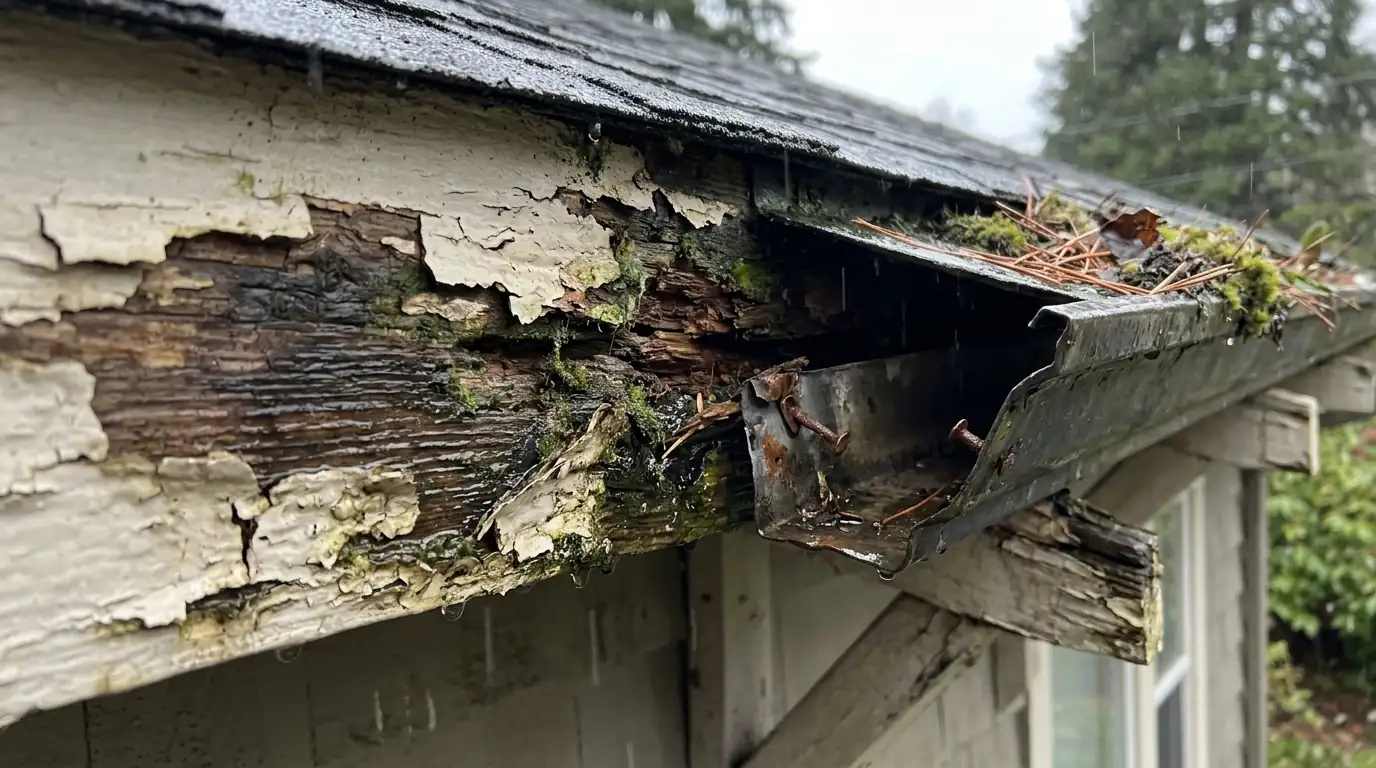
Fascia and soffit repair means cutting out rotted boards, checking the rafter tails behind them, installing new primed wood or wrapped trim, and restoring soffit venting. Most rot comes from water getting past the gutter or roof edge, so we fix the drip edge and gutter issues at the same time. Small sections can be patched; long runs often get replaced.
The fascia is the board that runs along the roof edge and holds the gutters. The soffit is the underside of the eave, between the fascia and the wall, and it usually carries the intake vents for the attic. Both live right where water leaves the roof, so they take a beating in a wet climate. When paint fails or gutters overflow, the wood soaks up water and starts to rot from the inside.
We treat fascia and soffit repair as roof-edge work, not just carpentry. Before we replace a board, we find out why it rotted. A missing drip edge, a gutter pitched the wrong way or a shingle overhang that is too short will rot the new board the same way. Fixing the cause along with the wood is what makes the repair last.
Why roof-edge wood rots
Most fascia rot starts with water getting behind the gutter. If the roof has no drip edge, or the drip edge does not reach into the gutter, water runs down the face of the fascia every time it rains. Overflowing gutters do the same thing from the other direction. Over a few winters the paint blisters, the wood darkens and softens, and the hanger screws lose their grip. By the time the gutter sags, the board behind it is often soft for several feet.
Soffit damage usually follows. Water that gets past the fascia runs back along the rafter tails and soaks the soffit panels from above. Plywood soffits delaminate and sag, and vented panels get stained and clogged. Animals take advantage of the soft spots too. Squirrels, birds and rats can chew or push through damaged soffit into the attic, which is one of the most common ways pests get into homes around here.
What we repair and replace
We start by pulling the gutters and probing every board along the damaged run with an awl, so we know where the rot stops. Then we cut back to solid wood, check the rafter tails and sister any that are soft. New fascia goes on primed on all sides, and new soffit panels go in with vents that match what the attic needs for intake air. Every cut end gets primed before it goes up.
- Fascia board replacement, primed on all sides
- Rafter tail sistering where ends have rotted
- Plywood or vented soffit panel replacement
- Aluminum or vinyl fascia wrap if wanted
- Drip edge added or extended into the gutter
- Gaps sealed against birds and rodents
Wood, wrap or composite
Primed and painted wood is the traditional choice and matches older homes well. It needs repainting every several years to stay sound, but it is easy to repair later. Composite and PVC trim boards cost more but do not rot, which makes them worth it on walls that face the weather or sit under big trees. They take paint and look like wood from the ground, so they work well on Craftsman and mid-century homes alike.
Aluminum fascia wrap is another option. A crew bends coil stock over the wood fascia so the board is never exposed to rain. It is common on newer homes and lowers upkeep, but it only works if the wood under it is sound and dry. Wrapping a rotted board just hides the problem until it fails. We replace any soft wood first, then wrap it if that is the finish you want.
Pairing with gutter and roof work
Fascia repair goes best when the gutters are off anyway. If your gutters are near the end of their life, replacing both at once saves a second round of labor. The same goes for a reroof: new drip edge goes on over new fascia, and the whole roof edge starts fresh. We will tell you whether a stand-alone repair makes sense or whether timing it with other work is smarter.
Signs of fascia and soffit damage
Peeling paint at the edge
Blistered or flaking paint on the fascia board is often the first sign of water soaking into the wood.
Soft spots in the board
Fascia that gives under a screwdriver or thumb has rot inside, even if the paint still looks fine.
Sagging soffit panels
Soffit that droops between supports has usually been soaked from above and has started to come apart.
Gutters pulling away
Gutters that lean out from the house often mean the screws have lost their grip in rotted fascia.
Animals in the eaves
Birds, squirrels or rats going in and out at the eaves point to a hole in the soffit or fascia.
Dark streaks under eaves
Water stains on the siding just below the soffit show water getting past the roof edge.
How we handle fascia & soffit repair
Probe and map the rot
We remove the gutters where needed and probe every board along the damaged run to find exactly where the rot stops.
Find the water source
We check the drip edge, gutter slope and shingle overhang to find why the wood got wet in the first place.
Cut back to solid wood
Rotted fascia and soffit get cut out, and soft rafter tails are sistered or repaired so the new boards have a firm base.
Install new trim
New fascia and soffit go in, primed on all sides, with vented panels where the attic needs intake air.
Reseal and rehang
We add or extend drip edge, seal gaps against pests, and rehang the gutters with screws into the new fascia.
Typical fascia and soffit repair costs
Fascia and soffit costs depend on how much wood has rotted, how high the work is and what material you choose. A short section on a one-story corner is a small job; replacing a whole side of a two-story home with rafter tail repairs is much bigger. These are typical Vancouver-area ranges, set once we probe the wood.
| Job | Typical range |
|---|---|
| Short fascia section, one-story | $285 to $640 |
| Fascia and soffit, one full side | $1,145 to $2,780 |
| Rafter tail repair, per tail | $135 to $315 |
| Aluminum fascia wrap, per home | $1,560 to $3,420 |
Hidden rot in rafter tails, two-story or three-story heights and composite or PVC trim choices raise the price. See every service side by side in the roofing price guide.
Roof-edge rot in Vancouver's wet climate
With most of the year's rain falling between October and May, roof-edge wood in Vancouver rarely gets a long dry spell. Paint has to hold up to months of moisture, and when it fails the wood soaks it up fast. The older Craftsman homes near downtown, in Hough, Arnada and around Esther Short, often have original or decades-old fascia and wide eaves with tongue-and-groove soffit. Those details are worth saving, and we can repair them in matching wood rather than covering them over.
In the mid-century ranches of Minnehaha and Bagley Downs, plywood soffits and fascia without drip edge are common. Firs overhead keep the gutters full and the edge wet. Adding drip edge and fixing gutter slope during the repair stops the same rot from coming back. Out on rural acreage around Brush Prairie and Hockinson, shops and barns often have bare wood fascia that was never painted, and we replace those with primed boards or wrap them in aluminum so they stand up to the weather.
Fascia & Soffit Repair questions
How do I know if my fascia and soffit repair needs new wood or just paint?
Press a screwdriver into the board. If it sinks in or the wood feels spongy, the board has rot and needs to be replaced, not painted. If the wood is firm and only the paint is peeling, scraping, priming and repainting may be enough, as long as the water source is fixed.
Can fascia and soffit repair be done without removing the gutters?
For small soffit repairs, sometimes. For fascia, almost never, because the gutter hangs on the board being replaced. We take the gutters down along the damaged section, replace the wood and rehang them with screws into the new fascia. If the gutters are old, it may be a good time to replace them.
Will fascia and soffit repair keep animals out of my attic?
It closes the openings they are using. Squirrels, birds and rats often get in through rotted soffit or gaps at the fascia. We replace the damaged wood and seal those gaps. If animals are already living in the attic, have them removed before the repair so they are not trapped inside.
Is aluminum wrap a good choice for fascia and soffit repair?
It can be, as long as the wood underneath is sound. Aluminum wrap keeps rain off the fascia and cuts down on painting. But it hides whatever is under it, so wrapping a soft board only delays the failure. We replace rotted wood first, then wrap it if you prefer that finish.
Work that often goes with it
Gutter Repair
Fixes for leaking seams, sagging runs, loose hangers and pulled-off downspouts, so the gutters you have keep working longer.
See the detailsAttic Ventilation
Balanced intake and exhaust venting that keeps attic air moving, cuts winter condensation and helps shingles last longer.
See the detailsSeamless Gutter Installation
Continuous aluminum gutters roll-formed on site to your exact eave length, with oversized downspouts sized for long winter rains.
See the detailsFascia & Soffit Repair around Vancouver
Our crews do this work across Clark County and the Portland side, including:
Call about fascia & soffit repair
Phones are answered 24/7. Tell us what you are seeing and we will set a time to look.