Commercial roof repair and replacement in Vancouver, WA
A leak over a store floor, an office or a warehouse rack costs more than the repair itself, since it can close a space, ruin stock and send tenants packing.
- 24/7 phones
- Commercial and specialty
- Vancouver office on Main St
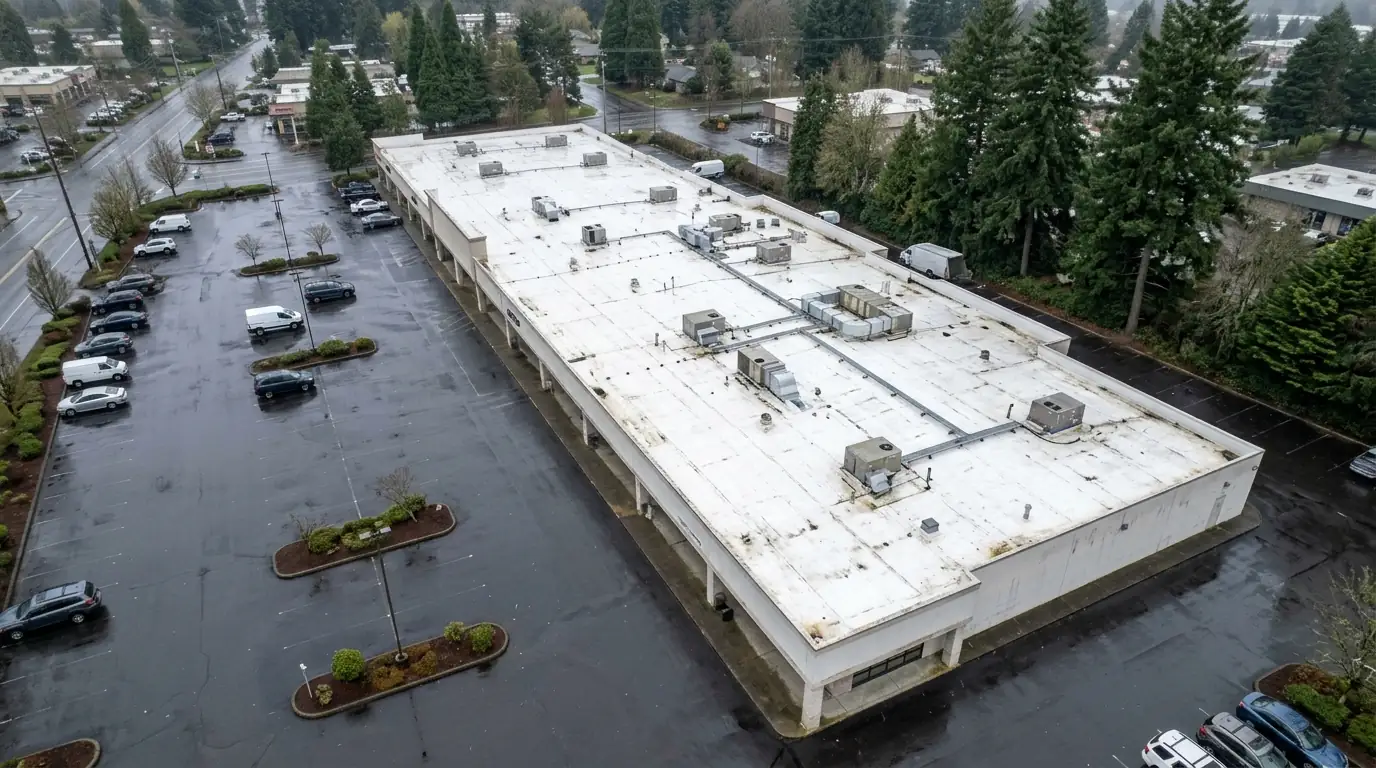
Most commercial roofs in the Vancouver area are low-slope membranes such as TPO, PVC, EPDM or modified bitumen. Many can be repaired or recovered rather than torn off, if the insulation and deck are dry. A core sample and moisture check tell us which path fits. Regular drain clearing and flashing checks catch most problems before they reach the interior.
Commercial roofs here are mostly low-slope: big, nearly flat surfaces covered with single-ply membrane, modified bitumen or built-up layers. They drain to interior drains or edge scuppers instead of gutters, and they carry rooftop units, ducts and conduit that each punch a hole through the roof. With so many penetrations and so much flat area, small problems spread fast. A blocked drain can leave a pond that slowly works its way through a weak seam.
Our crews handle commercial roofs from small strip centers and office buildings to shops and light industrial space. That includes leak repairs, membrane patches, flashing work around rooftop units, recovers over sound existing roofs and full tear-offs. We schedule around business hours where we can, keep the work area safe for tenants and customers, and keep owners and managers updated by phone as the job moves.
Common commercial roof systems
TPO is the most common new membrane on commercial buildings. It is a white or light single-ply sheet with heat-welded seams that reflect sun and stay strong for years. PVC is similar but stands up better to grease and chemicals, which makes it the choice over restaurants and some industrial spaces. EPDM, the black rubber membrane, is still on plenty of older buildings and is often repaired rather than replaced while the sheet is still flexible.
Modified bitumen, including torch-down and self-adhered sheets, is common on smaller commercial roofs and mixed-use buildings. Some older properties still have built-up tar and gravel roofs. Steep sections on commercial buildings, like mansards and entry roofs, may be shingles or metal. We work on all of these, and we match repairs to what is already on the roof so different materials do not fight each other at the seams. Mixing incompatible materials is a common cause of repeat leaks.
Commercial services we handle
Commercial work runs from a single leak call to a full replacement over an occupied building. Every job starts with a walk of the roof and the interior below, because leak stains inside rarely line up with the actual entry point on a flat roof. Water can travel along the deck and insulation a long way before it drips through the ceiling. We note every stain and match it to likely entry points above.
- Leak tracing and membrane repair
- Flashing at rooftop units, curbs and walls
- Drain, scupper and overflow clearing
- Recover over a sound, dry existing roof
- Full tear-off and replacement
- Scheduled roof checks for property managers
Repair, recover or replace
The choice comes down to what is under the membrane. If the insulation and deck are dry, a worn roof can often be recovered with a new membrane right over the old one, which saves the cost and disruption of a tear-off. Most building rules limit how many roof layers are allowed, so a building that already has two layers will usually need a full removal. We check the existing layer count early in the process.
Wet insulation changes the picture. Saturated board loses its insulating value, adds weight and can rot the deck, so it has to come out. We take core samples and use moisture readings to map where water has spread. Sometimes only part of the roof is wet, and those sections can be cut out and replaced while the rest is recovered, keeping the cost down. That approach also shortens the time the building is under construction.
Working on an occupied building
Most commercial roofs we work on sit over open businesses. We plan staging, crane lifts and debris chutes to keep entrances and parking usable, and we schedule noisy or odor-producing work for off hours when tenants need it. Daily dry-in at the end of every shift means the building is never left open overnight, even in a long wet stretch. Owners and managers get a short phone update at the end of each day, so they always know what was done and what comes next.
Signs a commercial roof needs attention
Ponding after 48 hours
Water still standing on the roof two days after rain points to drain or slope problems that stress the membrane.
Open or split seams
Seams lifting at the edges of membrane sheets let water into the insulation below.
Stains on ceiling tiles
Brown or sagging ceiling tiles inside often mark the end of a long leak path from the roof above.
Blisters or bubbles
Raised blisters in the membrane mean moisture or air is trapped under it and can split open.
Clogged drains and scuppers
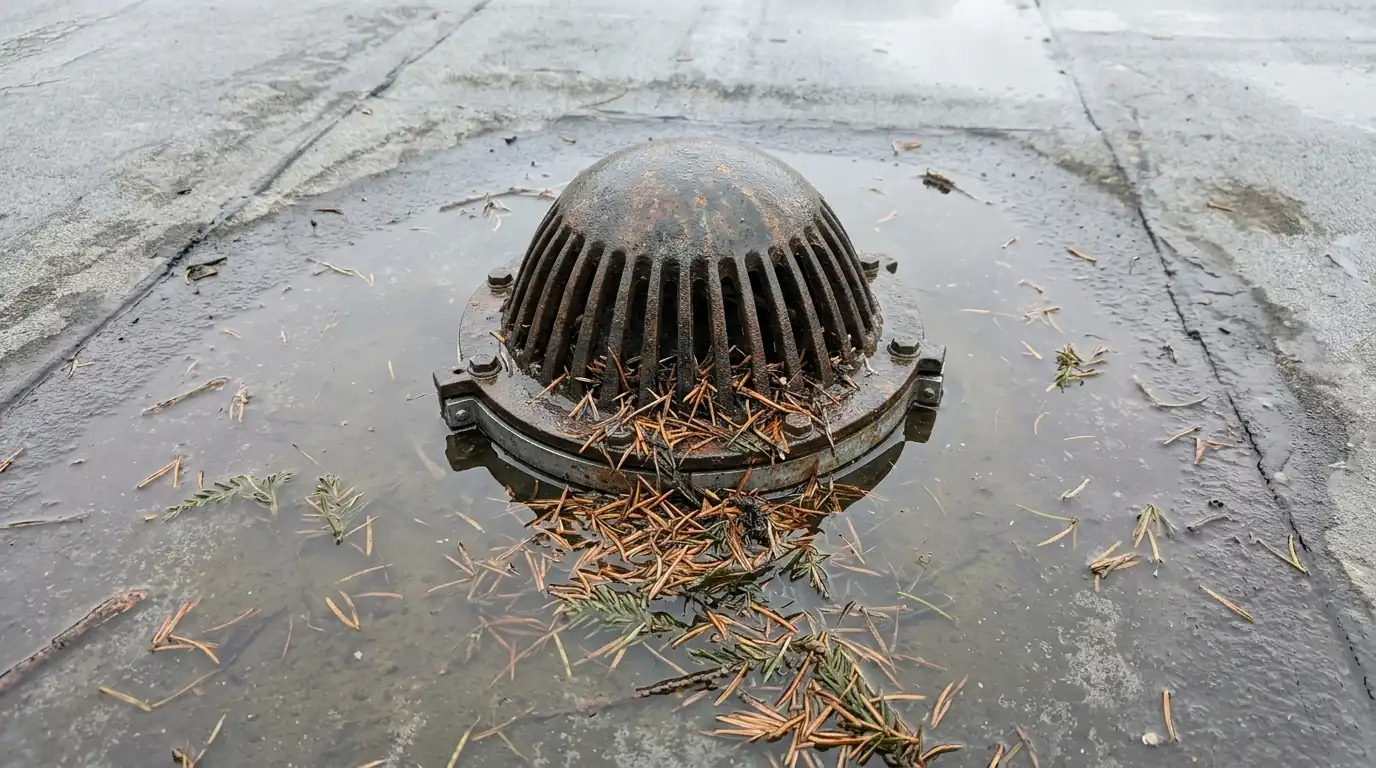
Debris piled at drains backs water up across the roof and loads the deck with extra weight.
Loose flashing at units
Flashing pulling away from rooftop units or walls opens a direct path into the building.
How we handle commercial roofing
Roof and interior walk
We walk the roof and the space below, note stains, ponding and damage, and photograph every problem area.
Moisture check
Core samples and moisture readings show whether the insulation is dry or wet and how far any water has spread.
Plan and schedule
You get repair, recover or replacement options with prices, plus a schedule built around your tenants and hours.
Do the work
Our crews make repairs or install the new system, drying in the roof at the end of every shift.
Final walk and records
We walk the finished roof, clear drains and give you photos and notes for the building's maintenance file.
Typical commercial roofing costs
Commercial roofing costs depend on roof size, the system chosen, the number of penetrations and units, and how much wet insulation needs removal. Smaller buildings cost more per square foot because setup is spread over less area. These are typical Vancouver-area ranges; we confirm pricing after a roof walk and moisture check.
| Job | Typical range |
|---|---|
| Leak repair and membrane patch | $685 to $2,340 |
| Recover over existing roof, per sq ft | $6.35 to $10.80 |
| Tear-off and new TPO, per sq ft | $9.65 to $15.40 |
| Rooftop unit reflashing, per unit | $745 to $1,890 |
Wet insulation, number of roof layers, rooftop equipment that must be lifted and crane access move the price most. See every service side by side in the roofing price guide.
Commercial roofs in Clark County's wet climate
Vancouver's commercial areas, from downtown and the waterfront to the business corridors along Fourth Plain, Mill Plain and in Hazel Dell, include many low-slope roofs built in the 1970s through 1990s. Months of steady rain from October to May mean any low spot or slow drain stays wet for weeks. Fir needles and debris blow onto these roofs and pack around drains and scuppers. Small ponds that would dry in a week elsewhere can sit here most of the winter.
East winds out of the Gorge also test the edges of large flat roofs. Metal edge and coping on buildings in east Vancouver and Camas can loosen, and lifted edges let wind get under the membrane. We check edge securement on every commercial roof walk. On the Oregon side, older flat roofs in Portland, Gresham and the industrial areas near the airport face the same wind and rain, and our crews service those buildings too.
Commercial Roofing questions
Can commercial roofing work be done while my business stays open?
In most cases, yes. We plan staging, debris removal and crane lifts to keep entrances and parking usable, and we can schedule noisy or odor-producing work for evenings or weekends. Each section is dried in at the end of every shift, so the building is never left open overnight.
What is the best commercial roofing material for Vancouver buildings?
For most low-slope commercial roofs here, TPO is a strong fit because of its welded seams and light color. PVC is better over restaurants and spaces with grease or chemical exhaust. Modified bitumen suits smaller roofs with lots of foot traffic. The right choice depends on the building and its use.
How do I know if my commercial roof can be recovered instead of replaced?
A recover works when the existing insulation and deck are dry and the roof has not already reached the limit on layers. We take core samples and moisture readings to check. If only part of the roof is wet, those areas can be replaced and the rest recovered, which often saves a lot.
How often should a commercial roof be checked?
Twice a year is a good baseline for most commercial roofs: once in fall before the rains and once in spring. Buildings under trees, with lots of rooftop equipment or with a history of leaks may need more frequent checks. Clearing drains on each visit prevents many of the leaks we see.
Work that often goes with it
Flat & Low-Slope Roofing
TPO, PVC, EPDM and modified bitumen roofs for flat and low-slope sections, with drainage fixes so water stops ponding.
See the detailsTorch-Down Roofing
Two-ply torch-applied modified bitumen for flat roofs, decks over living space and tie-ins, installed with strict fire-safety steps.
See the detailsRoof Coatings
Silicone and acrylic coatings rolled over sound low-slope and metal roofs to seal small leaks and add years before a tear-off.
See the detailsCommercial Roofing around Vancouver
Our crews do this work across Clark County and the Portland side, including:
Call about commercial roofing
Phones are answered 24/7. Tell us what you are seeing and we will set a time to look.