Leaking or loose metal roof repair in Vancouver, WA
Metal roofs rarely fail all at once; they leak at a backed-out screw, a lap that lost its sealant, or a ridge cap the east wind worked loose.
- 24/7 phones
- New roofs and materials
- Vancouver office on Main St
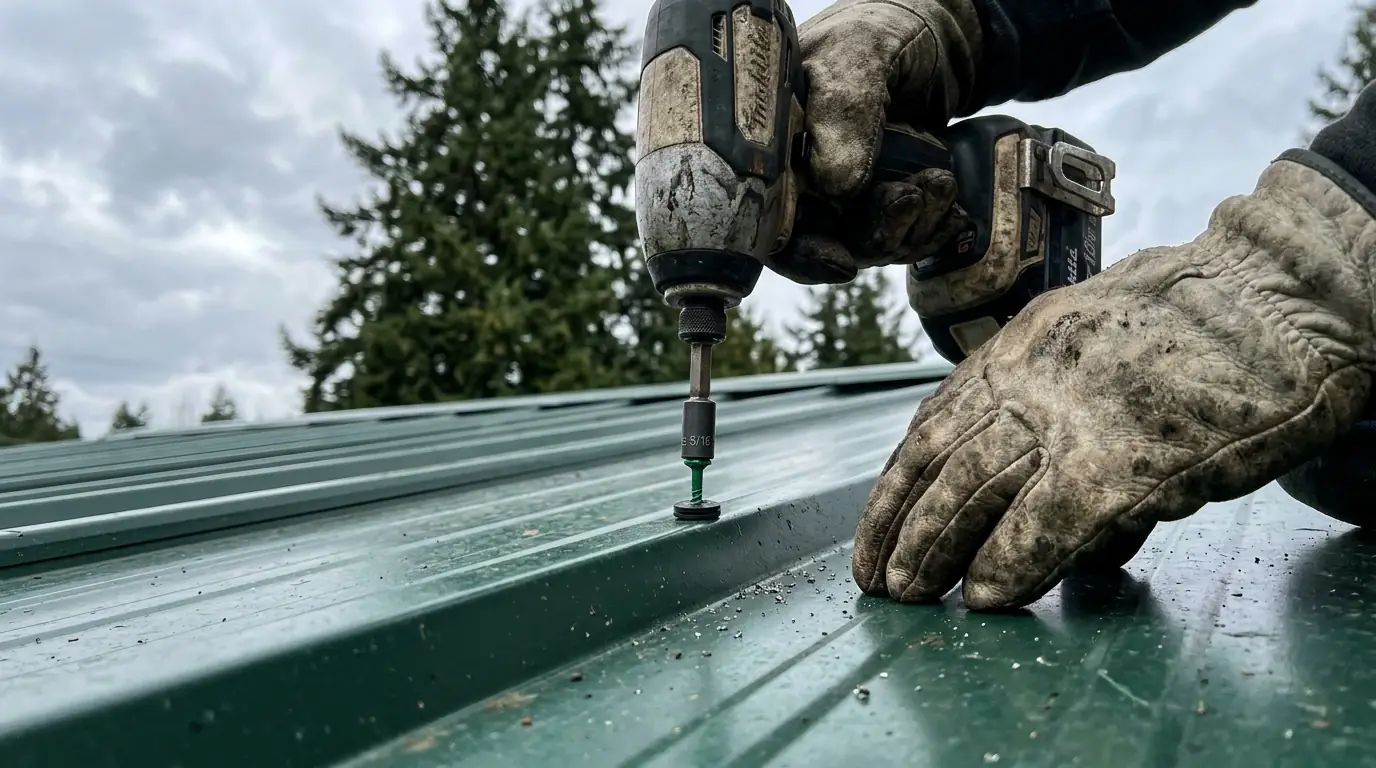
Yes, most metal roofs can be repaired instead of replaced. If the panels are still solid and the rust is only on the surface, replacing worn screws, resealing laps and refitting trim usually stops the leak. Replacement makes sense when panels are rusted through, badly dented across large areas, or the roof was installed so poorly that leaks keep moving.
Most metal roof leaks we see in Clark County trace back to small parts, not the panels. Screws loosen as the steel expands on a warm afternoon and shrinks again on a cold night. The neoprene washer under each screw head dries out and cracks after years of sun. Butyl tape at panel laps hardens and lets wind-driven rain wick in. None of that means the roof is finished.
Our crews repair both common systems: exposed-fastener panels, which are typical on shops, barns and budget re-roofs, and standing seam, where the fasteners hide under raised seams. The repair methods differ. On exposed-fastener roofs we usually replace screws with oversized ones and reseal laps. On standing seam we look at clips, seam closures, flashing and the trim pieces where most of the trouble starts.
Where metal roofs actually leak
The weak points on a metal roof are predictable. Exposed screws top the list, especially ones driven at an angle or overtightened so the washer squashed out sideways. Next come end laps, where one panel overlaps the one below it on long runs. Then the ridge cap, where foam closures shrink and let rain blow in under a strong east wind. Pipe penetrations are another common spot, because a rigid boot cannot follow the panel ribs well.
Condensation also gets blamed for a lot of roof leaks. A shop with bare panels and no vapor barrier can drip from the underside on a cold, damp morning even when the roof is tight. We check for this before replacing anything, because the fix is often insulation or ventilation rather than sealant. Telling the two apart saves money, and it keeps a dry roof from being torn into for no reason.
What a metal roof repair visit includes
We start on the roof, not in the attic, because metal leaks often travel along a rib before they drip. A roofer walks the panels in soft-soled shoes, stepping only where the deck or purlins support the weight. Each suspect area gets marked, photographed and explained before any work begins. Small fixes such as resealing one pipe flashing are often done on the same visit when we have the parts on the truck.
- Replacing failed screws with larger-diameter fasteners and new washers
- Cleaning and resealing panel end laps with butyl tape
- Refitting or replacing ridge cap and foam closures
- Swapping rigid pipe flashings for flexible metal-roof boots
- Spot-treating surface rust and priming cut edges
- Replacing single damaged or rusted-through panels
Standing seam versus exposed-fastener repairs
Exposed-fastener panels are the easier of the two to repair. Every screw is visible, and a section of panel can be unscrewed and replaced without disturbing much around it. The tradeoff is that these roofs need attention more often, since there are hundreds of washers that will all age. On many older shops we recommend a full screw replacement instead of chasing one leak at a time, because the rest of the washers are usually close behind.
Standing seam repairs take more care. Panels lock together along the seams and are held by hidden clips, so replacing one panel can mean unseaming its neighbors. Most standing seam leaks we fix are at the trim: the eave, the rake edge, a wall flashing or a skylight curb. Matching color and seam profile matters, so we bring sample pieces and confirm a match before ordering replacement metal, so the repair does not stand out.
When repair stops making sense
A metal roof is worth fixing when the panels have life left. We look for rust that has eaten through the coating and into the steel, especially along the bottom edges of panels and around fasteners. If more than a few panels are perforated, or the roof has been patched with mismatched sealant so many times that water now runs in odd paths, a new roof may cost less over time. We will tell you which side of that line your roof is on and show the photos that support it.
Signs your metal roof needs repair
Rust rings around screws
Orange halos around fastener heads mean the washer has failed and water is reaching the steel beneath it.
Screws backing out
Heads that stand above the panel surface let rain run straight down the shank and into the deck.
Rattling in the wind
A panel or ridge cap that bangs during an east wind has lost its grip and can tear loose.
Drips along a rib
Water stains that line up with panel ribs usually point to a lap or fastener higher up the slope.
Peeling coating at edges
Paint flaking at cut ends and eaves exposes bare steel that will rust through faster than the field.
Sealant cracking at trim
Dried, split caulk at wall flashings and rake trim lets wind-driven rain slip under the metal.
How we handle metal roof repair
Walk and mark
A roofer walks the supported areas of the roof, checks fasteners, laps and trim, and marks each problem with tape for photos.
Explain the findings
We show you the photos, explain which issues are causing the leak, and give a price for the repair before starting.
Prep the metal
Old sealant is scraped off, surfaces are cleaned with solvent, and any surface rust is wire-brushed and primed.
Fasten and seal
New screws, butyl tape, closures, boots or replacement panels go in using parts sized for your panel profile.
Water test
Where it is safe, we run a hose over the repaired area and check inside for drips before packing up.
Typical metal roof repair costs
These are typical ranges we see on Vancouver and Portland-metro homes and outbuildings. The real number comes after we look at the roof, because panel profile, roof pitch, access and how many fasteners have failed all change the labor. Shops with low pitch and good access usually cost less per square foot than steep house roofs.
| Job | Typical range |
|---|---|
| Single leak or pipe boot reseal | $365 to $890 |
| Ridge cap and closure refit | $740 to $1,960 |
| Full screw replacement, average shop | $1,840 to $4,670 |
| Panel replacement, per panel | $415 to $1,130 |
Steep pitch, hard-to-match standing seam profiles and rusted panels that need replacing push the price toward the top of each range. See every service side by side in the roofing price guide.
Metal roofs in Clark County's wet winters and Gorge winds
Metal is common out on rural acreage around Brush Prairie, Hockinson, Battle Ground and Yacolt, where shops and barns went up with exposed-fastener panels. Those roofs see long, wet winters and fir needles that pile up behind ridge caps and in panel valleys. Wet needle mats hold moisture against the steel and speed up rust along the bottom edges. On many shop roofs, the worst rust is right where needles collect above a wall or behind a vent. We clear those piles as part of every repair.
East Vancouver, Camas and Washougal get the strongest Gorge winds, and those gusts test every fastener on a metal roof. Loose ridge caps and rake trim are the most common wind repairs we make there. On houses near tall firs, we also check for dents from falling limbs, since a dent can open a lap or crack the coating. Most of those repairs are quick.
Metal Roof Repair questions
Can metal roof repair stop a leak without replacing the panels?
In most cases, yes. The panels themselves often have years left. Leaks usually come from failed screw washers, dried lap sealant, loose ridge caps or a poor pipe flashing. Replacing those parts stops the water. We only suggest new panels when the steel is rusted through or the panel is too damaged to seal.
How often should screws be replaced on an exposed-fastener metal roof?
The washers age at roughly the same rate, so when several start leaking, most of the rest are close. Many roofs in this area need a full screw replacement somewhere in their second decade, depending on sun exposure and how well the screws were set originally. We check a sample of fasteners and tell you what we find.
Is my shop roof leaking or is it condensation under the metal panels?
Both can look the same from inside. Condensation drips evenly across a cold roof on damp mornings, even in dry weather. A true leak shows up during or after rain, in one spot or along one rib. We check the panels from above and the underside from inside before recommending sealant, insulation or ventilation.
Can you match the color on a standing seam metal roof repair?
Usually close, not always exact. Factory colors fade over years of sun, so a new panel can look brighter at first. We bring color samples to compare in daylight and order from the same profile where possible. For trim-only repairs, small color differences are rarely noticeable from the ground.
Work that often goes with it
Metal Roofing
Standing seam and exposed-fastener metal roofs that shed rain, fir needles and moss and stand up to strong Gorge winds.
See the detailsGarage & Shop Roofing
New roofs and repairs for detached garages, pole buildings, shops and barns, in metal, composite or low-slope membrane.
See the detailsRoof Leak Repair
Leak tracing and repair for stains, drips and attic moisture. We follow the water back to where it actually enters the roof.
See the detailsMetal Roof Repair around Vancouver
Our crews do this work across Clark County and the Portland side, including:
Call about metal roof repair
Phones are answered 24/7. Tell us what you are seeing and we will set a time to look.