Roofing new homes and builds in Vancouver, WA
Framing is done, rain is in the forecast, and your build needs a roofing crew that shows up for dry-in on time and finishes before drywall.
- 24/7 phones
- New roofs and materials
- Vancouver office on Main St
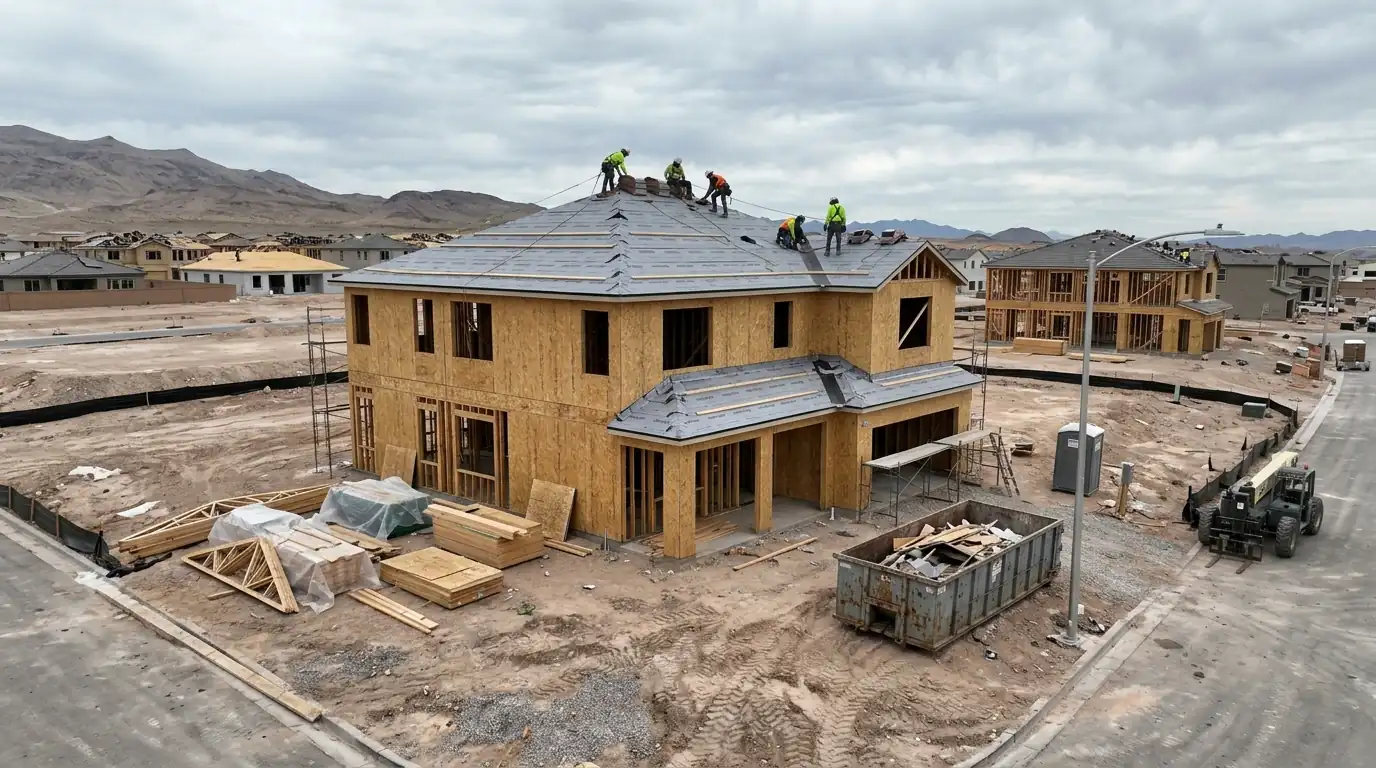
On a new build we usually come out twice. First for dry-in: drip edge, ice and water barrier and full underlayment, so the house is protected from rain. Then, after the other trades finish their roof penetrations, we return to install shingles or metal, flashings, vents and ridge. Scheduling both visits early keeps the build on time.
New construction roofing is a different job from a re-roof. There is nothing to tear off, but the schedule matters more, and the roofer has to work around framers, window installers, plumbers and electricians. The goal on a new build is to get the house dried in quickly so the framing and sheathing stop soaking up rain, then come back to install the finished roof once the other trades are done on top.
We roof new single-family homes, accessory dwelling units, custom builds and small infill projects for general contractors and for owner-builders managing their own job. Our crews install composite shingles, standing seam metal and low-slope membranes. Because we also do repair and replacement work, we know which new-construction shortcuts cause leaks ten years later, and we do not take them on any build.
Dry-in comes first on a new build
In this climate, a new house framed between fall and spring can take a lot of water before it is closed up. Wet sheathing swells at the edges, framing lumber picks up moisture, and mold can start on the attic side of the deck if it stays wet for weeks. A fast dry-in limits all of that. As soon as the sheathing inspection passes, our crews install drip edge, ice and water barrier at eaves and valleys, and synthetic underlayment across every slope.
A good dry-in also has the step flashings and kick-out flashings planned, even if they go on later. Window and door installers need to know where the roof meets the wall, so the housewrap and siding layers lap correctly over our flashing. We talk through those details with the builder before dry-in day. Getting the layering order right at the walls prevents the most common leak we see on new homes.
What our new construction scope covers
Every builder's scope is a little different, so we write ours out line by line and match it to the plans. The aim is no gaps between trades: nothing the framer assumed we would do, and nothing we assumed the siding crew would handle. When the plans call for a product or detail we think will cause trouble, we raise it before ordering material, not after the roof is on.
- Drip edge, ice and water barrier and underlayment
- Composite shingles, standing seam or low-slope membrane
- Step, kick-out, headwall and chimney flashing
- Pipe boots and vent flashing after rough-ins
- Ridge vents and intake venting per plans
- Skylight flashing kits and curb details
Working around other trades and inspections
The biggest risk on a new roof is damage by other trades after we leave. Plumbers cut holes for vents in the wrong spot, HVAC installers drop a flue through the wrong slope, or solar prep crews walk the new shingles in hard boots. We schedule finish roofing after most rooftop work is complete, and we ask builders to call us for any late penetration rather than letting another trade seal it with caulk.
Permits and inspections are handled by the builder in most cases, but we check with the local building department about any roofing items the inspector wants to see, such as ice barrier at the eaves or nailing patterns. We photograph key layers before they get covered so the builder has a record. Those photos are also useful later if a question comes up about how the roof was built, or when a buyer asks.
Choosing the roof for a new home
Most new homes around Vancouver go up with architectural composite shingles, which are affordable, easy to match later and accepted by nearly every HOA. Standing seam metal is a growing choice on modern designs and rural builds, especially where owners want a long-lived roof with fewer moss problems. Low-slope membranes suit modern flat rooflines and covered decks. We help builders and owners compare cost, look and upkeep, and we keep the product within any HOA or planning rules that apply.
Signs a new build needs its roofer now
Sheathing is up
Once the roof deck passes inspection, every rainy day without underlayment adds moisture to the framing.
Rain in the forecast
A wet week ahead is the strongest reason to lock in the dry-in date with your roofer early.
Edges starting to swell
Swollen sheathing edges mean the deck is soaking up water and should be covered quickly.
Windows going in
Window installers need wall and roof flashing details settled so their layers lap correctly.
Rough-ins finished
Once vent pipes and flues are through the roof, the finished roofing and boots can be installed.
Drywall is scheduled
The house should be fully weathertight before interior finishes go in, or the new drywall can be ruined.
How we handle new construction roofing
Plan talk with builder
We go through the roof plans, product choices, flashing details and schedule with the builder or owner before ordering.
Dry-in visit
After the sheathing inspection, our crew installs drip edge, ice barrier and underlayment so the house is protected from rain.
Coordinate penetrations
We confirm vent, flue and skylight locations with the other trades and flash any openings cut after dry-in.
Finish roofing
Shingles, metal or membrane go on with ridge vents, boots, step flashing and kick-out flashing at every wall.
Photo record handoff
The builder or owner receives dated photos of each roofing layer, product details and a final walkthrough of the completed roof.
New construction roofing price ranges
New construction prices depend on roof area, pitch, how many valleys and walls the design has, material choice and whether the schedule needs split visits. These are typical ranges for builds around Clark County and the Portland metro. We give a firm number after going over the plans and the site access for deliveries.
| Job | Typical range |
|---|---|
| ADU or small cottage roof | $7,850 to $14,300 |
| Average new home, composite shingles | $15,900 to $27,400 |
| Custom home, complex design | $28,700 to $49,600 |
| Standing seam upgrade, average home | $12,350 to $23,800 added |
Steep pitch, many valleys and dormers, metal roofing and extra return trips for late penetrations move new construction prices the most. See every service side by side in the roofing price guide.
New construction across fast-growing Clark County
Battle Ground, Ridgefield and the north county areas around Mount Vista and Salmon Creek have seen a lot of new home construction, along with infill and ADU projects closer to central Vancouver. Many of these builds start or finish framing during the October to May rain season, which is why we push for early dry-in dates. Lots near the Ridgefield wildlife refuge and on open acreage can also take more wind than older, tree-sheltered neighborhoods, so we pay attention to edge metal and starter strips.
Newer subdivisions often have HOAs with set roof colors and products. We confirm the approved list with the builder before ordering, so there are no mismatches between homes on the same street. Each city and the county set their own roofing permit rules, and we check with the right building department before work starts. If an HOA requires a submittal for each lot, we provide product sheets for it.
New Construction Roofing questions
When should the roofer start on a new construction roofing job?
As soon as the roof sheathing is installed and inspected. A quick dry-in protects the framing from rain while the other trades work. We then return for the finish roofing once vent pipes, flues and skylights are in place. Calling us while framing is still going up helps lock in the dates.
Do you work with owner-builders on new construction roofing?
Yes. Owner-builders often need help sorting out the order of trades and the flashing details where the roof meets the walls. We explain what needs to happen before and after our visits, and we coordinate directly with your window, siding and plumbing installers when you want us to.
Can my new construction roof be metal instead of shingles?
Yes, as long as the design, budget and any HOA rules allow it. Standing seam metal suits modern and rural homes and handles moss and wind well. It costs more up front. We price both so you can compare, and we plan the framing details that metal needs.
What happens if another trade cuts a hole in my new roof?
Call us. A vent or flue added after the finish roof should be flashed with a proper boot or flashing, not sealed with caulk. We come back, cut in the right flashing and tie it into the shingles or metal so the opening stays dry for the life of the roof.
Work that often goes with it
Home Addition & Dormer Roofing
Roofing for additions, new dormers and bump-outs, tied into your existing roof so the old and new sections drain as one.
See the detailsMetal Roofing
Standing seam and exposed-fastener metal roofs that shed rain, fir needles and moss and stand up to strong Gorge winds.
See the detailsAsphalt Shingle Roofing
New architectural and designer asphalt shingle roofs, with algae-resistant options that hold up under fir shade and rain.
See the detailsNew Construction Roofing around Vancouver
Our crews do this work across Clark County and the Portland side, including:
Call about new construction roofing
Phones are answered 24/7. Tell us what you are seeing and we will set a time to look.