Attic ventilation that keeps Vancouver, WA roof decks dry
Frost on the nails in January, a musty attic and dark stains on the underside of the roof deck usually mean the attic is not breathing.
- 24/7 phones
- Inspections and roof care
- Vancouver office on Main St
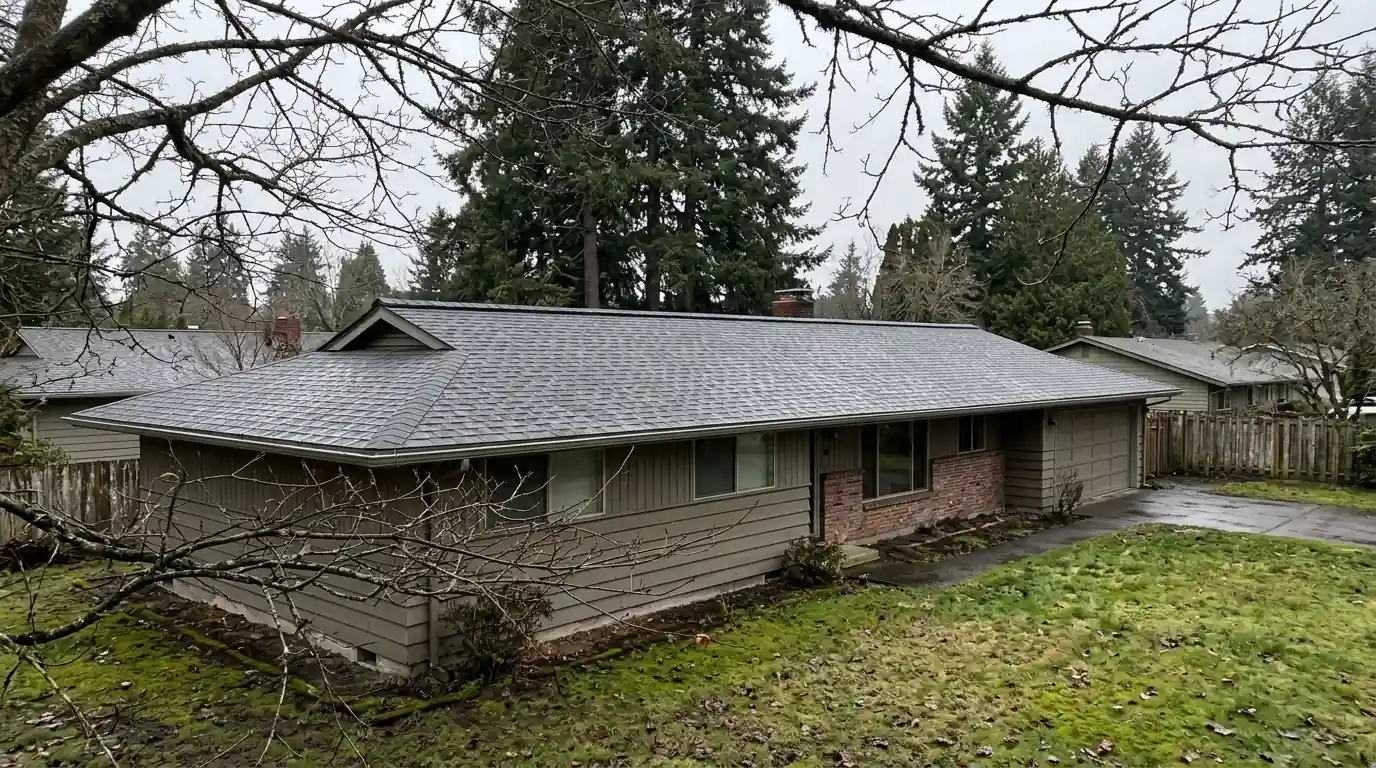
Good attic ventilation means matched intake low on the roof and exhaust high on the roof, so air moves through the whole attic. In Vancouver's damp winters it matters most for moisture, not heat. Without it, condensation soaks the roof deck, nails rust and mold grows, often long before the shingles show any wear.
Attic ventilation is about moving air through the space under your roof. Cool outside air comes in low at the soffits, warms slightly, and leaves high at the ridge or through roof vents. That steady flow carries off the moisture that rises from the house below. When it stops, warm damp air sits against the cold roof deck all winter, and the wood starts to darken, swell and grow mold.
We handle ventilation as roofing work because the vents are part of the roof. Ridge vent gets cut in and capped, box vents get flashed into the shingles, and soffit intake gets opened up from below. We also check what is pushing moisture into the attic in the first place, such as bath fans dumping into the attic instead of venting out through the roof.
How moisture ends up in the attic
Every house pushes water vapor upward: showers, cooking, laundry, even breathing. Some of it leaks through ceiling light fixtures, attic hatches and gaps around plumbing stacks. On a cold night that vapor meets the underside of the roof sheathing, which is the coldest surface in the attic, and turns to water or frost. When the sun warms the roof the next day, it melts and drips onto the insulation, which looks a lot like a roof leak.
A healthy attic flushes that moisture out before it settles. Trouble starts when the system is out of balance. Painted-over soffit screens, insulation stuffed against the eaves and too few exhaust vents are common in older homes. Newer homes sometimes have the opposite issue: a powered fan or mixed vent types pulling air from the wrong place, sometimes drawing damp air up out of the living space itself. The fix starts with finding which way the air is really moving.
Vent types we install and correct
The right setup depends on the roof shape. A long, simple gable roof takes ridge vent well. A hip roof with short ridges may need box vents or a hip vent product. Every system needs enough intake to match its exhaust, and that intake has to stay open, which is why we add baffles between rafters so insulation cannot slump into the airflow path at the eaves. A well-built system is quiet and simple, with no moving parts.
- Continuous ridge vent with shingle cap
- Low-profile box vents flashed into the roof
- Soffit and eave intake vents, opened or added
- Rafter baffles to keep insulation off the eaves
- Bath and kitchen fan ducts run out through the roof
- Closing mixed exhaust types that short-circuit airflow
Mixing vent types and other common mistakes
One of the most common problems we find is two kinds of exhaust on the same roof, like ridge vent plus a couple of old box vents or a gable louver. Air takes the shortest path, so the vents pull from each other instead of from the soffits. The lower half of the attic then gets almost no flow. Fixing it often means closing off vents rather than adding more, which surprises many homeowners.
Powered attic fans are the other frequent mistake in this climate. They were sold for summer heat, but when intake is short they pull conditioned air and moisture up out of the house through ceiling gaps. In a wet Northwest winter that can make condensation worse. We usually recommend removing or disconnecting them and putting the money into balanced passive vents instead. A passive system has nothing to wear out, needs no power and keeps working through a winter outage.
Doing ventilation with a reroof
The best time to correct ventilation is during a roof replacement, because the old shingles are off and cutting a ridge slot or adding vents costs little extra. If your roof is still in good shape, we can retrofit ridge vent or box vents into the existing shingles. Either way, we look at decking condition first, since years of condensation may have already softened some sheets that need replacing. Soft decking has to be fixed first, or new vents will sit on weak wood.
Signs your attic is not venting
Frost on nail tips
Rows of white frost or rusty drips on the nail points poking through the deck on cold mornings.
Dark or blotchy sheathing
Black or gray staining on the underside of the roof deck, often worst on the north-facing side.
Musty attic smell
A damp, earthy smell when you open the attic hatch, even though the roof itself is not leaking.
Wet insulation spots
Matted or damp patches in the insulation with no matching hole or leak in the roof above them.
Stains after cold snaps
Brown spots on upstairs ceilings that show up after a cold, clear stretch rather than during rain.
Wavy roof lines
Shingles that look rippled from the street can point to sheathing swollen by trapped moisture.
How we handle attic ventilation
Attic walk-through
We go into the attic, measure vent openings, check the sheathing for stains and moisture, and find where fans and stacks vent.
Find the imbalance
We compare intake to exhaust and look for mixed vent types, blocked soffits and ducts that dump damp air into the attic.
Plan the fix
You get a plain plan with photos showing which vents to add, close or open, and a price for each part of the work.
Install and flash
Our crew cuts in ridge or box vents, flashes them into the shingles, opens soffit intake and sets baffles at every rafter bay.
Confirm the airflow
We check the finished system from inside the attic and can come back after a cold stretch to confirm the frost is gone.
Typical attic ventilation costs
Ventilation jobs range from a small fix, like rerouting one bath fan, to a full rebalance with new ridge vent and opened soffits on every eave. These are typical Vancouver-area ranges. The final number comes after we see the attic and roof, because access and sheathing condition change the work.
| Job | Typical range |
|---|---|
| Reroute a bath fan duct through the roof | $385 to $745 |
| Add or replace box vents | $465 to $1,180 |
| Retrofit ridge vent on an existing roof | $845 to $1,960 |
| Full intake and exhaust rebalance with baffles | $1,640 to $3,870 |
Hip roofs with short ridges, tight attic access and any damaged sheathing found along the way raise the cost. See every service side by side in the roofing price guide.
Ventilation for wet Clark County winters
Vancouver gets most of its rain from October through May, and the air stays damp for weeks at a time. That means attics here deal with moisture far more than with summer heat. Cold, clear nights after a rainy spell are when condensation hits hardest. Mid-century ranches in Hazel Dell and Minnehaha often have small soffit vents that were painted shut decades ago, and the attics show it in dark, spotted sheathing. Opening those vents and adding baffles is often the biggest single improvement.
East Vancouver and Camas add another factor: strong Gorge winds in fall and winter. Some older vent styles let wind push rain sideways into the attic. On those homes we choose ridge vent with an external baffle and low box vents that hold up in gusts, so the attic can breathe without taking on wind-driven water. Gable louvers facing east get extra attention, since they catch the worst of it.
Attic Ventilation questions
How much attic ventilation does a Vancouver home need?
A common rule of thumb is about one square foot of net vent area for every 150 to 300 square feet of attic floor, split roughly evenly between intake and exhaust. The exact target depends on your attic and local building rules, so we measure the space and check with the building department when a permit is involved.
Can poor attic ventilation cause what looks like a roof leak?
Yes, and it is one of the most common false alarms we see in winter. Moisture condenses on the cold roof deck overnight, turns to frost, then melts when the day warms up and drips onto the ceiling. If stains appear after cold, clear weather instead of during rain, ventilation is the first thing we check.
Should I keep my powered attic fan when you update the attic ventilation?
Usually not. In this climate powered fans tend to pull damp indoor air into the attic through ceiling gaps, especially when intake is short. We generally recommend disconnecting the fan and sealing its opening, then balancing passive intake and exhaust. If your fan runs on a humidity sensor, we look at it case by case.
Is ridge vent the best attic ventilation for every roof?
Not always. Ridge vent works best on roofs with long, continuous ridges and good soffit intake. Hip roofs with short ridges may not have enough ridge length, so low-profile box vents or a dedicated hip vent can do the job better. The key is one exhaust type matched with enough open intake.
Work that often goes with it
Attic Insulation
Blown-in and batt attic insulation added after air sealing, set with baffles so it never blocks the roof's soffit vents.
See the detailsFascia & Soffit Repair
Replacing rotted fascia boards and damaged soffit panels at the roof edge, then sealing the gaps that let in water and pests.
See the detailsRoof Decking Replacement
Replacement of soft, rotted or delaminated roof sheathing under the shingles, from a single sheet to whole slopes.
See the detailsAttic Ventilation around Vancouver
Our crews do this work across Clark County and the Portland side, including:
Call about attic ventilation
Phones are answered 24/7. Tell us what you are seeing and we will set a time to look.