Bringing daylight in: skylight installation in Vancouver, WA
A dark hallway, a windowless bathroom or a kitchen that needs the lights on at noon in November can often be fixed with a skylight cut into the roof.
- 24/7 phones
- Gutters, skylights and roofline
- Vancouver office on Main St
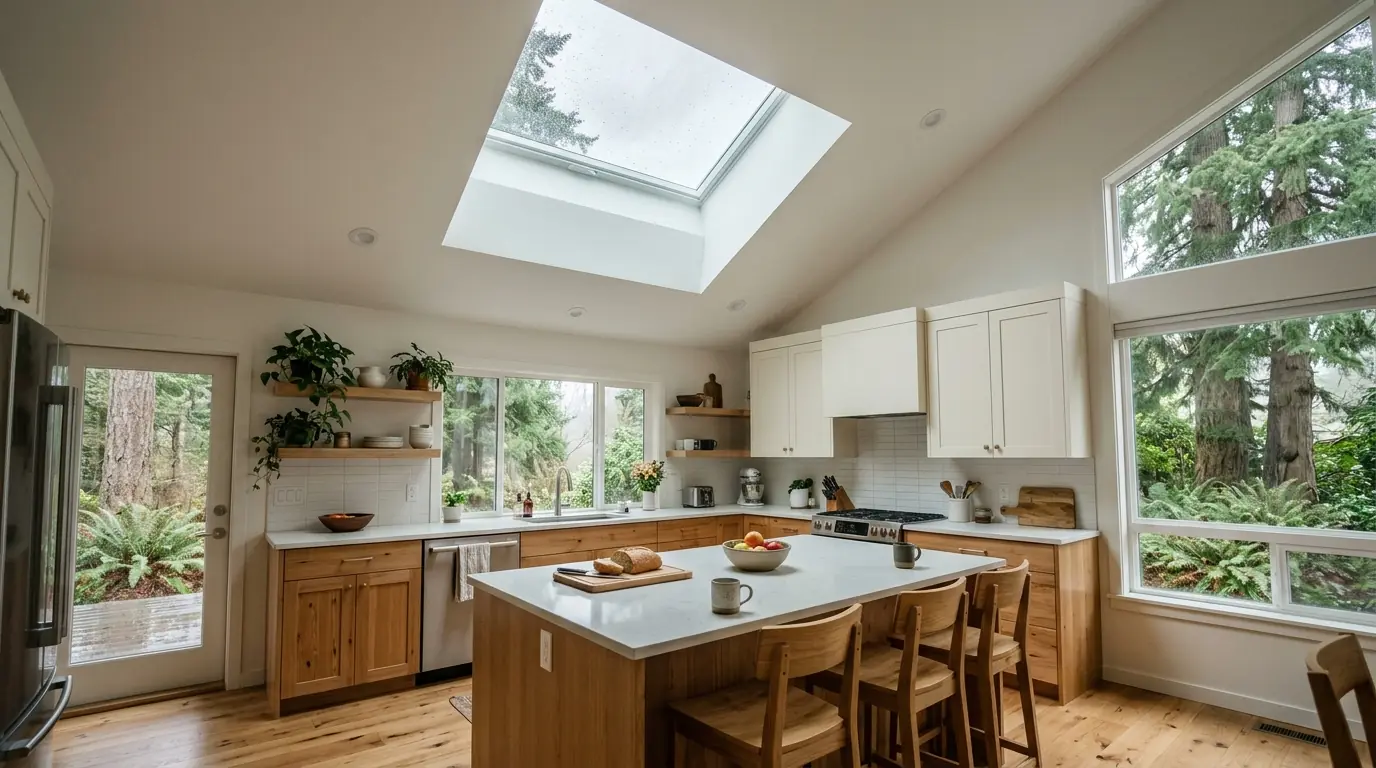
Most skylight installs take one to two days and include cutting the roof, framing the opening, setting a curb-mounted or deck-mounted unit with its flashing kit, and finishing the light shaft inside. Sun tunnels are faster and cheaper for small rooms. In this climate, a laminated, low-E glass unit with a step-flashed kit gives the best mix of light and leak protection.
Vancouver winters are long and gray, and many homes have rooms that never get direct light. Skylights solve that by pulling daylight from overhead, which is brighter than light from a wall window of the same size. A well-placed skylight can light a whole kitchen or stairwell on an overcast day. The trick is putting it where it brings in light without adding heat, glare or a leak risk.
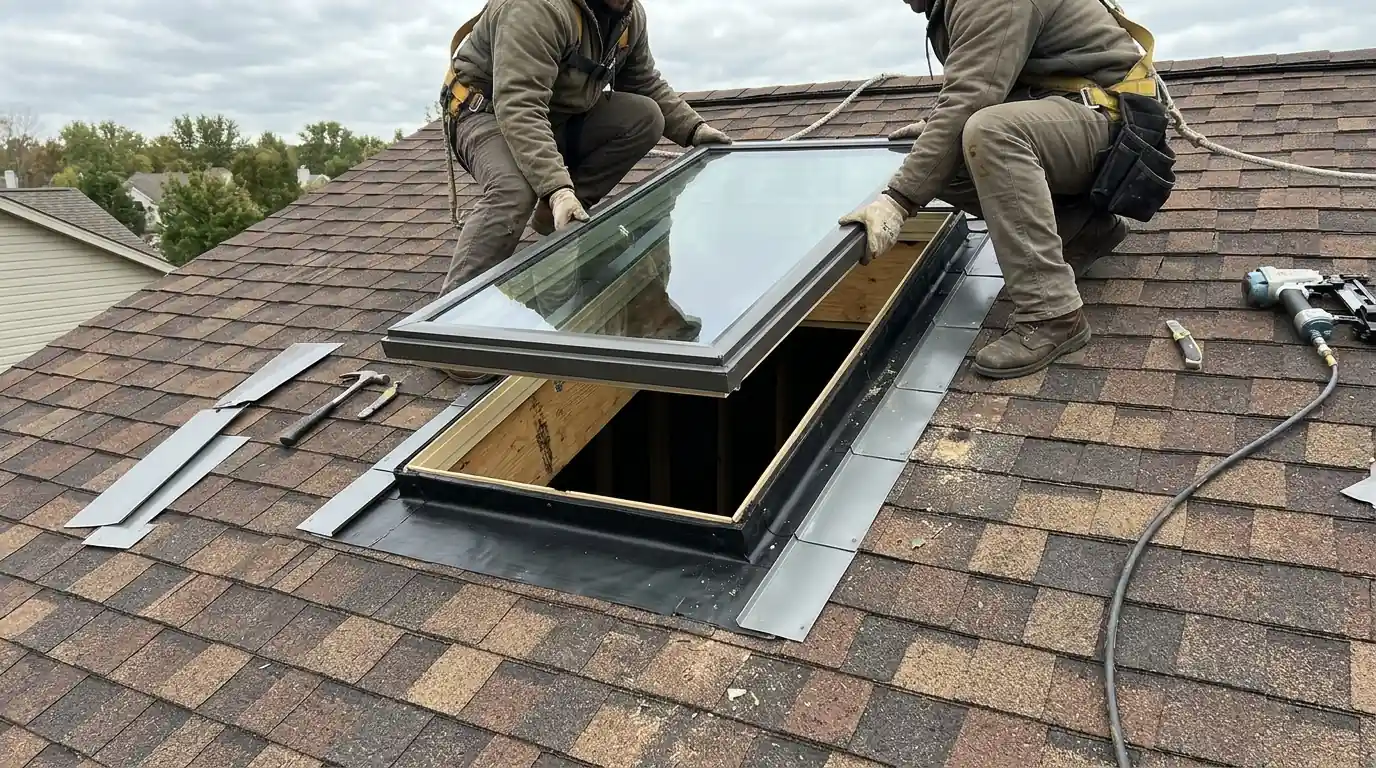
Installing a skylight is roofing and framing work together. We open the roof, frame the opening between or across rafters, build the light shaft down to the ceiling, and set the unit with the manufacturer's flashing kit woven into the shingles. Getting that flashing right is the whole job, because a skylight that is not flashed properly will leak in the first steady rain.
Skylight types and where each works
Fixed skylights are the most common. They do not open, so they have fewer parts to wear out and seal tighter. Venting skylights open with a crank or a small motor and can let steam out of a bathroom or heat out of an upstairs room in summer. Many venting units have a rain sensor that closes them automatically when the first drops hit, which matters a lot here, where showers come in fast even in spring.
Sun tunnels, also called tubular skylights, are a different product. A small dome on the roof feeds a reflective tube down to a round ceiling diffuser. They fit between rafters, need no framing changes and work well in hallways, closets and small bathrooms. They do not give you a view of the sky, but for pure light in a tight space they cost far less than a full skylight and shaft.
What goes into a proper install
The flashing system is what keeps a skylight dry. We use the manufacturer's step-flashing kit for the unit, which interlocks with each course of shingles, and we add a self-adhering underlayment collar around the opening before the flashing goes on. That gives two layers of protection. Inside, we frame and drywall the shaft, insulate around it and leave it ready for paint. Insulating the shaft walls matters, since a cold shaft is where condensation collects in winter.
- Cutting and framing the roof opening
- Headers and doubled rafters where needed
- Self-adhering underlayment collar
- Manufacturer step-flashing kit
- Insulated, drywalled light shaft
- Ceiling finish ready for paint
Placement, size and heat
Where the skylight goes on the roof changes how it behaves. A north-facing skylight gives soft, even light all day with little heat gain, which suits kitchens and offices. A south or west-facing one brings in more light but also more summer heat, which can make an upstairs bedroom warm in August. Low-E glass and an add-on shade help, and we talk through placement before cutting anything. Trees count too: a big fir to the south can shade a skylight for half the year.
Size matters too. A skylight that is too big for the room can feel harsh and leak heat in winter. A common rule is to keep the glass to a small fraction of the floor area below, and to use a splayed shaft, wider at the ceiling than at the roof, to spread light further without a bigger hole in the roof. A splayed shaft also looks more finished from below and reduces the bright-spot effect on a cloudy day.
Adding a skylight during a reroof
The best time to add a skylight is when the roof is being replaced. The shingles are already off, the flashing can be integrated with brand-new underlayment, and the cost of the roofing part of the job drops. If you are planning a reroof in the next few years, it is worth deciding on skylights before the new shingles go on. We can frame the openings, set the units and finish the shafts in the same project, so the roof is only opened once and every piece of flashing goes under new shingles.
Signs a room could use a skylight
Lights on at midday
If a room needs lamps on at noon even in summer, it is a strong candidate for overhead light.
Windowless bathroom
Interior bathrooms with no window benefit from both the light and the venting a skylight can add.
Dark stairwell or hall
Hallways and stairs in the middle of the house are often the darkest spots and easy to light from above.
Damp, stuffy upstairs
A venting skylight can pull warm, moist air out of a top floor that never seems to dry out.
Vaulted ceiling space
Vaulted ceilings with roof directly above make for short shafts and very bright skylights.
Reroof coming up
A planned roof replacement is the cheapest window to add skylights and get them flashed in right.
How we handle skylight installation
Walk the room and attic
We look at the room, check rafters, wiring and ducts in the attic, and pick a spot that clears them and gives the best light.
Choose the unit
You pick fixed, venting or sun tunnel, plus glass and size, with our advice on heat, light and the roof slope.
Cut and frame
We cut the roof, frame the opening with headers as needed and protect the room below from dust and debris.
Set and flash
The unit goes in with an underlayment collar and its matching step-flashing kit, woven into the shingles course by course.
Finish the shaft
We frame, insulate and drywall the light shaft, then clean up and water test the skylight from the roof.
Typical skylight installation costs
Skylight cost depends on the unit, the size of the opening, the shaft length and how much framing is needed. A sun tunnel in a hallway is a small job; a large venting skylight over a kitchen with a long shaft is a bigger one. These are typical Vancouver-area ranges confirmed after we look at the room and attic.
| Job | Typical range |
|---|---|
| Sun tunnel, installed | $945 to $1,780 |
| Fixed skylight with shaft | $2,465 to $4,390 |
| Venting skylight with rain sensor | $3,280 to $5,960 |
| Skylight added during a reroof | $1,590 to $3,240 |
Long or splayed shafts, cutting a rafter that needs a header, and electrical work for powered units move the price most. See every service side by side in the roofing price guide.
Skylights for gray Pacific Northwest winters
From October to May, Vancouver sees long runs of overcast days, and many homes feel dim by mid-afternoon. A skylight pulls in far more daylight than a wall window of the same size, even under clouds. In mid-century ranches around Hazel Dell and Walnut Grove, a small skylight over a kitchen or interior bath can change the feel of the house. In newer homes on the east side, vaulted great rooms are often the easiest place to add one with a short, bright shaft.
The same rain that makes skylights welcome also tests them. Steady rain for days and wind-driven water on east-facing slopes mean the flashing has to be perfect. Tall firs also matter: we place skylights away from spots where needles collect, so debris does not pile up against the upper curb. On low-slope porch or addition roofs, we use a raised curb so standing water cannot reach the frame during a long downpour.
Skylight Installation questions
How long does skylight installation take?
A sun tunnel usually takes a few hours. A full skylight with a framed and drywalled shaft typically takes one to two days, plus drying time before paint. If a rafter has to be cut and headered or the shaft is long, it can take a little longer. The roof is closed and watertight at the end of the first day.
Do skylights leak more than the rest of the roof?
A properly flashed skylight should not leak. Most skylight leaks come from poor installs: missing step flashing, sealant used instead of real flashing, or no underlayment collar. We use the manufacturer's flashing kit plus a self-adhering collar, which is the setup that holds up to long Northwest rains.
Is a sun tunnel or a full skylight installation better for my bathroom?
For a small interior bathroom, a sun tunnel often makes more sense. It gives plenty of light, fits between rafters and costs much less. If you want a view of the sky, a larger lit area or the ability to vent steam, a venting skylight is the better choice, though it costs more and takes longer.
Can skylight installation be done on a metal or flat roof?
Yes, with the right unit and flashing. Metal roofs need a curb and flashing made for metal panels, and low-slope roofs need a curb-mounted skylight that sits high enough to shed water. We check your roof type first and choose a unit and flashing kit designed for it.
Work that often goes with it
Skylight Replacement & Leak Repair
Tracing and fixing skylight leaks at the flashing, curb or glass, or swapping old fogged units for new ones with fresh flashing.
See the detailsRoof Replacement
Full tear-off and replacement with new underlayment, flashing, vents and your choice of shingle, metal or other roofing.
See the detailsAttic Insulation
Blown-in and batt attic insulation added after air sealing, set with baffles so it never blocks the roof's soffit vents.
See the detailsSkylight Installation around Vancouver
Our crews do this work across Clark County and the Portland side, including:
Call about skylight installation
Phones are answered 24/7. Tell us what you are seeing and we will set a time to look.