Stopping chimney leaks in Vancouver, WA with new flashing and crickets
Water is coming in around your chimney, often staining the ceiling or wall beside the fireplace, and sealant patches have not stopped it.
- 24/7 phones
- Roof repair
- Vancouver office on Main St
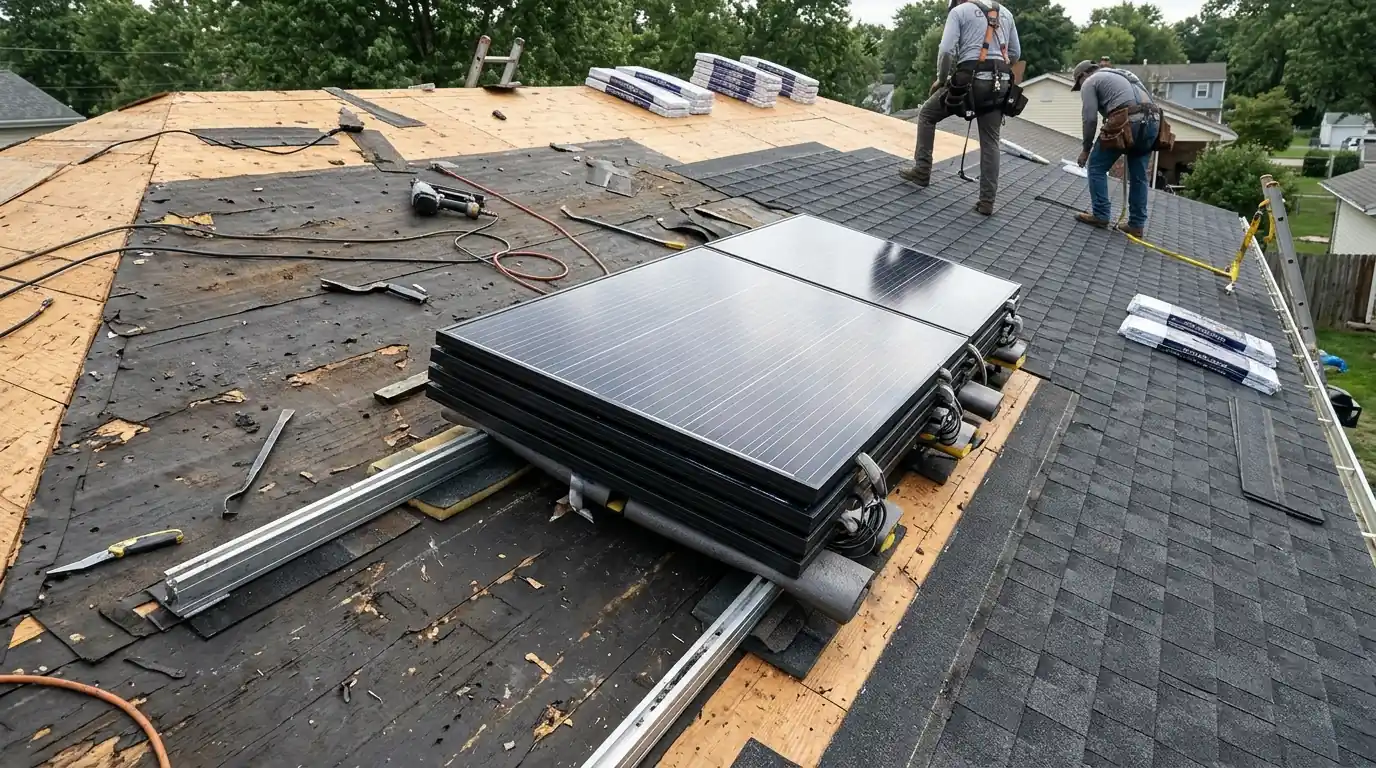
Chimney flashing and cricket repair replaces the metal layers that seal a chimney to the roof and, on wider chimneys, builds a small peaked section behind it to shed water. In the Vancouver area, typical jobs run $865 to $2,740. Leaks around chimneys usually come from failed counter-flashing, rusted step flashing, or a missing cricket.
Chimneys are one of the hardest spots on a roof to keep dry. A masonry chimney moves differently from the wood roof around it, so the flashing has to allow for that while still sealing out water. A proper chimney flashing system has several layers: step flashing woven with the shingles, counter-flashing set into the mortar joints and lapped over the step flashing, an apron at the front, and a back pan or cricket behind.
When any piece is missing or failing, water gets in. The usual culprits are counter-flashing that pulled out of the mortar, step flashing that rusted through, and no cricket on a wide chimney, so water and fir needles pile up behind it. We remove the old flashing, cut fresh reglets where needed, and install a complete new system matched to your chimney.
How a chimney flashing system works
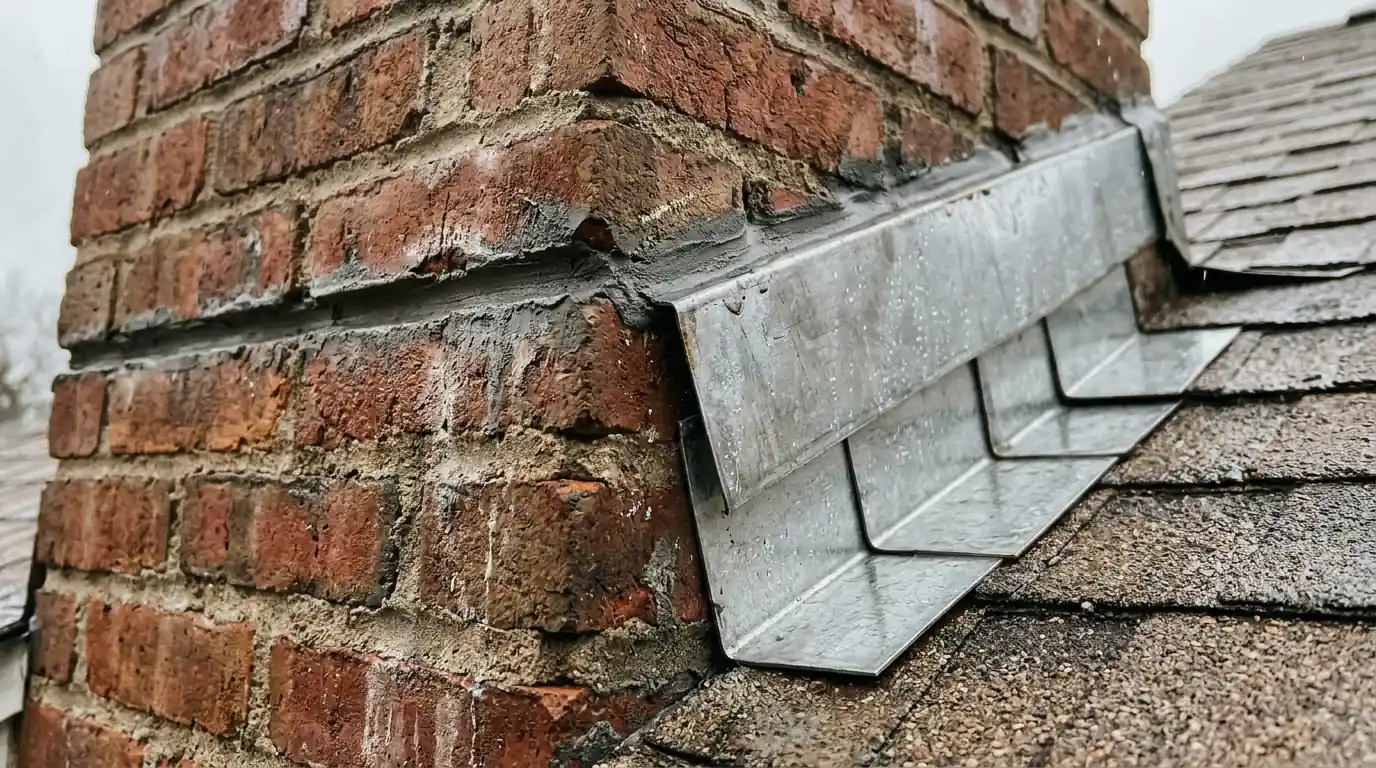
Chimney flashing is built in layers that overlap so water always flows outward. Step flashing pieces are woven in with each course of shingles along the chimney sides and bent up against the brick. Counter-flashing is set into a groove, called a reglet, cut into a mortar joint, then folded down over the step flashing. The front apron covers the downhill face, and the back is handled with a pan or a cricket.
Because the chimney and the roof framing expand, contract and settle at different rates, the two layers are not fastened to each other. That small gap lets them move without tearing. When someone seals the gap with a thick bead of caulk or fastens the counter-flashing straight onto the step flashing, the system loses that movement. In a few seasons, cracks open, and the leak returns in the same spot.
What a cricket does and when you need one
A cricket, sometimes called a saddle, is a small peaked roof built on the uphill side of a chimney. It splits water and debris to either side instead of letting them dam up against the brick. Wide chimneys usually need one. Without it, water pools behind the chimney every storm and fir needles pack into the corner, holding moisture against the flashing for weeks. It is a small build with a big effect on leaks.
- Framed from lumber and sheathed to match the roof
- Covered with underlayment and metal or shingles
- Tied into the chimney with its own flashing
- Sheds water and needles to both sides
- Cuts down on pooling and rot behind the chimney
Reflashing a brick chimney step by step
We start by removing shingles around the chimney and pulling out the old flashing and any layers of sealant. We check the decking at the chimney base, since this is a common spot for rot. Then we cut new reglets into the mortar joints with a masonry saw, install new step flashing course by course, set counter-flashing pieces into the reglets, and seal them with a masonry-rated sealant. Each layer is checked before the next goes on.
If the chimney needs a cricket, we frame and sheathe it before the step and counter-flashing go on, then flash it into the brick. Finally, we reinstall shingles and check every lap. If we see loose bricks, crumbling mortar or a cracked crown on top, we point it out, since water entering through the masonry itself can look just like a flashing leak from inside the house. That way you are not chasing the same stain twice.
Framed chimneys and chase covers
Many newer Clark County homes have framed chimney chases with siding instead of brick, often around a gas fireplace or wood stove flue. These leak in different ways. Water can get in through the siding, around the step flashing, or through a rusted metal chase cover on top. We check all three. Reflashing a framed chase follows the same rules as roof-to-wall flashing, and a rusted chase cover is replaced with a new sloped one that sheds water.
Signs of a chimney flashing leak
Stain beside fireplace
A water mark on the ceiling or wall next to a fireplace often traces straight to failed chimney flashing above.
Counter-flashing pulled loose
Metal that has lifted out of the mortar joints leaves an open gap where water runs behind the step flashing.
Needles piled behind chimney
A buildup of fir needles and debris on the uphill side shows water is pooling there and a cricket may be needed.
Thick sealant around brick
Layers of tar or caulk smeared around the chimney base usually mean a leak has been patched repeatedly without a fix.
Damp attic near chimney
Wet or stained wood and insulation right around the chimney in the attic point to water getting past the flashing.
Rust on chase cover
Rust streaks running down a framed chimney chase mean the metal top is failing and letting water into the chase.
How we handle chimney flashing & cricket repair
Call with leak details
Call (360) 803-6405 and tell us where the stain is, whether the chimney is brick or framed, and how wide it is.
Inspect chimney and attic
Our roofer checks the flashing layers, mortar joints, crown and the attic around the chimney to pinpoint how water gets in.
Remove old flashing
We strip shingles, old flashing and sealant around the chimney and check the decking at its base for rot or soft spots.
Build cricket and reflash
We frame a cricket if needed, cut fresh reglets, then install step flashing, counter-flashing and an apron in the correct order.
Seal, reshingle, clean up
Counter-flashing is sealed into the reglets, shingles go back on, and we clear masonry dust and debris from the roof and gutters.
Chimney flashing and cricket costs in the Vancouver area
Chimney flashing prices depend on chimney size, whether a cricket is needed, roof pitch and whether there is rot at the base. A small brick chimney on a low-pitch roof is the simplest job. A wide chimney on a steep two-story roof with a new cricket takes more time. These ranges are typical for 2026 in the Vancouver and Portland-metro area.
| Job | Typical range |
|---|---|
| Reflash a small brick chimney | $865 to $1,540 |
| Reflash plus new cricket | $1,420 to $2,740 |
| Framed chase reflash and new cover | $1,040 to $2,190 |
| Decking repair at chimney base | $340 to $910 |
Chimney width, roof steepness, cricket framing and any rot found at the base move the final price the most. See every service side by side in the roofing price guide.
Chimneys, firs and Vancouver weather
Brick chimneys are common on older Vancouver homes, especially Craftsman bungalows and early 1900s houses around Hough, Arnada and Esther Short, and on mid-century ranches in Hazel Dell and Minnehaha. Many of those chimneys were flashed decades ago, and the counter-flashing has worked loose from mortar that has softened over the years. With rain falling most days from fall through spring, small gaps around a chimney turn into steady leaks. Every one of those small gaps gets tested again and again before spring arrives.
Tall Douglas firs make it worse. Needles slide down the roof and pile up behind wide chimneys, holding water against the flashing for weeks. A properly built cricket clears that corner. Cold east winds out of the Gorge also drive rain into the joints on the windward face. In Felida and Salmon Creek, where many lots back onto tall conifers, we often add a cricket even on mid-size chimneys to keep that corner clear between cleanings.
Chimney Flashing & Cricket Repair questions
Does every chimney need a cricket during chimney flashing repair?
Not every one. Narrow chimneys can often shed water with a back pan alone. Wider chimneys, and those on lower-pitch roofs, generally need a cricket to keep water and debris from pooling behind them. Around Vancouver, where fir needles pile up fast, a cricket is often worth adding even when the chimney is close to the size limit.
Can chimney flashing repair fix a leak if the bricks are cracked?
New flashing stops water at the roof joint, but it cannot stop water soaking through cracked brick, failed mortar or a broken crown. If we see masonry damage during the job, we point it out. A mason may need to repair the brickwork, and we can time our flashing so both repairs fit together.
Why did my last chimney flashing repair fail so quickly?
The usual reasons are caulk used as the main seal, counter-flashing nailed to the step flashing so the two cannot move, or step flashing laid as one long piece instead of woven with each shingle. Missing crickets also cause repeat leaks. We remove the old work and rebuild the full system in the correct order.
Should I remove my chimney instead of paying for chimney flashing repair?
If the fireplace is unused and the chimney is in poor shape, removing it below the roofline and patching the roof can be a good option. It eliminates the leak point for good. If you use the fireplace or the chimney is in good condition, reflashing is usually the better value. We can price both for comparison.
Work that often goes with it
Chimney Removal & Roof Patch
Taking down an unused brick chimney below the roofline, then framing, decking and shingling the opening so it blends in.
See the detailsFlashing Repair
Repair and replacement of step, wall, headwall and drip-edge flashing where the roof meets walls, dormers and edges.
See the detailsRoof Leak Repair
Leak tracing and repair for stains, drips and attic moisture. We follow the water back to where it actually enters the roof.
See the detailsChimney Flashing & Cricket Repair around Vancouver
Our crews do this work across Clark County and the Portland side, including:
Call about chimney flashing & cricket repair
Phones are answered 24/7. Tell us what you are seeing and we will set a time to look.