Silicone and acrylic roof coatings in Vancouver, WA
A low-slope or metal roof with small leaks, aging seams and surface wear may not need a tear-off yet, if the deck and insulation under it are still dry.
- 24/7 phones
- Commercial and specialty
- Vancouver office on Main St
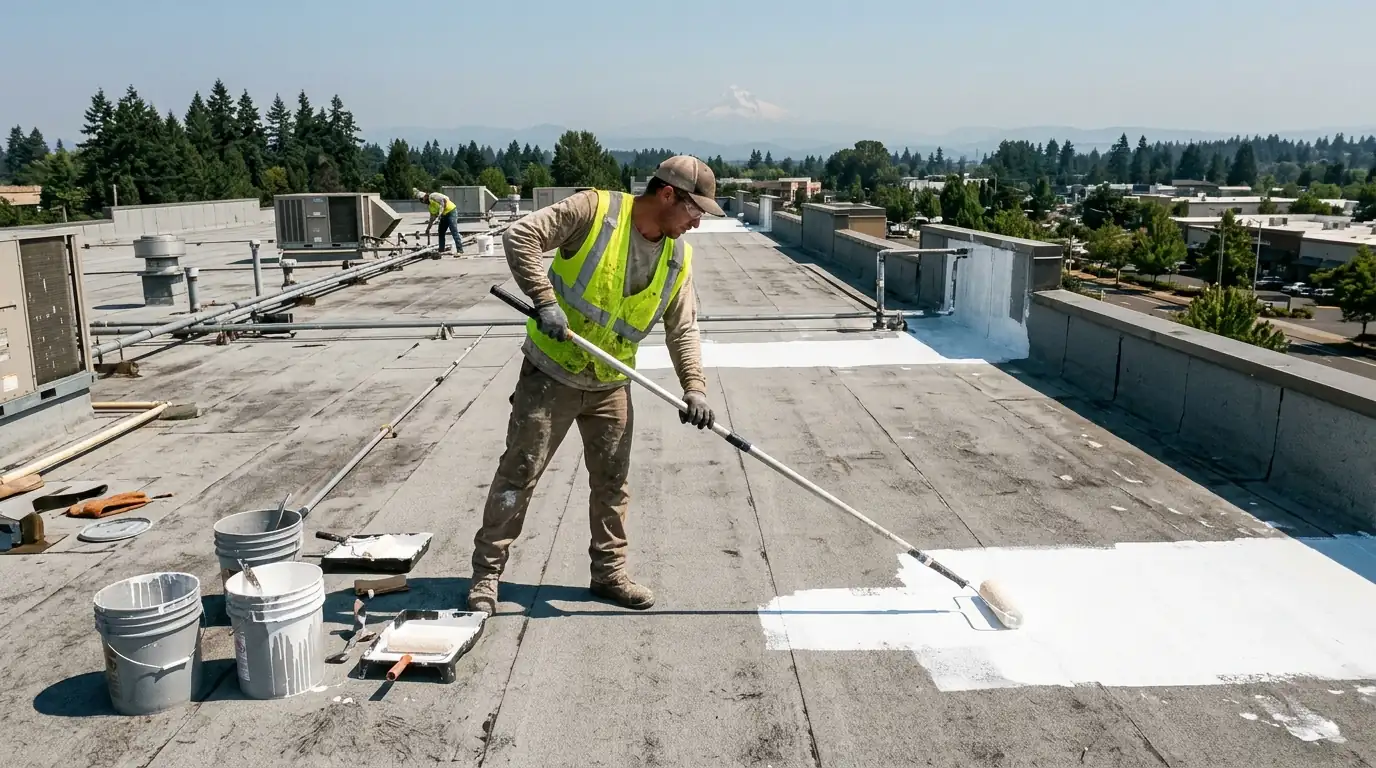
Roof coatings can add years to a sound low-slope or metal roof by sealing seams, fasteners and small cracks with a continuous layer. Silicone handles standing water best, which matters in this climate. Acrylic costs less but needs good drainage. A coating only makes sense when moisture checks show the roof underneath is dry and solid.
A roof coating is a liquid membrane rolled or sprayed over an existing roof. It cures into a continuous rubbery layer that covers seams, fasteners and small cracks, and it adds a fresh weathering surface over worn material. Coatings are used mostly on low-slope roofs, such as commercial membranes, modified bitumen and older built-up roofs, and on metal roofs on shops, barns and commercial buildings.
A coating is not a cure for a failing roof. It only works when the roof underneath is sound, dry and well attached. Coating over wet insulation or rotted decking traps the moisture and hides the damage until it gets worse. That is why every coating job we take starts with a moisture check, and why we sometimes tell owners that a coating is the wrong choice for their roof.
Coating types and where each fits
Silicone is the coating we use most often around here. It stands up to ponding water without breaking down, which matters on low-slope roofs that hold a little water for days during the wet season. It also stays flexible in cold weather and resists UV. Its downside is that dirt sticks to it, and most other materials will not bond to silicone later, so future repairs have to be made with more silicone.
Acrylic coatings are water-based, cost less and come in bright white that reflects summer sun. They work well on metal roofs and on low-slope roofs with good drainage, but standing water softens them over time. Polyurethane and other specialty coatings are tougher and suit roofs with foot traffic or rooftop equipment, though they cost more. We match the coating to how the roof drains and how it is used, not just the price.
What a coating job includes
The coating is only as good as the prep under it. We clean the roof with a power washer, remove loose material, and repair problem spots before coating. On metal roofs, that means treating rust and sealing every fastener. On membrane roofs, it means reinforcing seams with fabric and coating, then rolling the full surface to the thickness the product calls for, measured with a gauge as we go. Thin spots get a second pass.
- Moisture check and core samples
- Power washing and surface cleaning
- Seam and fastener reinforcement with fabric
- Rust treatment and primer on metal roofs
- Base and top coats to full thickness
- Clear drains and scuppers after cleanup
When a coating is the wrong answer
If moisture readings show wet insulation or soft decking across a large part of the roof, a coating will not fix it. Water trapped under a coating keeps rotting the deck and can blister the new layer from below. The same goes for a roof with large sections of membrane pulling away from the deck, or a metal roof with widespread rust holes. Those roofs need sections replaced or a full new system, and we will tell you so plainly.
Coatings also are not a fit for steep-slope shingle roofs. Coating asphalt shingles can trap moisture, void manufacturer warranty terms and make the roof harder to repair later. If a seller offers to coat your shingle roof to extend its life, it is worth getting a second look. For shingles, moss treatment, spot repairs and eventually replacement are the right tools. We are happy to look at a shingle roof and explain the real options.
Weather windows for coating
Coatings need dry weather to cure. Most products need the roof to stay dry for a set number of hours after application, and some need temperatures above a minimum. In Vancouver that means most coating work happens from late spring through early fall. We watch the forecast closely, and we will move a start date rather than risk rain on fresh coating. Planning a coating project in winter so it is ready to go by May is a good approach.
Signs a roof may be ready for a coating
Small leaks at seams
Minor leaks at membrane seams or metal laps on a roof that is otherwise dry and well attached.
Loose or rusted fasteners
Metal roof screws with worn washers or surface rust that have started letting water in at the panels.
Chalky, worn surface
A membrane or metal surface that leaves residue on your hand has lost its top layer to weather.
Surface cracks, dry deck
Fine surface cracking on a low-slope roof where moisture readings show the layers below are still dry.
Rust on metal panels
Surface rust spreading on shop or barn panels that have not yet rusted through to holes.
Avoiding a tear-off
Owners looking to add years to a sound roof without the cost and disruption of full replacement.
How we handle roof coatings
Check for moisture
We take core samples and moisture readings to confirm the roof underneath is dry and solid enough to coat.
Clean the surface
The roof is power washed and loose material removed so the coating can bond tightly to the existing surface.
Repair and reinforce
Seams, fasteners, flashings and rust spots get repaired and reinforced with fabric and primer before the full coating goes on.
Apply the coating
We roll or spray base and top coats to the product's required thickness, checking with a gauge as we work.
Inspect and document
After curing, we walk the roof, check coverage and thickness, and give you photos and product details for your records.
Typical roof coating costs
Coating costs depend on roof size, condition, the amount of seam and fastener repair needed and the coating type. Silicone costs more than acrylic but handles standing water better. These are typical Vancouver-area ranges, and the real price comes after we check the roof for moisture and measure it.
| Job | Typical range |
|---|---|
| Acrylic coating, per sq ft | $2.85 to $4.65 |
| Silicone coating, per sq ft | $3.45 to $5.90 |
| Metal shop or barn roof, coated | $5,380 to $14,250 |
| Seam and fastener prep, per sq ft | $0.65 to $1.85 |
Wet areas that must be cut out first, heavy rust on metal panels and the amount of seam reinforcement needed move the price most. See every service side by side in the roofing price guide.
Coatings in a wet Clark County climate
Low-slope roofs here spend months under steady rain from October through May, and many hold shallow water for days after each storm. That is why silicone tends to be our first choice on commercial and low-slope roofs in Vancouver. It holds up to ponding that would soften acrylic. On metal shops and barns around Brush Prairie, Hockinson, Battle Ground and La Center, coatings are a common way to stop leaks at fasteners and slow rust without replacing the whole set of panels.
The dry summer is what makes coatings practical here. From roughly June through September, the roof has the dry days it needs to cure. We book most coating projects for that window, and owners who plan ahead in winter get the best start dates on the schedule. On commercial buildings in Hazel Dell and along Fourth Plain, coating work is often timed for weekends or early mornings so the dry hours are used and tenants are not disturbed by the smell or the crew traffic.
Roof Coatings questions
How long do roof coatings last on a low-slope roof?
Life depends on the coating type, thickness, drainage and roof traffic. Many coatings are made to be cleaned and recoated over time, which can stretch a sound roof for years. Manufacturer warranty terms vary by product and thickness. We tell you what the product and its maker say about upkeep and recoating.
Can roof coatings be applied over a shingle roof?
We do not recommend it. Coating asphalt shingles can trap moisture, affect manufacturer warranty terms and make future repairs harder. Coatings are meant for low-slope membranes and metal roofs. For shingle roofs, moss treatment, spot repairs and replacement when the time comes are the right tools.
Is silicone or acrylic better for roof coatings in Vancouver?
On low-slope roofs that hold water after rain, silicone is usually better because it holds up to ponding. Acrylic costs less and works well on metal roofs and well-drained surfaces. We look at how your roof drains and how it is used before recommending one or the other.
Can roof coatings be applied in winter?
Usually not. Coatings need dry weather and certain temperatures to cure, so most coating work in Vancouver happens from late spring through early fall. A winter visit is still a good time to check the roof for moisture, price the job and get on the schedule for the dry season.
Work that often goes with it
Flat & Low-Slope Roofing
TPO, PVC, EPDM and modified bitumen roofs for flat and low-slope sections, with drainage fixes so water stops ponding.
See the detailsMetal Roof Repair
Fixes for loose screws, leaking seams, worn panel laps and bent trim on standing seam and exposed-fastener metal roofs.
See the detailsCommercial Roofing
Repairs, recovers and replacements on low-slope and steep commercial roofs, from strip malls and offices to shops and warehouses.
See the detailsRoof Coatings around Vancouver
Our crews do this work across Clark County and the Portland side, including:
Call about roof coatings
Phones are answered 24/7. Tell us what you are seeing and we will set a time to look.