From Charbonneau shake to newer-home vent leaks, Wilsonville, OR 97070
Wilsonville roof work tends to come from two places: older planned neighborhoods south of the Willamette with aging shake, and newer, denser neighborhoods with small install defects.
Wilsonville, OR at a glance
- ZIP codes
- 97070
- Common homes
- 1970s and 1980s planned homes, 2000s and newer infill
- Roofs we see most
- Aging shake, architectural composite, some tile
- Weather to plan for
- Southwest rain storms, damp winters, river fog
- Nearest office
- Vancouver office, 610 Main Street
Wilsonville straddles I-5 at the south end of the Portland metro, with the Willamette River cutting through the city and the Boone Bridge carrying the freeway over it. From our Vancouver office it is a straight run south on I-5 once we clear the Interstate Bridge and Portland traffic. Most of the city lies in Clackamas County, and its growth came in planned waves, each with its own style of home and roof, and often its own homeowners association.
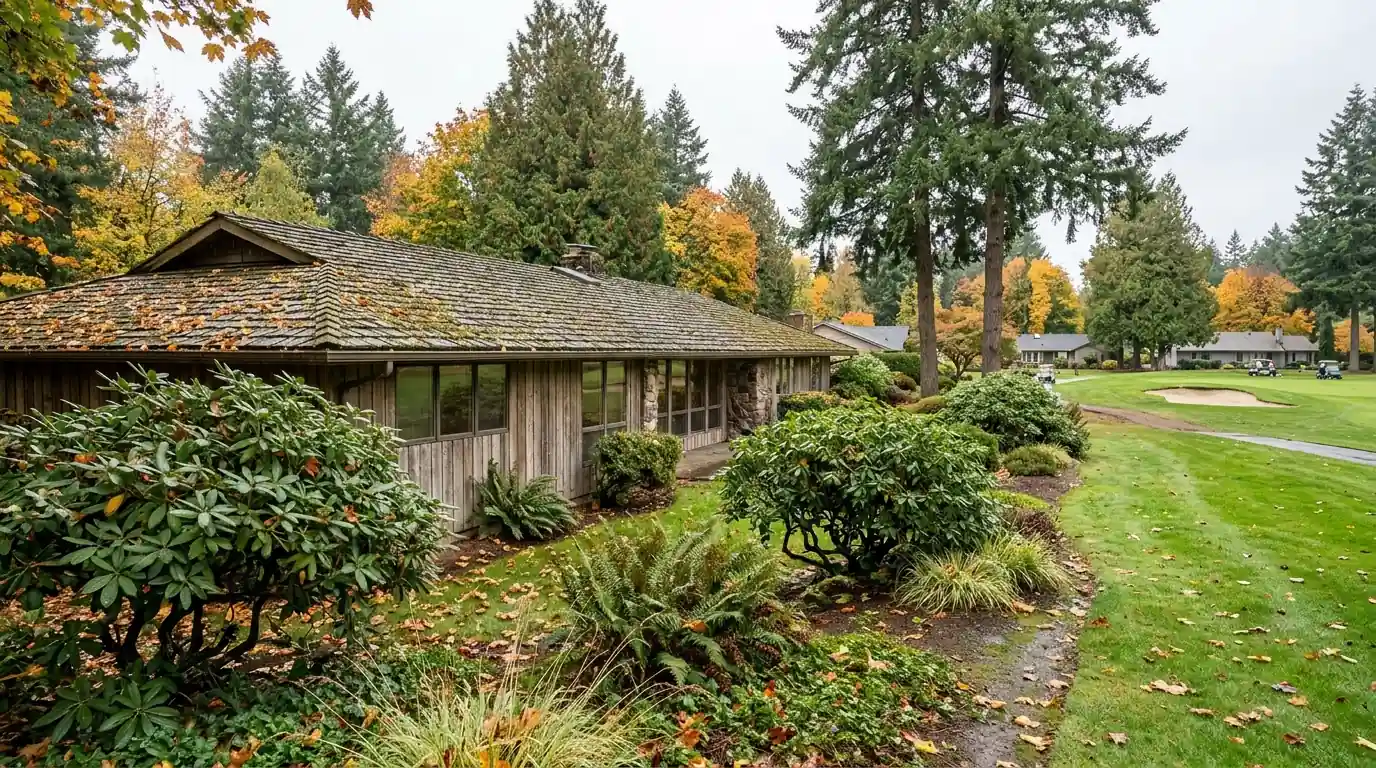
South of the river, Charbonneau was laid out around a golf course starting in the 1970s, with many homes first roofed in wood shake. North of the river, newer neighborhoods such as Villebois went up from the 2000s on with tighter lots, architectural shingles and plenty of roof penetrations. The roofs we see in each could hardly be more different, and so are the fixes.
Wilsonville shake roofs and what replaces them
Shake roofs from Wilsonville's early planned neighborhoods have had a long run, and many are now split, thin and growing moss. Owners usually want something that keeps the warm, textured look the neighborhood was built around, and the HOA often wants the same. Architectural composite in a heavy, dimensional profile is the most common choice. Synthetic slate or synthetic shake products are another, costing more up front but holding their look and shedding moss better than wood. Both need new solid sheathing over the old spaced boards. We bring sample boards and spec sheets laid out the way associations ask for them, so the approval step keeps moving.
Many of these homes also have long roof runs, low-pitched sections over patios, and a few skylights. During a conversion we flash skylights fresh, rebuild valleys with metal, and make sure the attic has enough intake at the eaves, which older shake roofs could ignore because the gaps between shakes let air through. Once solid sheathing and composite go on, that passive airflow is gone, so the vents have to do the job instead.
Weather and wear on Wilsonville roofs
Wilsonville gets the Willamette Valley pattern: long rainy months, fog along the river, and storms from the southwest that bring gusty, heavy rain. It sits far enough south that Gorge east winds matter less than in east Vancouver, so most wind damage arrives from the south and west. On newer homes, wear shows up first around roof penetrations. Plumbing vents, bath fans and furnace flues were often sealed with rubber boots that crack in summer sun, and the steady rain that follows sends water into the attic. A leak in a ten-year-old Wilsonville house is often a boot, not the roof.
How our crews work in Wilsonville neighborhoods
For older homes, we start with a full inspection and attic check, then price composite and synthetic options side by side. For newer homes with a single leak, we trace it from the attic, swap the failed boot or flashing, and check the rest of the roof while we are up there. HOA rules on work hours and parking are common here, and we plan around them. We check City of Wilsonville permit requirements and pull permits where required.
What homeowners in Wilsonville call us for
Cedar Shake to Composite Conversion
Wood shake on early Wilsonville planned homes is aging out, and composite keeps a similar look with far less upkeep.
See the detailsSynthetic Slate Roofing
Wilsonville owners who want a richer textured look than composite often choose synthetic slate when the shake comes off.
See the detailsMulti-Family & HOA Roofing
Wilsonville associations often guide roof color and style and may coordinate replacements across many homes.
See the detailsPipe Boot & Roof Vent Repair
Cracked rubber vent boots cause many of the leaks we trace on newer Wilsonville homes.
See the detailsRoof Inspection
An inspection sorts out whether a Wilsonville roof needs a boot swap, a repair, or a full conversion.
See the detailsGutter Guards
Mature landscaping around older Wilsonville neighborhoods fills long gutter runs with leaves each fall.
See the detailsRoofing questions from Wilsonville
Will my Wilsonville HOA approve synthetic slate in place of shake?
Many associations consider it, since synthetic slate and synthetic shake keep a textured look. Each board sets its own rules, so we provide product names, color samples and spec sheets for your Wilsonville HOA before anything is ordered. If the board prefers composite, we price that too. A typical synthetic conversion here runs $27,450 to $46,800, confirmed after we measure.
Why is my newer Wilsonville home leaking around a bathroom fan vent?
On many newer Wilsonville houses the leak is at the vent itself. The rubber boot or flashing around a bath fan or plumbing pipe cracks in summer sun, then rain runs down the pipe into the attic. Replacing a boot or vent cap usually costs $285 to $640. We check every other penetration while we are on the roof and confirm the price on site.
How long does a shake to composite conversion take on a Wilsonville house?
Most Wilsonville conversions take two to four working days, depending on roof size, the number of skylights and how much sheathing goes on. We tear off and dry in one section at a time so the house stays covered at the end of each day. Rain can add a day, and we let you know before the schedule shifts.
Nearby areas we also roof
Roof trouble in Wilsonville?
Call any time. We will set a time to look and give you a straight price.