Riverfront roof repair and new roofs in St. Helens, OR 97051
St. Helens sits right on the Columbia, where open water gives wind a long, clear run at the roofs of older river-town homes.
St. Helens, OR at a glance
- ZIP codes
- 97051
- Common homes
- Early 1900s river-town houses, mid-century homes, new builds
- Roofs we see most
- Composite, metal on shops and homes, some old cedar
- Weather to plan for
- Open river wind, river fog and damp, winter storms
- Nearest office
- Vancouver office, 610 Main Street
St. Helens is the Columbia County seat, a river town north of Portland along Highway 30. From our Vancouver office the drive runs west across the I-5 bridge, through north Portland and up the highway along the river. The old town near the waterfront has houses from the early 1900s and earlier, while newer homes and subdivisions fill the higher ground to the west. Many homes have outbuildings, shops or detached garages with roofs of their own.
The river shapes roof wear here. Wind comes off the water with nothing to slow it, and damp air settles over town in winter. Roofs facing the river take the brunt. A house a few blocks uphill may see less wind but more shade from tall firs, which brings its own moss and debris problems. We plan each St. Helens job around where the house sits, which way its slopes face, and how many buildings on the lot need attention.
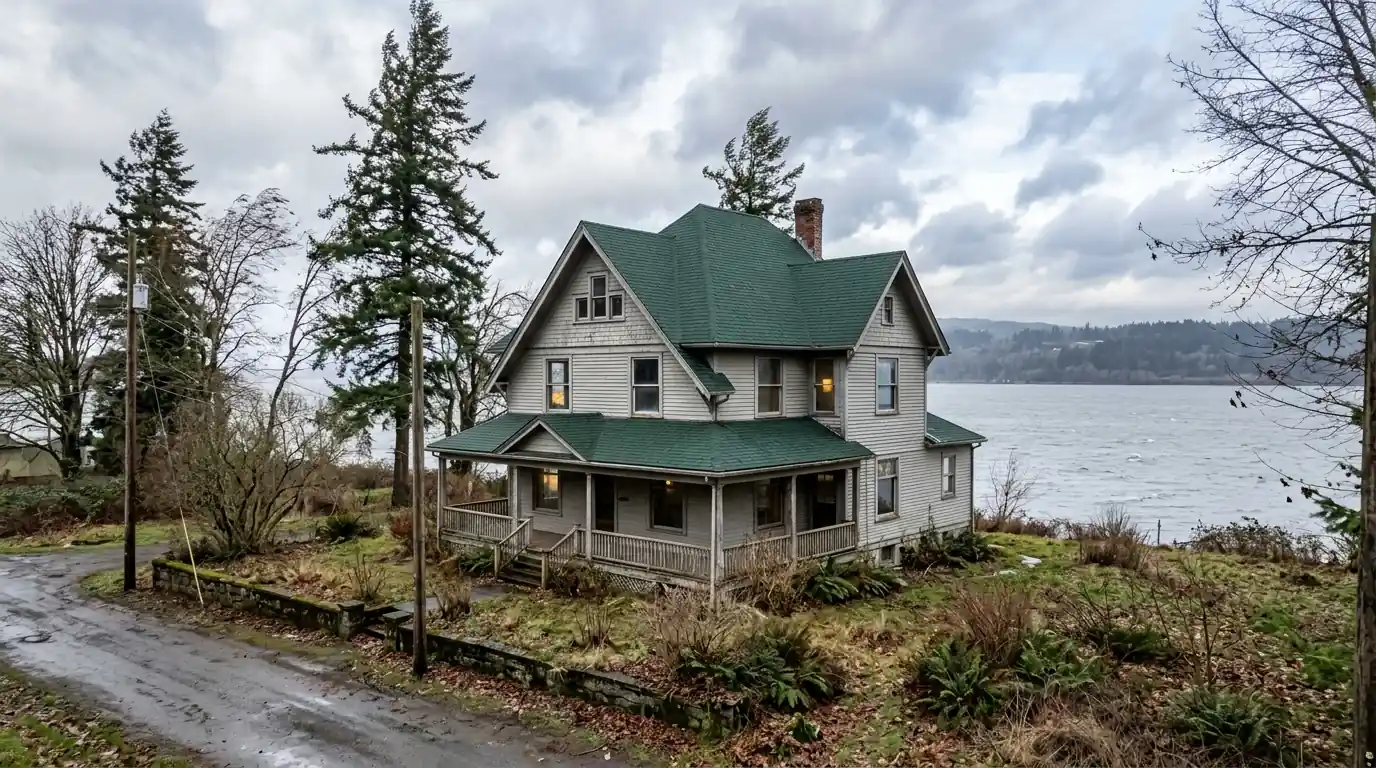
St. Helens homes from the waterfront to the hills
Older houses near the St. Helens waterfront often have steep gable roofs, small dormers and brick chimneys, with framing and decking much like early homes in Portland. Many have been reroofed several times over the years, and some still have layers that should have come off long ago. Mid-century homes farther from the river have simpler, lower-pitched roofs that hold up well but often lack attic venting. Newer homes on the hills above town look much like suburban builds elsewhere in the metro, with architectural composite and plenty of valleys.
Metal roofing is common here on shops, barns and detached garages, and more homeowners are choosing it for houses too. Exposed-fastener metal on older outbuildings needs screws replaced as washers wear out, or it starts to leak at every fastener. On a house, standing seam metal with hidden clips is the usual choice, since it handles river wind well and sheds rain fast. Some owners pair a metal house roof with a matching shop. Others keep composite on the house and use metal only on outbuildings to manage cost. Both approaches work here, and we price them side by side so you can see the difference before choosing.
What open river wind does to St. Helens roofs
Wind blowing across a wide river picks up speed and moisture with nothing to break it, so the river-facing sides of St. Helens homes take the hardest hits. Storm gusts lift shingle tabs, loosen ridge caps and drive rain sideways under flashing. Gutters and downspouts on the windward side come loose. Damp air from the river and fog that lingers on winter mornings keep roofs wet, which feeds moss and algae on shaded slopes. On metal outbuildings, constant moisture speeds rust at cut edges and around old screws, and loose panels rattle in every storm.
Our approach to roof work in St. Helens
We check which slopes face the river and look hardest at those first. For wind damage, we photograph and measure each problem for any homeowner's insurance claim. On older homes, we inspect decking and chimney flashing before pricing a new roof. For metal shops and barns, we can replace worn fasteners or the whole roof, and we schedule around stored equipment. We check city and county permit rules and pull permits where required.
What homeowners in St. Helens call us for
Wind & Storm Damage Repair
River-facing slopes in St. Helens take open wind off the Columbia that lifts shingles and peels ridge caps.
See the detailsMetal Roof Repair
Older metal shops and barns around St. Helens leak at worn screw washers and rusted panel edges.
See the detailsGarage & Shop Roofing
Detached garages and shops on many St. Helens lots need their own roof replacement, often in metal.
See the detailsRoof Replacement
Older waterfront homes in St. Helens often carry several old roof layers that need full removal.
See the detailsChimney Flashing & Cricket Repair
Brick chimneys on early St. Helens houses leak at aging flashing, especially in wind-driven rain.
See the detailsMoss Removal & Roof Cleaning
River damp and winter fog keep St. Helens roofs wet, so moss spreads fast on shaded slopes.
See the detailsRoofing questions from St. Helens
Why does the river side of my St. Helens roof wear out first?
Wind off the Columbia crosses open water with nothing to slow it, so the river-facing slopes of St. Helens homes take stronger gusts and more wind-driven rain. Shingles there lose their seal and lift sooner. We often repair or replace that side first if the rest of the roof is still sound.
Can you fix a leaking metal shop roof in St. Helens?
Yes. Many St. Helens shops and barns have exposed-fastener metal roofs that leak once the rubber washers on the screws wear out. Replacing the screws, sealing laps and treating rusted edges often stops the leak. Re-screwing a typical shop roof runs $685 to $1,740. If the panels are rusted through, a new metal roof is the better fix.
Do your crews really travel to St. Helens from Vancouver?
Yes. St. Helens is a straightforward drive from our Vancouver office across the I-5 bridge and up Highway 30. We schedule repair work, inspections and replacements in St. Helens the same way we do in Clark County, and we answer the phone 24/7 for storm damage.
Nearby areas we also roof
Roof trouble in St. Helens?
Call any time. We will set a time to look and give you a straight price.