Roofing for HOAs, condos and apartments in Vancouver, WA
When a townhome community or apartment complex has dozens of roofs aging at the same time, leaks start showing up in clusters and the budget has to stretch.
- 24/7 phones
- Commercial and specialty
- Vancouver office on Main St
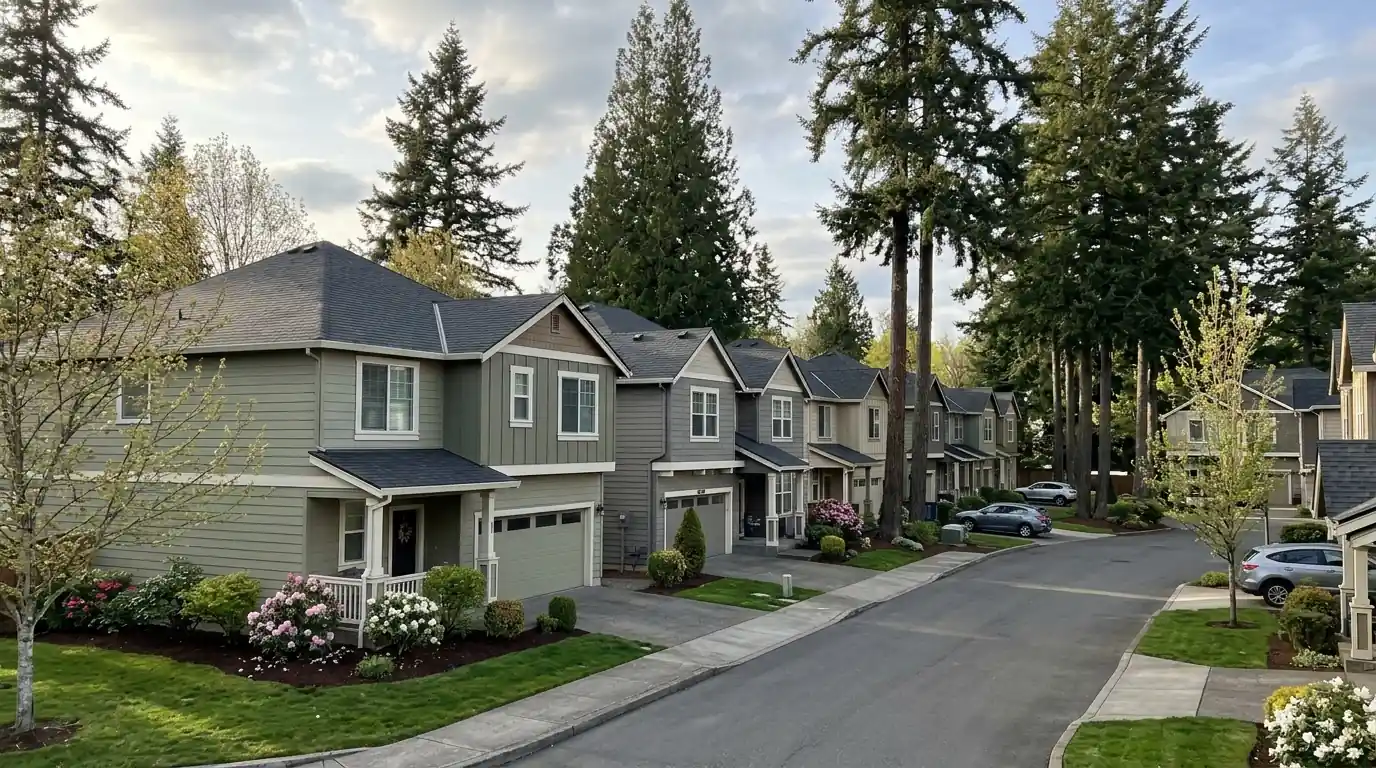
Most HOA and multi-family roof projects start with a condition survey of every building, then a phased plan that replaces the worst roofs first. Spreading the work over seasons fits reserve budgets and limits disruption. Consistent materials and colors across phases keep the community looking uniform, and clear schedules help residents know when crews will be overhead.
Multi-family roofing is a different kind of job from a single house. A townhome community might have twenty buildings that were all roofed the same year, so they all reach the end of their life together. An apartment complex has tenants under every roof and a manager who needs leaks fixed without a week of disruption. A condo board has a reserve fund, a vote to hold and owners who want to know what is happening and when.
We work with boards, managers and owners to plan the work in a way that fits the money and the people living there. That often means a roof-by-roof condition survey, a priority list of the worst buildings first, and a phased plan that spreads replacement over two or three seasons. In between, we keep the remaining roofs patched and draining so leaks do not pile up while the plan moves forward.
Starting with a condition survey
Before anyone can budget, the board or owner needs to know what shape each roof is in. We walk every building and record the roof type, age, leaks, soft decking, flashing problems, moss and gutter condition. Each roof gets photos and a simple rating, such as replace now, replace in the next few years or good for now. That gives the board a clear picture they can share with owners, and it helps the reserve study line up with what is actually on the roofs.
The survey also catches problems that are cheap to fix now and costly later. A cracked pipe boot over one unit, a valley packed with needles over another, a gutter dumping water against a foundation. We list those as small repairs so they can be done right away, even if the bigger replacement is still a season or two away. Many leak calls in older communities trace back to just a handful of these small items.
What multi-family work covers
Our crews handle the full range of roof work for communities and rental buildings, from a single urgent leak over a bedroom to a full replacement of every building in phases. We keep one point of contact for the board or manager, so questions and updates go through one phone line and nothing gets lost between the office, the crew and the residents. Urgent leaks over occupied units get priority on the schedule.
- Roof-by-roof condition surveys with photos
- Phased replacement plans for reserve budgets
- Leak repair and quick response for occupied units
- Gutter, moss and valley upkeep across buildings
- Material and color matching across phases
- Resident notices and daily cleanup plans
Phasing work to fit the budget
Few communities can replace every roof in one season, and most do not need to. A phased plan groups buildings by condition and location, so each phase is a sensible chunk of work. The worst roofs go first. Buildings close to each other get grouped to save on setup and dumpster moves. We price each phase separately and hold material choices steady across them, so the community ends up with one look rather than a patchwork of colors and styles.
Phasing also gives the board room to adjust. If a phase comes in under budget or a building turns out to be in better shape than expected, the plan can shift. If a storm damages a building scheduled for later, it can move up. We keep the plan as a working document the board can update, and we talk through changes by phone before any crew is scheduled. Owners get the same updates the board does when the board wants that.
Working around residents
Roofing over people's homes takes planning. Residents need notice of when crews will be overhead, where to park, and when noise will start each day. We post notices ahead of each building, protect patios and walkways, run a magnet sweep for nails every afternoon and keep dumpsters away from entrances. Each building is dried in at the end of every shift, and we give managers a short phone update so they can answer resident questions.
Signs a community's roofs need a plan
Leak calls in clusters
Several units calling about stains in the same winter usually means a whole phase of roofs is wearing out together.
Moss on many buildings
Thick moss across several roofs shows shingles staying wet and aging faster than the reserve study assumed.
Mismatched patch repairs
Patches in different colors on many buildings mean the roofs are being kept going one leak at a time.
Curling or bald shingles
Shingles with curled edges or bare spots across the complex point to roofs near the end of their life.
Gutters overflowing everywhere
Gutter overflow on many buildings during normal rain shows deferred upkeep that is now soaking fascia and siding.
No roof records on file
A board with no photos or condition notes on its roofs has no way to plan or budget well.
How we handle multi-family & hoa roofing
Survey every roof
We walk each building, record roof condition and photograph problems, then give the board a clear roof-by-roof summary.
Fix urgent items
Active leaks and small, high-risk problems get repaired right away so units stay dry while the bigger plan is built.
Build the phased plan
We group buildings by condition and location, price each phase and set material and color choices for the whole community.
Notify and schedule
Residents get notice before work starts on their building, and the manager gets a schedule for each phase.
Replace and record
Crews complete each building, dry in every night and hand over photos and notes for the community's roof records.
Typical multi-family and HOA roofing costs
Multi-family roofing costs depend on the number and size of buildings, roof pitch, material choice and access around parking and landscaping. Grouping buildings into phases often lowers the per-building cost by sharing setup and disposal. These are typical Vancouver-area ranges, confirmed after we survey the property.
| Job | Typical range |
|---|---|
| Condition survey, per building | $185 to $365 |
| Townhome building reroof, per unit | $7,850 to $13,600 |
| Small apartment building reroof | $27,400 to $58,900 |
| Leak repair over an occupied unit | $435 to $1,180 |
Roof pitch, the number of buildings per phase, decking repairs found during tear-off and access around parked cars move the price most. See every service side by side in the roofing price guide.
Community roofs across Clark County
Much of the townhome and condo housing in Vancouver went up in the 1980s through the 2000s, especially in east Vancouver around Cascade Park, Fishers Landing and Five Corners, and north in Salmon Creek and Mount Vista. Many of those communities had all their roofs installed within a year or two, so the roofs are now aging out on the same timeline. Several were built with cedar shake that is past its life, and boards are converting to architectural composite shingles, often in colors the HOA approves ahead of time.
Tall firs between buildings and Gorge winds on the east side make upkeep matter. Needles pack valleys and gutters on every building, and lifted ridge caps show up after each windy night. A shared upkeep schedule keeps those small problems from turning into leaks across the whole complex. We also work with apartment owners on the Oregon side, in Portland, Gresham and Beaverton, where the same aging roofs and heavy tree cover show up on older complexes.
Multi-Family & HOA Roofing questions
Can multi-family and HOA roofing be done in phases?
Yes, and most communities do it that way. We survey every building, then group roofs by condition and location into phases that fit the reserve budget. The worst roofs go first. Material and color choices stay the same across all phases, so the community has one consistent look when the work is done.
How do residents know when HOA roofing work will happen on their building?
We post notices on each building ahead of work and give the manager or board a schedule to share. Notices cover the start date, expected hours, parking and patio items to move. On the day, crews protect walkways and landscaping, and a nail sweep runs before they leave each afternoon.
Can the HOA choose a new roof color during a community reroof?
Yes. Many associations pick a new shingle color or style when replacing roofs, especially when moving from cedar shake to composite. We bring samples, can lay out options on one building, and help the board narrow choices. Once approved, the same color is used on every building in every phase.
What does an apartment roofing leak repair cost per unit?
Most leak repairs over an occupied apartment fall between a few hundred and just over a thousand dollars, depending on the cause and roof type. Cracked pipe boots and lifted flashing are on the low end; rotted decking or valley failures cost more. We photograph the problem and price it before starting any work.
Work that often goes with it
Cedar Shake to Composite Conversion
Tear off a worn cedar shake roof and replace it with architectural composite shingles over new solid decking and underlayment.
See the detailsRoof Maintenance Plans
Scheduled fall and spring roof visits that clear debris, reseal small gaps and catch moss before it lifts shingles.
See the detailsRoof Replacement
Full tear-off and replacement with new underlayment, flashing, vents and your choice of shingle, metal or other roofing.
See the detailsMulti-Family & HOA Roofing around Vancouver
Our crews do this work across Clark County and the Portland side, including:
Call about multi-family & hoa roofing
Phones are answered 24/7. Tell us what you are seeing and we will set a time to look.