Roofing materials compared for Vancouver, WA homes
A side-by-side look at the roofing materials we install around Clark County and the Portland metro, with typical lifespans, installed costs, and how each one handles wind and moss.
What matters most here
- Rain
- Most of it falls October through May
- Moss and shade
- North slopes under firs stay wet
- East wind
- Gorge gusts test edges and ridges
Choosing a roof here comes down to more than looks. Our long wet season, Gorge east winds and heavy fir cover all test a roof in ways that sales brochures written for drier places do not mention. A material that lasts a long time in sunny climates can wear out early on a shaded north slope in Felida, and a light panel that suits a flat lot may not be the right pick on an exposed ridge in Washougal. The table below sums up what we see on real homes in the area.
Costs are shown per square, which is 100 square feet of roof surface, installed with tear-off of one layer and new underlayment. They are typical 2026 ranges only. Pitch, access, decking repairs and flashing details all move the final figure, and the real number comes after we look at the roof. Lifespans are typical for our climate, not warranty terms, which vary by product.
| Material | Typical life here | Installed cost | Wind | Moss | Best for |
|---|---|---|---|---|---|
| 3-tab composite shingles | 15 to 20 years | $415 to $590 per square | Flat tabs lift and tear in strong east wind as the seal strips age | Thin surface wears quickly under moss, especially on shaded slopes | Sheds, rentals and tight budgets on sheltered lots |
| Architectural composite shingles | 20 to 30 years | $485 to $840 per square | Thicker laminated shingles hold up much better than 3-tab when nailed to spec | Grows moss on north slopes; zinc strips and regular treatment help | Most Clark County homes, HOA neighborhoods and shake conversions |
| Standing seam metal | 40 years or more | $1,260 to $2,140 per square | Concealed fasteners and locked seams resist uplift very well | Sheds needles and rain fast, so moss rarely takes hold | Windy east-county lots, homes under firs and modern designs |
| Metal shingles or stone-coated steel | 35 to 50 years | $1,035 to $1,580 per square | Interlocking panels handle gusts well when installed correctly | Textured coating can hold some debris but resists moss better than composite | Owners who want a shake or tile look with metal durability |
| Cedar shake | 15 to 35 years, depending on shade and upkeep | $965 to $1,470 per square | Heavy shakes stay put, but split and dried shakes can pull loose | Very prone to moss and rot under trees; needs regular care | Rustic or historic homes where the owner commits to upkeep |
| Concrete tile | Tiles 50 years or more; underlayment much less | $1,120 to $1,790 per square | Weight helps, but loose or poorly fastened tiles can shift | Porous surface grows moss and lichen; periodic cleaning needed | Homes built for the weight that already have tile |
| Synthetic slate | 30 to 50 years | $1,380 to $2,260 per square | Individually nailed pieces resist lifting well on steep roofs | Dense surface resists moss better than wood or composite | Steep Craftsman and custom homes wanting a slate look without the weight |
| TPO membrane (low-slope roofs) | 18 to 25 years | $735 to $1,180 per square | Fully adhered or well-fastened sheets resist uplift; edges are the weak point | Smooth surface stays mostly clean if water drains off | Flat additions, porch roofs, ADU shed roofs and low-slope garages |
Costs are typical installed ranges per roofing square (100 square feet) around Vancouver and Portland. Your price follows an inspection.
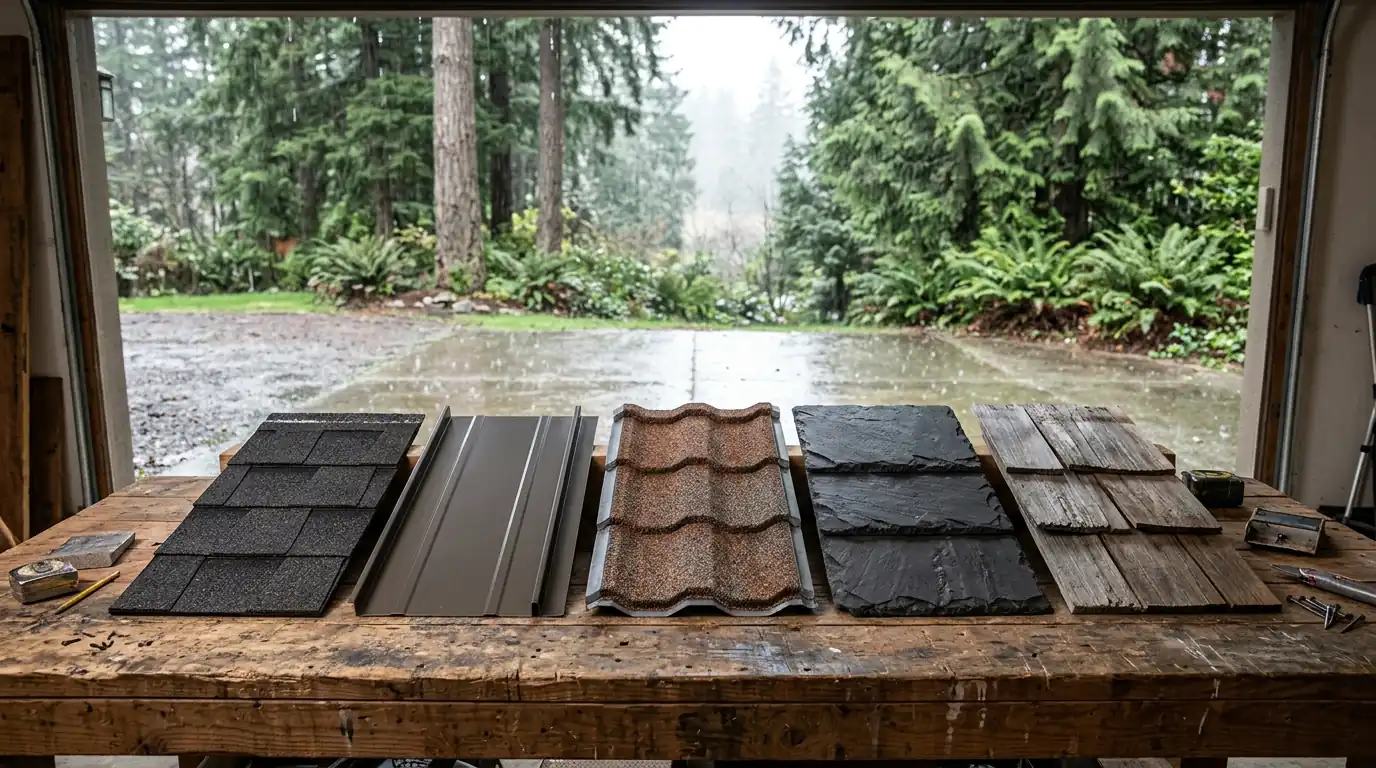
How wind exposure should shape your choice
If your home sits on an open lot in east Vancouver, Camas, Washougal or anywhere with a clear line to the Gorge, wind should weigh heavily in the decision. Fall and winter east winds come in cold and steady, then gust hard. Over a few seasons, those gusts break the seal strips on composite shingles and loosen ridge caps. Architectural shingles installed with the full nailing pattern and good starter strips handle this far better than 3-tab. Standing seam metal and stone-coated steel go further, since their fastening systems resist uplift across the whole panel, not one tab at a time.
Trees, shade and moss
Homes under tall firs live with damp roofs and a steady fall of needles. Moss settles first on north slopes and in shaded valleys, then lifts shingle edges and holds water against the surface. Smooth, hard materials resist this best. Standing seam metal sheds needles with each rain and rarely grows moss. Synthetic slate and stone-coated steel hold up better than composite. Cedar shake and concrete tile are the most demanding under trees, since both surfaces stay wet and grow moss quickly. Any material benefits from trimming branches back, clearing valleys each fall, and moss prevention on the shaded side.
Weight, structure and switching materials
Changing materials is common here, especially when a 1980s cedar shake roof reaches the end and gets converted to architectural composite. That switch usually means adding solid sheathing over the old spaced boards. Going the other way, to concrete tile, is much harder, because tile weighs several times more than composite and many framed homes were not built to carry it. Synthetic slate and metal both weigh far less than real slate or tile. Before we recommend a change, we look at the framing and decking from the attic and tell you plainly whether the structure suits the material you have in mind.
HOAs, matching and resale
Many subdivisions in Cascade Park, Fishers Landing, Felida and Mount Vista have HOAs that must approve roof color and material. Some allow only composite shingles in a short list of colors, while others accept metal or synthetic slate with approval. Check your covenants and get approval in writing before you commit. Resale matters too. Buyers in most Clark County neighborhoods expect composite or metal, and a well-documented newer roof helps a sale. A material that stands out from the street may appeal to you but narrow the pool of buyers later, so weigh both before you choose.
Material pages
Asphalt Shingle Roofing
New architectural and designer asphalt shingle roofs, with algae-resistant options that hold up under fir shade and rain.
See the detailsMetal Roofing
Standing seam and exposed-fastener metal roofs that shed rain, fir needles and moss and stand up to strong Gorge winds.
See the detailsSynthetic Slate Roofing
Lightweight composite slate tiles with the look of stone, installed over solid decking and full underlayment for wet winters.
See the detailsCedar Shake Roofing
Repair, partial replacement and full new cedar shake roofs, with proper interlayment, spacing and ventilation for wet winters.
See the detailsCedar Shake to Composite Conversion
Tear off a worn cedar shake roof and replace it with architectural composite shingles over new solid decking and underlayment.
See the detailsFlat & Low-Slope Roofing
TPO, PVC, EPDM and modified bitumen roofs for flat and low-slope sections, with drainage fixes so water stops ponding.
See the detailsMaterial questions
Which roofing material lasts longest under fir trees in Vancouver, WA?
Standing seam metal usually holds up best under heavy fir cover. Its smooth panels shed needles and rain quickly, so moss rarely gets a start, and there are no tabs for debris to lift. Synthetic slate and stone-coated steel come next. Cedar shake and concrete tile need the most care under trees. Whatever you choose, clearing valleys and trimming limbs adds years.
Is synthetic slate worth the extra cost over architectural shingles on a Clark County home?
It can be for a steep, visible roof where the look matters and you plan to stay a long time. Synthetic slate typically lasts longer, resists moss better and handles wind well, but it costs roughly two to three times as much as architectural composite per square. On a low-visibility ranch roof, the extra spend rarely pays back. We can price both side by side for your roof.
Can my house carry concrete tile if I am replacing a composite roof in Vancouver, WA?
Often not without structural work. Concrete tile weighs several times more than composite shingles, and many framed homes here were built for lighter roofs. An engineer usually needs to check the framing before switching. If you like the look of tile, stone-coated steel or synthetic options give a similar profile at a fraction of the weight. We check the framing before recommending any change.
Not sure which roof fits your house?
Call and we will look at the roof, the pitch and the trees around it before recommending anything.