Soft spots underfoot? Roof decking replacement in Vancouver, WA
Part of your roof feels spongy, sags between rafters, or shows dark, crumbling wood from the attic, and the shingles on top cannot hold if the base is failing.
- 24/7 phones
- Roof repair
- Vancouver office on Main St
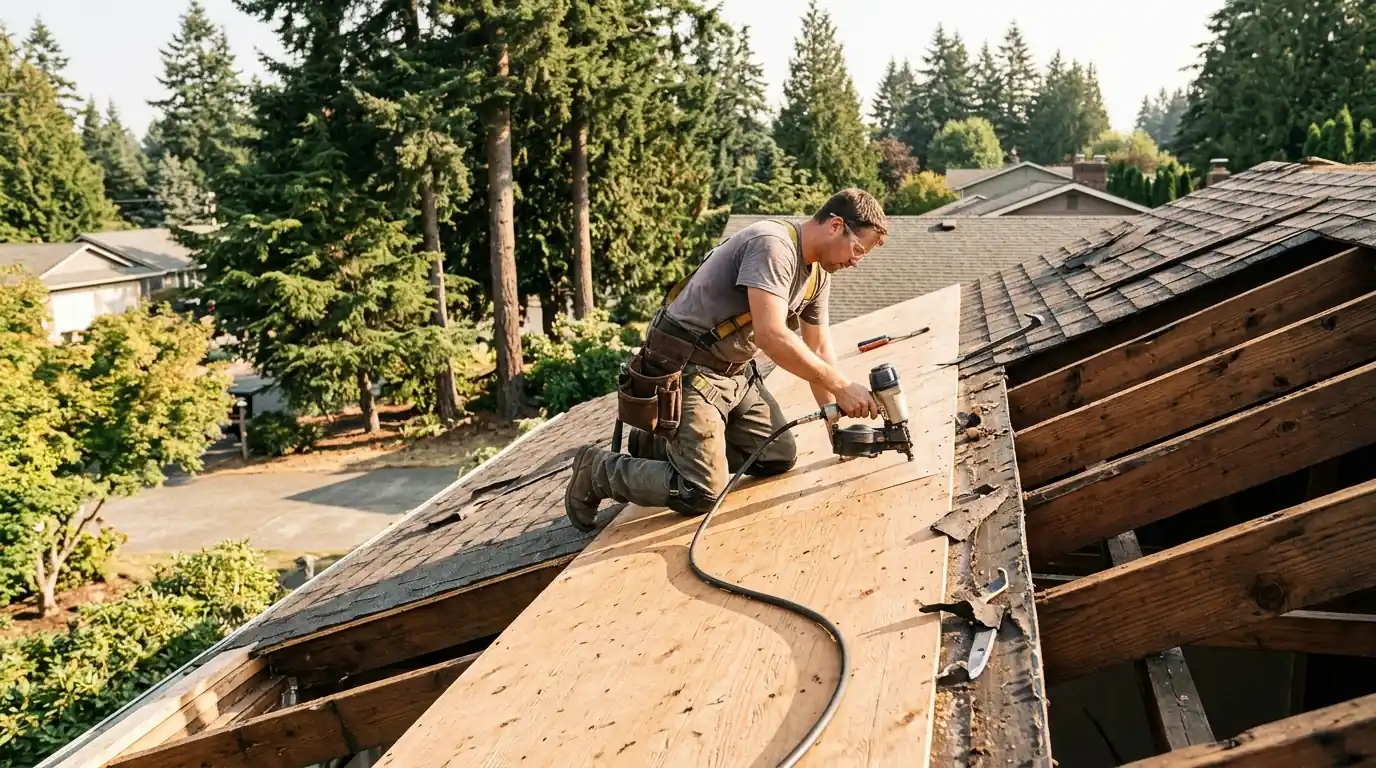
Roof decking replacement removes soft, rotted or delaminated sheathing and installs new plywood or OSB on solid framing. In the Vancouver area, replacing decking typically runs $96 to $148 per sheet installed during other roof work, or $745 to $2,860 as a standalone repair. Finding and fixing the moisture source matters just as much as the new wood.
Roof decking, also called sheathing, is the layer of plywood, OSB or old board planks nailed to the rafters. Shingles and underlayment sit on top of it, and nails have to grip it to hold the roof down in wind. When decking gets wet over and over, it softens, swells, delaminates or rots. Shingles laid over bad decking will not seal flat, and nails pull loose.
Decking replacement is part of most leak repairs that have gone on too long, part of many full roof replacements, and sometimes a job on its own. We find the extent of the damage, cut the bad wood back to solid framing, install new sheathing of the right thickness, and rebuild the roof surface. If we find the cause, such as a leak or poor ventilation, we fix that too.
What causes roof decking to fail
Most decking damage comes from water that sits in the wood for a long time. A slow leak at a pipe boot, valley or chimney can soak the same patch of sheathing every rainy season for years before a stain shows up inside. Gutters that overflow along the eaves soak the lower edge of the decking. In both cases, the wood darkens, softens and loses its grip on nails, and the damage keeps growing quietly until someone steps on it.
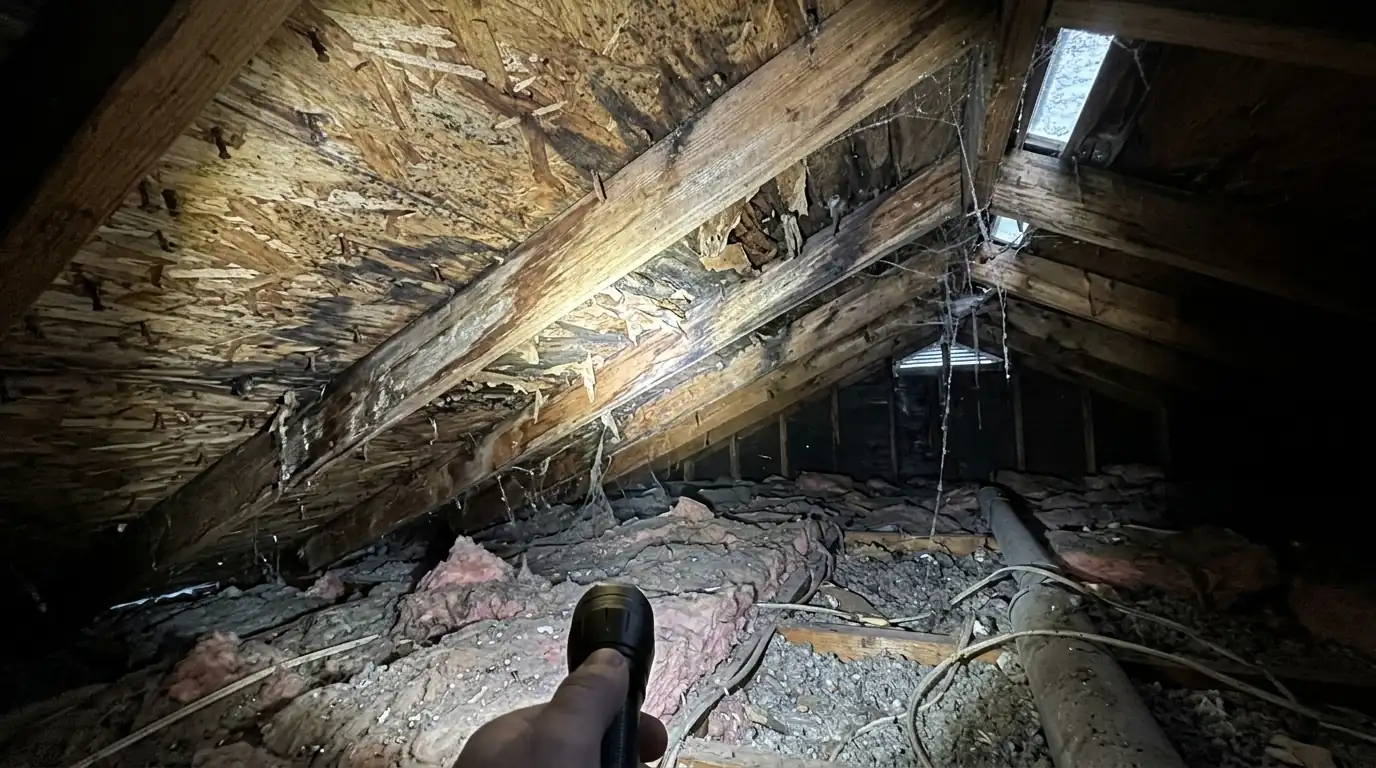
Attic moisture is the other big cause. When warm, damp air from the house rises into a poorly vented attic, it condenses on the cold underside of the decking all winter. OSB is especially prone to swelling and flaking when that happens year after year. You may see black staining across large areas of the attic, frost on nail tips on cold mornings, or a wavy roof line from outside as the sheathing swells between rafters.
How we find and replace bad decking
From the roof, we walk the surface and probe soft areas. From the attic, we look for dark stains, flaking layers and nails that have rusted or pulled through. Once we expose the decking, we test the wood around the damage with an awl, since rot often spreads farther than it looks. Every bad section is cut back to the center of the nearest rafters so new sheets have full support on both edges.
- Probe and mark soft areas from above
- Check the attic for stains and flaking layers
- Cut back to the centers of solid rafters
- Install sheathing matched to the existing thickness
- Use clips or blocking where the framing needs it
Plank decking on older Vancouver homes
Many early 1900s homes and Craftsman bungalows near downtown Vancouver have board planks instead of plywood. Those boards were often laid with gaps for the wood shingles that topped them originally. Composition shingles need a solid surface, so when we reroof these houses, we often add a layer of plywood over the planks or replace the worst boards. We check plank condition carefully, since a single cracked board can leave a weak line across the roof.
Some mid-century homes have plywood that has delaminated over decades, especially near the eaves and around old chimneys. It may look fine from below but lose strength where it matters. When a roof is off for replacement, we inspect every sheet and replace the ones that fail. We tell you the count and show photos before we close it up, so there is no guessing about what was replaced and why.
Fixing the cause so it does not come back
New decking will rot just like the old if the moisture source stays. If the damage traces back to a leak, we repair the flashing, boot or valley at the same time. If it comes from attic moisture, we look at soffit and ridge vents, bath fans venting into the attic, and gaps in the ceiling that let warm air rise. A decking repair that ignores the cause is a temporary fix, and we will tell you that up front instead of hiding it.
Signs your roof decking needs replacing
Spongy feel underfoot
A section of roof that gives or flexes when you step on it usually has soft or rotted sheathing below the shingles.
Sag between rafters
A wavy or dipping roof line between framing members means the decking has softened and is losing its shape.
Dark attic staining
Black or dark brown patches on the underside of the decking show repeated moisture, from leaks or condensation.
Flaking or swollen OSB
Sheathing that peels in layers or has puffed up edges has lost its strength and will not hold nails well.
Nails poking through shingles
Nail heads lifting the shingles above them often means the decking below can no longer grip the fasteners.
Daylight through boards
Light visible between planks or through cracks in the sheathing means the base layer has holes water can reach.
How we handle roof decking replacement
Call and describe it
Call (360) 803-6405 and tell us where the soft area is, how big it seems, and whether there has been a leak or attic moisture.
Inspect roof and attic
Our roofer probes the surface, checks the attic underside for staining and flaking, and estimates how far the damage spreads.
Remove roofing and bad wood
We strip shingles and underlayment over the area, then cut damaged sheathing back to the centers of solid rafters on all sides.
Install new sheathing
New plywood or OSB matched to the existing thickness is fastened to the framing, with clips or blocking added where needed.
Rebuild and fix the cause
We install new underlayment and roofing, repair the leak or ventilation problem behind the damage, and clean up the site.
Roof decking replacement costs near Vancouver
Decking replacement is priced by the sheet during a full roof replacement, or as a repair that includes removing and rebuilding the roofing on top. Price depends on how many sheets fail, the roof pitch, and what material we are matching. The ranges below are typical for 2026 in the Vancouver and Portland-metro area. Your real number comes after we expose the wood.
| Job | Typical range |
|---|---|
| Per sheet during a roof replacement | $96 to $148 |
| Small repair (one to three sheets) | $745 to $1,480 |
| Larger section with reroofing | $1,390 to $2,860 |
| Plywood overlay on plank decking (per square) | $165 to $235 |
Number of failed sheets, roof steepness, plank versus plywood decking and the repair of the moisture cause move the price. See every service side by side in the roofing price guide.
Damp winters and Clark County roof decking
Clark County's climate is hard on roof sheathing in a slow, steady way. Rain falls most days from October through May, and long gray stretches mean roofs rarely dry out fully between storms. North-facing slopes under tall Douglas firs stay damp the longest, and moss there holds water against the shingles and decking. On many 1980s and 1990s homes in east Vancouver and Orchards, we find OSB near the eaves softened by years of gutter overflow under fir needles. Those edges fail first.
Older homes near Hough and Arnada often have original plank decking that held up for decades under wood shingles, then got covered with composition layers. When those roofs come off, we check every board and add plywood where it is needed, so the new roof sits on a sound base. Rural shops and barns around Brush Prairie and La Center often have open plank decking too, and we size the fix to how the building is used.
Roof Decking Replacement questions
How do roofers know how much roof decking replacement is needed before tearing off?
We estimate from the attic and from probing the roof surface, but the real count comes only after the shingles are off. That is why we price decking by the sheet during a replacement. You see the exact number replaced, with photos, before the roof is closed up. Nothing is added without being shown to you.
Can roof decking replacement be done without a full reroof?
Yes. For local damage, we remove shingles and underlayment over the area, replace the bad sheathing, and weave new roofing into the existing roof. It works well when the rest of the roof is sound. If the shingles around the area are too brittle to lift, replacing that slope may make more sense.
Is plywood or OSB better for roof decking replacement?
Both are widely used and work well when they stay dry and the attic is vented. Plywood tends to tolerate repeated wetting a bit better and dries out faster, while OSB is more consistent from sheet to sheet and usually costs less. When we patch, we match the existing thickness so the roof surface stays flat. We can discuss the options for a full replacement.
Will roof decking replacement fix a sagging roof?
If the sag comes from soft decking between rafters, new sheathing usually flattens it out. If the rafters or ridge themselves are bowing or cracked, the framing needs repair too. We check the framing from the attic before giving a price, so you know whether you are dealing with decking only or a structural issue.
Work that often goes with it
Roof Leak Repair
Leak tracing and repair for stains, drips and attic moisture. We follow the water back to where it actually enters the roof.
See the detailsAttic Ventilation
Balanced intake and exhaust venting that keeps attic air moving, cuts winter condensation and helps shingles last longer.
See the detailsRoof Replacement
Full tear-off and replacement with new underlayment, flashing, vents and your choice of shingle, metal or other roofing.
See the detailsRoof Decking Replacement around Vancouver
Our crews do this work across Clark County and the Portland side, including:
Call about roof decking replacement
Phones are answered 24/7. Tell us what you are seeing and we will set a time to look.