Attic insulation in Vancouver, WA, done with the roof in mind
A thin, patchy layer of old insulation lets heat escape through the ceiling, warms the roof deck unevenly and leaves upstairs rooms cold all winter.
- 24/7 phones
- Inspections and roof care
- Vancouver office on Main St
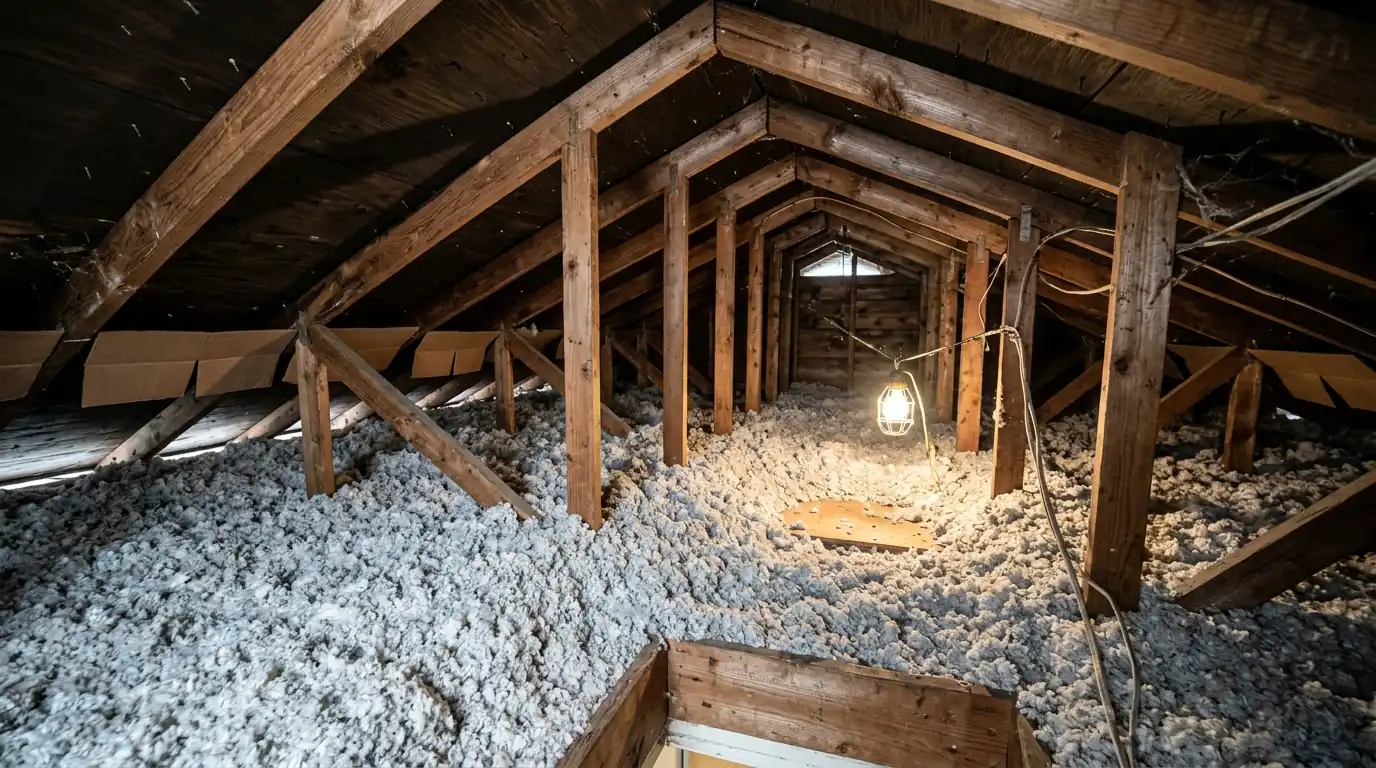
For most Vancouver attics, the goal is a deep, even layer of blown-in insulation over a sealed ceiling, with baffles keeping the eaves open. Air sealing comes first, since gaps around lights and pipes leak more moisture than the insulation can stop. A typical top-up adds several inches over what is there, without removing good material.
Many homes around Vancouver still have the insulation they were built with. In a 1960s ranch that might be a few inches of settled fiberglass batts. In a 1990s subdivision it might be blown-in fill that was never topped up in thirty years and now has bare spots where someone walked through to run cable. Either way, heat leaks up into the attic, your furnace runs longer, and the roof deck gets warm and cold in patches.
We approach insulation from the roof side. Before adding anything, we look at ventilation, because piling insulation over blocked soffits traps moisture against the decking. Then we air-seal the ceiling so damp indoor air stops rising into the attic. Only after that do we add new insulation over the old, keeping a clear channel at every eave so the roof can still breathe.
Air sealing comes before insulation
Insulation slows heat, but it does not stop air. Warm, moist air moves right through fiberglass and loose fill. The real leaks are the holes in the ceiling: recessed light housings, the attic hatch, wiring holes in the top plates, the chase around a chimney or furnace flue, and the gap where plumbing stacks pass through. We seal those with foam, caulk and fire-rated materials where heat sources are involved, before any new insulation goes down.
This step matters even more in a wet climate. Moist air leaking into the attic is the main source of the condensation and mold we find on roof decks around the county. Sealing the ceiling takes that moisture out of the attic at the source, so the ventilation only has to handle what is left. The result is a drier roof deck and a warmer house from the same work.
Insulation options for attics
Most attics we work on get blown-in fiberglass or cellulose because it fills around joists, wires and odd framing better than batts. Batts still make sense over a garage or in a knee wall where loose fill will not stay put. If the old insulation is wet, moldy, full of rodent waste or was installed over a roof leak, we remove it first rather than burying the problem. Covering damaged material only hides it for the next owner.
- Blown-in fiberglass top-ups
- Blown-in cellulose for deep, dense coverage
- Batts for knee walls and over garages
- Insulated, weatherstripped attic hatch covers
- Rafter baffles at every eave
- Removal of wet or contaminated old insulation
How insulation affects your roof
An under-insulated attic puts uneven heat onto the roof deck. In a cold snap those warm spots melt any snow or ice from below, and the water turns to ice again at the colder eaves, building ice dams that push water under the shingles. Snow is not common here, but when it does fall on a poorly insulated roof, the leaks show up fast along the first few feet above the gutters. Even one ice storm can do this.
The other risk runs the opposite way. When insulation is blown in carelessly, it slides into the eaves and blocks the soffit vents. That cuts off intake air, the attic stops venting, and condensation builds on the deck. We set a baffle in each rafter bay before blowing, so the insulation stops short of the eave and the airflow channel stays open from soffit to ridge. We check each bay with a light before we leave.
Pairing insulation with roof work
If a roof replacement is coming up in the next year or two, it is worth planning the attic work around it. We can fix ventilation from above while the roof is open, then air-seal and insulate from inside once the new roof is on. Doing them in that order means each part gets done once, and the new shingles start life over a dry, well-balanced attic. It also keeps the ceiling from being disturbed twice.
Signs your attic needs more insulation
Joists showing through
If you can see the tops of the ceiling joists, the insulation is too thin for this climate.
Cold upstairs rooms
Bedrooms under the roof stay noticeably colder than the rest of the house through the winter.
Patchy frost on the roof
Frost that melts in patches on a cold morning shows where heat is escaping through the ceiling.
Dark streaks in insulation
Dirty streaks on fiberglass mark the spots where air is leaking up from the rooms below.
Icicles along the eaves
Icicles after a rare snow can point to heat loss melting the snow from underneath.
Matted or wet patches
Flattened or damp areas of insulation have lost most of their loft and most of their value.
How we handle attic insulation
Check attic and vents
We measure insulation depth, look for wet or moldy spots, and confirm soffit intake and exhaust vents before planning anything.
Clear what has to go
Wet, moldy or rodent-damaged insulation is bagged and removed so new material is not laid over a problem.
Seal the ceiling
Gaps around lights, wires, stacks, flues and the hatch get sealed with foam, caulk or fire-rated material as needed.
Set baffles
We staple a baffle into each rafter bay at the eaves to keep the new insulation clear of the soffit vents.
Blow to depth
New insulation is blown to an even depth across the attic, with depth markers left so you can see the result.
Typical attic insulation costs
Insulation cost depends on attic size, how much is already there, how many gaps need sealing and whether old material has to come out first. These are typical Vancouver-area ranges for common jobs. We give you the real price after we have been up in your attic and measured it.
| Job | Typical range |
|---|---|
| Air sealing the attic floor | $585 to $1,340 |
| Blown-in top-up over existing insulation | $1,265 to $2,690 |
| Removal of old insulation | $1,480 to $3,350 |
| Full removal, sealing and new insulation | $3,180 to $6,470 |
Tight attic access, many recessed lights and contaminated insulation that needs careful removal push the price up. See every service side by side in the roofing price guide.
Insulation for Vancouver's older and mid-century homes
Craftsman bungalows near downtown Vancouver, in Hough and Arnada, often have attics with little or no insulation and open gaps where old framing lets air rise straight up from the walls. Mid-century ranches in Hazel Dell, Walnut Grove and Bagley Downs usually have a thin layer of old batts with plenty of bare spots. Both get damp, gray winters where the furnace runs for months, so closing those gaps shows up quickly on heating bills. Knob-and-tube wiring, still found in a few older homes, has to be checked before any insulation covers it.
Newer east-side subdivisions like Fishers Landing and Sifton tend to have decent depth but poor sealing around recessed lights and the attic hatch. In those homes air sealing often matters more than adding inches. Wherever the house is, we check with the local building department and pull permits when the work calls for one. We also leave the attic hatch insulated and weatherstripped, since an open hatch can undo much of the gain.
Attic Insulation questions
How much attic insulation is right for a home in Vancouver?
Energy rules in the Northwest call for deep attic insulation, and many older homes have only a fraction of it. We measure what you have, then add enough blown-in material to reach a full, even depth. The exact target depends on your attic and current local rules, which we confirm before starting.
Does attic insulation work include removing the old material?
Only when it needs to go. Dry, clean insulation stays in place and new material goes on top. We remove it when it is wet, moldy, matted from an old roof leak or contaminated by rodents. Removal adds cost, so we show you photos of the problem areas before recommending it.
Can attic insulation block my roof vents?
It can if it is blown in carelessly, and it happens often. Loose insulation slides into the eaves and covers the soffit vents, which stops intake air and leads to condensation on the roof deck. We set a baffle in every rafter bay before blowing, so the insulation stays back from the eaves.
Should attic insulation be done before or after a new roof?
Ideally after. If a reroof is coming soon, we fix ventilation from above while the roof is open, then air-seal and insulate from inside once the new roof is on. That avoids crews walking on fresh insulation and gives the new shingles a dry, balanced attic from day one.
Work that often goes with it
Attic Ventilation
Balanced intake and exhaust venting that keeps attic air moving, cuts winter condensation and helps shingles last longer.
See the detailsRoof Replacement
Full tear-off and replacement with new underlayment, flashing, vents and your choice of shingle, metal or other roofing.
See the detailsRoof Inspection
A full roof check covering shingles, flashing, vents, decking and attic, with photos and a written plain-language summary.
See the detailsAttic Insulation around Vancouver
Our crews do this work across Clark County and the Portland side, including:
Call about attic insulation
Phones are answered 24/7. Tell us what you are seeing and we will set a time to look.