Concrete tile roof repair for Vancouver, WA homes
A concrete tile roof can look solid from the street while cracked tiles and worn underlayment let water reach the deck below every time it rains.
- 24/7 phones
- New roofs and materials
- Vancouver office on Main St
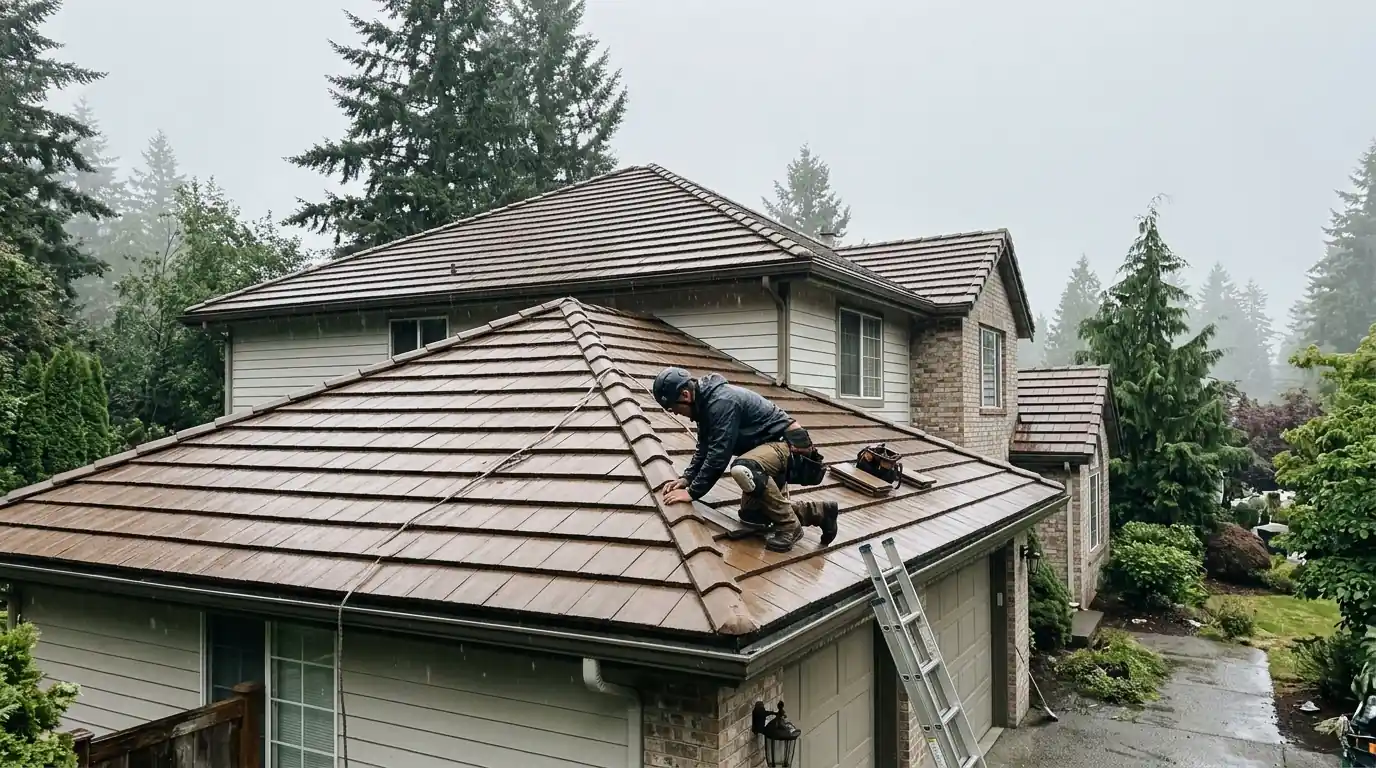
Most concrete tile roof leaks are fixed by replacing cracked tiles, repairing ridge and flashing details, or, on older roofs, lifting the tiles to install new underlayment and setting them back. Because the tiles usually outlast the felt beneath them, a full tear-off is rarely needed. The key is matching broken tiles and not cracking more during the repair.
Concrete tile is heavy, fireproof and long-lived, and it shows up on some 1980s and 1990s homes around Clark County and the Portland metro. The tiles themselves rarely wear out. What fails is everything around them: the felt underlayment that actually keeps water out, the battens the tiles hang on, the ridge mortar or ridge fasteners, and the flashings at walls and valleys.
Concrete tile repair is careful work. The tiles break if someone walks on them the wrong way, so many tile roof leaks we find were caused by a previous trade walking the roof. Our roofers know where to step, carry spare tiles and move pieces without cracking their neighbors. We also handle the bigger job of lifting tiles, re-laying new underlayment and setting the same tiles back.
Why tile roofs leak even when tiles look fine
Concrete tiles shed most water, but not all. Wind-driven rain and runoff get under the tiles and drain down the underlayment to the eave. That felt layer is the true waterproofing. On older tile roofs, the original felt dries out, cracks along the batten lines and turns brittle, especially near the eaves where it gets the most heat and water. Once it splits, water reaches the deck even with every tile intact.
Moss is another problem. On shaded slopes moss grows in the gaps between tiles, dams water, and pushes it sideways under the laps. Fir needles do the same in valleys. Broken tiles are the easiest cause to spot, often cracked by foot traffic from satellite installers, painters or gutter cleaners, or by falling limbs during storms. A single cracked tile can drip for months before anyone notices, since the felt below slows the water at first.
Tile repair work we handle
Our crews carry common replacement profiles and can source others from salvage and supplier stock. When a tile profile is discontinued, we pull matching tiles from a less visible area, such as behind a chimney or on a back slope, and put the new tiles there instead. That keeps the front of the house looking consistent. We also note the tile maker and profile on our records, so future repairs go faster.
- Replacing cracked and broken concrete tiles
- Resetting slipped tiles and refastening
- Rebuilding or refastening ridge and hip tiles
- Replacing valley metal under tile slopes
- Repairing wall and chimney flashing at tile
- Clearing moss and debris from tile gaps
Lift and re-lay: new underlayment, same tiles
When the underlayment has failed across the roof, the most cost-effective fix is often a lift and re-lay. We remove the tiles section by section and stack them on the roof or on pallets. The old felt and battens come off, we repair any soft decking, and then install new synthetic underlayment and battens, with new flashing at walls and valleys. Finally the same tiles go back on, with broken ones replaced from stock.
This keeps the original tiles, which are heavy and costly to replace, and avoids a full material change. Because concrete tiles are very heavy, the roof framing was built to carry them, so switching to a lighter material later remains an option. A lift and re-lay takes longer than a shingle re-roof, since every tile is handled twice. We explain the schedule before starting and keep each opened section covered overnight.
When we suggest a different roof
Sometimes the best answer is not tile at all. If many tiles are cracked or porous, or the roof has a discontinued profile that cannot be matched, owners sometimes choose to convert to composite shingles or metal. That job means removing the tiles and battens and often adding new sheathing. We price both paths so you can compare a re-lay against a full change, and we never push replacement on a tile roof that can be saved.
Signs a concrete tile roof needs repair
Cracked or chipped tiles
Visible cracks or missing corners let runoff fall straight onto underlayment that may already be brittle.
Slipped tiles
Tiles that slid down out of line expose the batten and felt beneath them to direct rain.
Stains at the eaves
Water marks on soffits or fascia often mean the felt at the bottom of the roof has failed.
Loose ridge tiles
Ridge tiles that rock or show cracked mortar open the top of the roof to wind-driven rain.
Moss in tile gaps
Thick moss between tiles dams water and pushes it sideways under the laps toward the deck.
Attic drips in storms
Drips that appear only during heavy rain usually mean water is getting past the tiles and the felt.
How we handle concrete tile roof repair
Careful roof walk
Our roofer steps only on the tile noses over battens, finds broken tiles and lifts a few to check underlayment.
Match the tile
We identify the tile profile and color, then source replacements from stock, salvage or a hidden area of the roof.
Repair or re-lay
Cracked tiles are swapped, flashings repaired, or whole sections of tiles lifted so new underlayment and battens can go down.
Reset and secure
Tiles go back in their courses, ridge and hip pieces are refastened, and valleys are cleared of moss and needles.
Final check
We look over the whole roof for any tiles cracked during the work and replace them before we leave.
Concrete tile roof repair costs
Tile repairs are priced by labor time and tile availability more than by material. These are typical ranges for homes around Vancouver and the Portland metro. The real number depends on how many tiles are broken, whether the profile is still made, roof pitch and the condition of the underlayment we find under the tiles.
| Job | Typical range |
|---|---|
| Replace a few cracked tiles | $385 to $1,060 |
| Ridge and hip repair | $1,180 to $3,240 |
| Valley metal replacement | $1,460 to $3,870 |
| Lift and re-lay, average home | $14,900 to $28,600 |
Discontinued tile profiles, steep pitch, soft decking and the number of broken tiles move tile repair prices the most. See every service side by side in the roofing price guide.
Concrete tile in a wet, mossy climate
Concrete tile is more common in sunny, dry climates, but some homes around east Vancouver, Camas and the Portland suburbs were built with it. Here, the main challenge is moisture. Concrete is porous, so tiles on shaded north slopes stay damp through the rainy season and grow moss and lichen quickly. Fir needles fill the valleys and gaps between tiles. Over years that keeps the felt under the tiles wet far longer than it was designed for, and the eave courses fail first.
Ice storms, while uncommon, can also crack tiles when limbs come down. After those events we see broken tiles and slipped courses. Keeping valleys clear and moss under control does more to extend a tile roof here than any other single habit. A yearly check after the leaves and needles drop in late fall catches cracked tiles before winter rains do real damage. We can include that check as part of a regular visit.
Concrete Tile Roof Repair questions
Can you walk on a concrete tile roof without breaking tiles during repair?
Yes, with care. Our roofers step on the lower part of each tile where it rests over the batten below, and avoid the unsupported middle. We still bring spare tiles because an old, brittle tile can crack. Any tile we break during the job gets replaced before we leave.
What if my concrete tile profile is no longer made?
We first check suppliers and salvage stock. If no match is available, we pull tiles from a hidden part of the roof, such as behind a chimney or on a rear slope, to use where they show, and fill the hidden spot with a close match.
How do I know if my concrete tile roof needs a lift and re-lay?
If leaks keep appearing in different spots and the tiles look fine, the underlayment is usually the cause. We lift a few tiles, especially near the eaves, and look at the felt. If it is cracked and brittle across the roof, a lift and re-lay with new underlayment is the lasting fix.
Can moss damage a concrete tile roof?
Moss does not destroy the tiles quickly, but it holds water, blocks the gaps tiles use to drain, and pushes water under the laps. Over time that shortens the life of the underlayment. Regular moss control and clear valleys help a tile roof last much longer here.
Work that often goes with it
Moss Removal & Roof Cleaning
Hand removal of moss, lichen and needle debris from shingle, shake and tile roofs, with gentle cleaning that protects the roofing.
See the detailsRoof Replacement
Full tear-off and replacement with new underlayment, flashing, vents and your choice of shingle, metal or other roofing.
See the detailsRoof Valley Repair
Valley rebuilds for worn, clogged or poorly cut valleys, with new underlayment and open metal or closed-cut shingle finishes.
See the detailsConcrete Tile Roof Repair around Vancouver
Our crews do this work across Clark County and the Portland side, including:
Call about concrete tile roof repair
Phones are answered 24/7. Tell us what you are seeing and we will set a time to look.