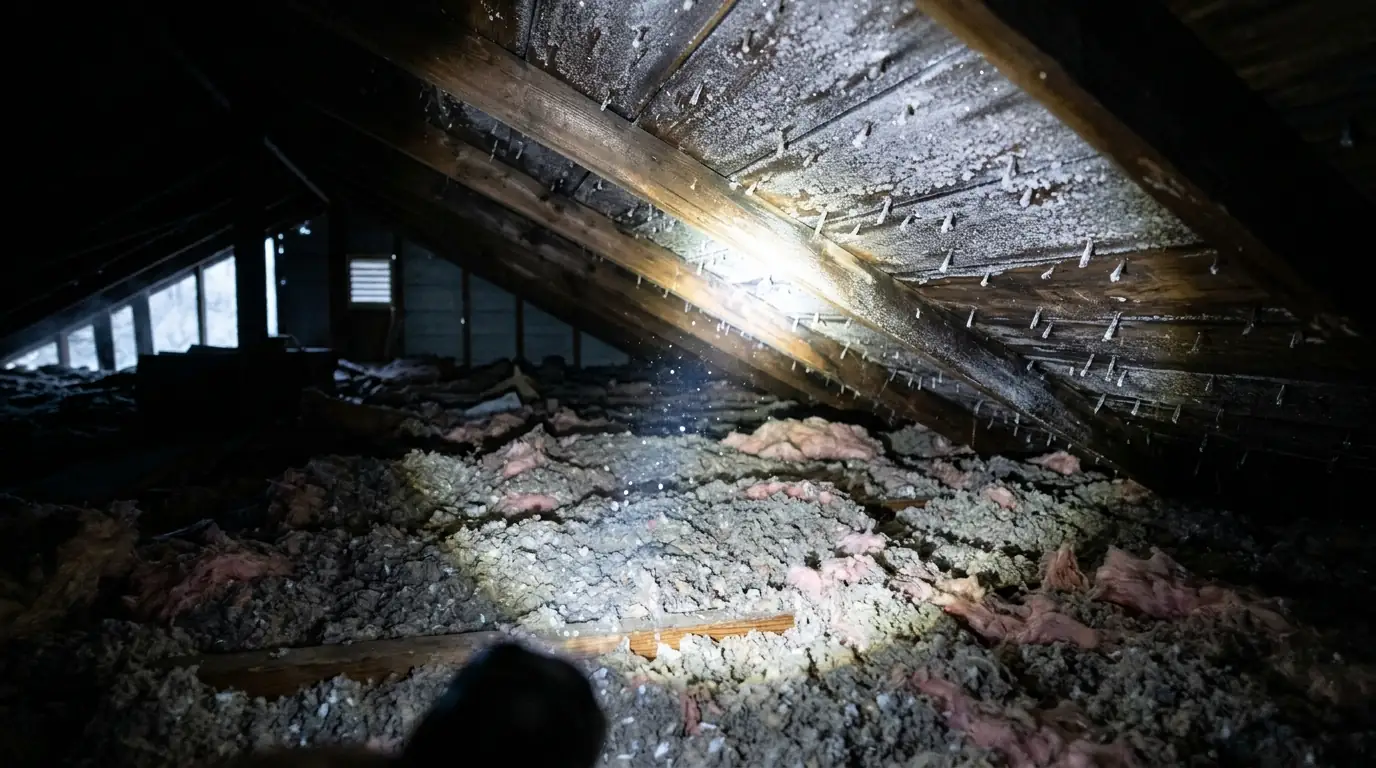
Every winter we get calls about leaks that turn out to have nothing to do with the roof covering. The homeowner sees water spots on the ceiling or finds damp insulation, and the timing is strange: it happens on a clear, cold morning after days without rain. Nails in the attic are white with frost, and the underside of the decking is wet. That pattern points to condensation, which is moisture from inside the house icing up and melting on the cold roof deck.
Telling condensation from a real leak saves money, because the fixes are completely different. Replacing shingles will not solve an attic moisture problem, and adding vents will not fix a cracked pipe boot. This post covers the signs of each, how to check, and what usually works for older and newer Vancouver homes.
How condensation builds up in an attic
Warm indoor air holds moisture from cooking, showers, laundry, and breathing. When that air leaks into the attic through gaps around light fixtures, attic hatches, plumbing stacks, and top plates, it meets the cold underside of the roof deck. On a clear winter night, the roof can drop below the outdoor temperature as it radiates heat to the sky. Moisture condenses on the sheathing and on the tips of roofing nails, and if it is cold enough, it turns to frost.
When the sun comes up and the roof warms, that frost melts all at once. Water drips off nail tips onto the insulation and sometimes onto the ceiling drywall, leaving small spots that look like a leak. Because it happens most on cold, dry, clear mornings, the timing is the clue. A roof leak almost always lines up with rain. Condensation lines up with cold nights and indoor moisture, and it can repeat for weeks during a stretch of dry, cold weather.
Signs that point to condensation
Condensation tends to be spread out rather than coming from one spot. You might see frost or dampness across large areas of the decking, especially on the north slope, which stays coldest. Nail tips may have rust stains or dark rings around them. The insulation may be damp in many small spots instead of soaked in one area. Mold or dark staining on the sheathing, spread evenly across the attic, is another sign that moisture has been a problem for several winters.
Look at how the house handles moisture, too. Bathroom fans that vent into the attic instead of through the roof, a dryer duct that ends in the attic, or a kitchen fan that recirculates instead of exhausting all add a lot of water vapor. Windows that fog or run with water in the morning are another hint that indoor humidity is high. Older homes near downtown and mid-century ranches often have little or no soffit venting, which makes the problem worse.
- Frost on nail tips on cold, clear mornings
- Damp spots that appear without rain
- Evenly spread dark staining on the north slope decking
- Bath or dryer fans that end inside the attic
- Fogged windows and high indoor humidity
Signs that point to a real leak
A roof leak usually starts in one place and shows a clear path. Look for a stain on the decking with a darker center and lighter edges, water trails along a rafter, or a wet spot around a vent pipe, chimney, or skylight. Leaks get worse during heavy rain or wind, not on dry days. The insulation under a leak tends to be soaked in a concentrated area, and the drywall stain grows with each storm instead of appearing as many small dots.
Check the common leak points from inside. Pipe boots crack with age and let water run down the vent pipe. Flashing around chimneys and skylights can fail and leave stains on the framing next to them. Valleys can leak and show a line of staining along the valley rafter. If you can safely enter the attic during or right after a rain, a flashlight often shows the drip in action. Mark the spot and photograph it, which makes the repair much faster.
Fixing attic condensation
The first step is to cut the moisture coming from below. Seal gaps around recessed lights, wiring holes, the attic hatch, and plumbing stacks with the right materials, so less warm air reaches the attic. Make sure every bath fan, dryer vent, and kitchen fan runs through a proper roof or wall cap to the outside. These small fixes often make the biggest difference, and they cost far less than most roofing work. Adding insulation on top of the sealed ceiling keeps the attic colder and drier.
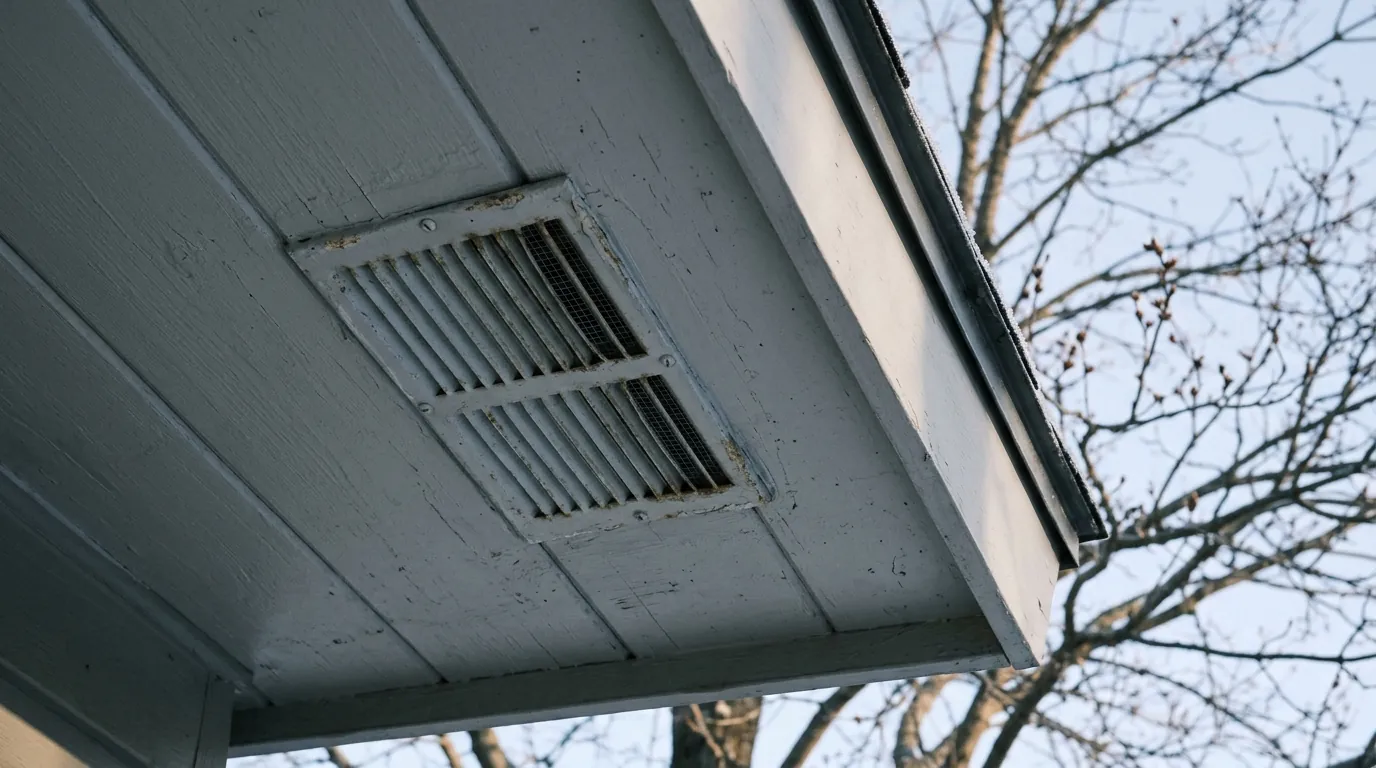
The second step is ventilation. A healthy attic pulls cool, dry air in through soffit vents at the eaves and lets it out through ridge or high roof vents. Many older Vancouver homes have soffits that were painted shut, blocked by insulation, or never vented at all. Clearing intake, adding baffles to keep insulation away from the vents, and installing a ridge vent can turn a damp attic into a dry one. We check intake and exhaust balance before recommending any change.
When it is both
Sometimes a house has a small leak and a condensation problem at the same time, and one hides the other. A cracked pipe boot leaks a little during storms, while frost drips across the north slope on cold mornings. The homeowner sees water in both places and assumes the whole roof is failing. Separating the two takes a careful look at the timing, the pattern of stains, and the condition of the flashing and vents. In truth the roof covering may be fine.
That is why we start with the attic on these calls. We look at the stains, the insulation, the venting, and how fans are ducted, then check the roof surface and flashing from outside. If the problem is moisture, we explain the attic changes that fix it. If there is a leak, we repair the specific spot. When both are present, we deal with each one directly, so you do not pay for a new roof when the attic needs air.
The short version
- Water in the attic on cold, dry, clear mornings usually comes from condensation, not a roof leak.
- Sealing air leaks, venting fans outside, and balancing soffit and ridge venting fix most attic moisture problems.
- A real leak follows rain, starts in one spot, and leaves a clear trail along the framing.
Leroy Swanson edits the Roofing Library for Roof Down Remodels, turning what our crews see on Clark County and Portland-area roofs into plain guides for homeowners.