Ask people what they know about metal roofs and many will mention the sound of rain on a tin barn roof. That drumming is real, but it comes from a specific kind of building: thin panels screwed straight to open purlins, with no deck, no underlayment, and no insulation. A standing seam roof on a house is built very differently, and in most homes the sound of rain is close to what you hear under shingles.
With roughly 40 inches of rain falling in a typical year here, the question matters. This post explains what controls rain noise on a metal roof, what to expect on a house versus a shop, and the details that keep things quiet, from the deck under the panels to the attic insulation.
Why barn roofs are loud and house roofs usually are not
On a pole barn or a basic shop, metal panels are often fastened directly to wood or steel purlins spaced a couple of feet apart. There is nothing behind the panel except air. When a raindrop hits, the thin metal flexes and vibrates like a drum skin, and the open space below lets that sound travel straight down. Add a concrete floor and bare walls, and the building echoes. That is the sound most people picture when they think about metal roofing.
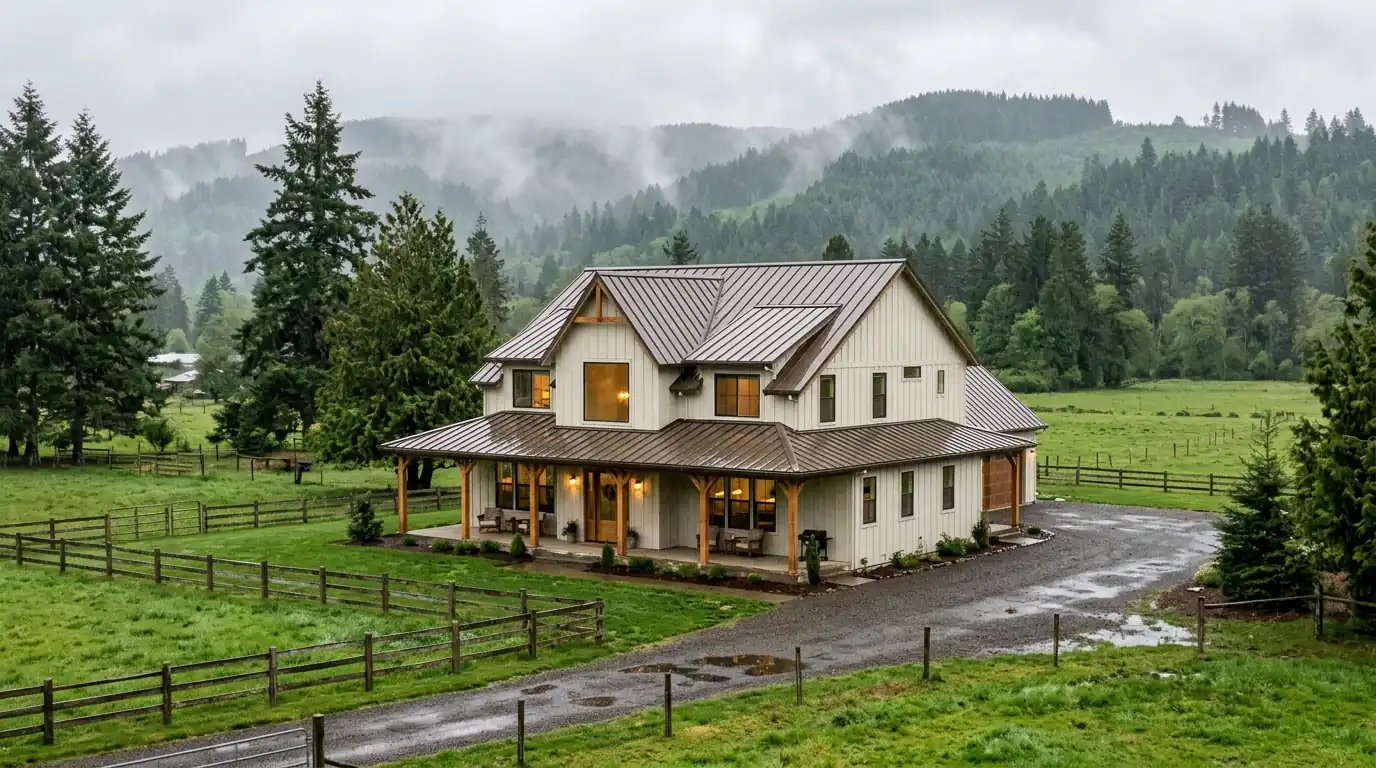
On a house, metal panels usually go over a solid plywood or OSB deck covered with a layer of underlayment. The deck stiffens the panel and soaks up much of the vibration. Under the deck there is an attic full of insulation, and then a drywall ceiling. Each of those layers absorbs and blocks sound. By the time rain noise reaches the living room, it is muffled to a soft patter. Many homeowners say they notice it only during a real downpour.
What actually controls the sound
Four things matter most. First is the deck: a solid deck under the panels makes a large difference compared with open framing. Second is underlayment, which adds a cushioning layer between the metal and the wood. Synthetic underlayments are common, and some products are made with sound damping in mind. Third is attic insulation, which blocks sound traveling down to the rooms below. Fourth is the ceiling itself, since drywall and the air gap above it act as a final barrier.
Panel type plays a smaller role. Thicker gauge panels flex less and ring less than thin ones. Standing seam panels, which are fastened with concealed clips and have raised seams, tend to be stiffer than the exposed-fastener panels used on many outbuildings. Stone-coated steel products, shaped to look like shingles or shake, have a granular surface and an air gap that change how rain sounds again. On a well-built house roof, though, the deck and insulation do most of the work.
- A solid plywood or OSB deck under the panels
- Underlayment between the metal and the deck
- Plenty of attic insulation
- A finished drywall ceiling below
- Stiffer, thicker panels where budget allows

Where metal can be louder than shingles
Vaulted ceilings are the main exception on houses. When the ceiling follows the roof slope, there is no attic space to absorb sound, only the rafter bay with whatever insulation fits in it. Rain on metal over a vaulted great room is more noticeable than over a flat ceiling with an attic above. It is still nothing like a barn, but if you have a vaulted bedroom, it is worth asking about thicker insulation or a sound-damping underlayment for that area.
Porch covers, patio roofs, and attached carports are another case. These are often built with panels over open framing so you can see the underside, and they will drum in heavy rain. Some people enjoy that sound on a covered patio. Others do not want it next to a bedroom window. Shops, garages, and barns on rural lots around Battle Ground and Brush Prairie are usually built the open way too, so they are loud unless they are lined or insulated.
Quieting a shop, garage or barn roof
If you have an existing metal outbuilding that is loud, you have options short of a new roof. Spray foam or rigid insulation on the underside of the panels cuts drumming and also stops condensation from dripping off the metal on cold mornings. That condensation problem is common in shops here, where cool, damp air meets cold steel. A ceiling liner or interior panels add another layer that blocks sound. Even partial coverage over a work area helps. Start with the noisiest bays first.
For a new shop or barn, you can build in sound control from the start. Laying a solid deck with underlayment under the panels adds cost, but it makes a quieter and drier building. Some owners choose a vapor barrier blanket under the panels as a middle option. If you plan to use the building as a workspace or hobby room, it is worth spending a bit more up front. Retrofitting later costs more and is harder to do well.
Is metal a good fit for a Vancouver home?
Noise aside, metal has real strengths here. It sheds water quickly, does not hold moss the way shingles do, and holds up well to cold east winds when properly fastened. Snow slides off rather than piling up, which matters on the rare snowy winters in the north county foothills. Standing seam is also popular on modern homes and rural houses that want a clean look. The tradeoff is cost, since metal runs well above composite shingles on the same house.
If you are considering metal, think about how you use each room under the roof, whether you have vaulted ceilings, and whether your HOA allows it. Many east and north Vancouver associations have rules on roof material and color, and some limit metal. We can walk through the options and price both metal and composite so you can compare. A good install over a solid deck will be quieter than most people expect. Ask to hear one in the rain if you can.
The short version
- Metal over a solid deck with underlayment and attic insulation is usually close to as quiet as shingles.
- The drumming people remember comes from panels over open framing on barns, shops, and patio covers.
- Vaulted ceilings and open-framed outbuildings are the main places where extra sound control is worth the cost.
Leroy Swanson edits the Roofing Library for Roof Down Remodels, turning what our crews see on Clark County and Portland-area roofs into plain guides for homeowners.