A fir limb comes down in an east wind, or a winter storm peels shingles off the back slope, and suddenly you have a roof problem and an insurance question at the same time. Most homeowners file a roof claim rarely, so the process feels unfamiliar. The steps are mostly practical: protect the house, document the damage, contact your insurance company, and keep track of every cost.
This post is not legal advice, and it does not cover what any particular policy will or will not pay. Your policy and your insurer decide that. What it covers are the practical things homeowners can do in Clark County and the rest of Washington to keep the process organized and avoid common mistakes.
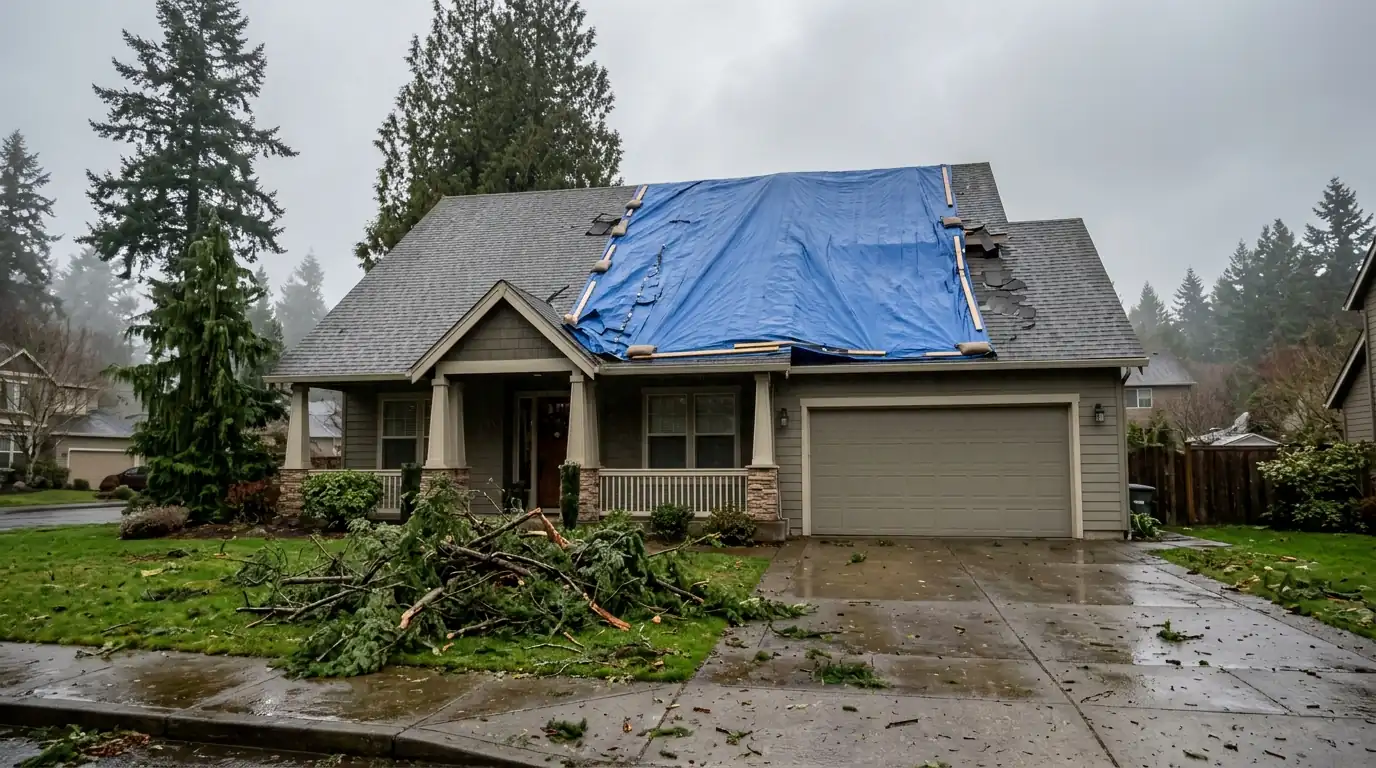
Make the house safe first
Before anything else, make sure everyone is safe. If a tree or large limb is on the roof, keep people out of the rooms below in case the ceiling gives way. If water is coming in near light fixtures or outlets, turn off power to that area at the breaker if you can do so safely. Watch for downed power lines in the yard, and call the utility if you see one. Do not climb onto a damaged or wet roof to look around.
Then limit the damage you can. Move furniture and belongings away from leaks, put down buckets and towels, and if a ceiling is bulging with water, a small hole at the lowest point lets it drain into a bucket instead of collapsing. Most policies expect the homeowner to take reasonable steps to prevent further damage. That usually means a tarp over any opening as soon as it is safe, even before an adjuster visits. Ask your insurer what they expect if you are unsure.
Document everything before cleanup
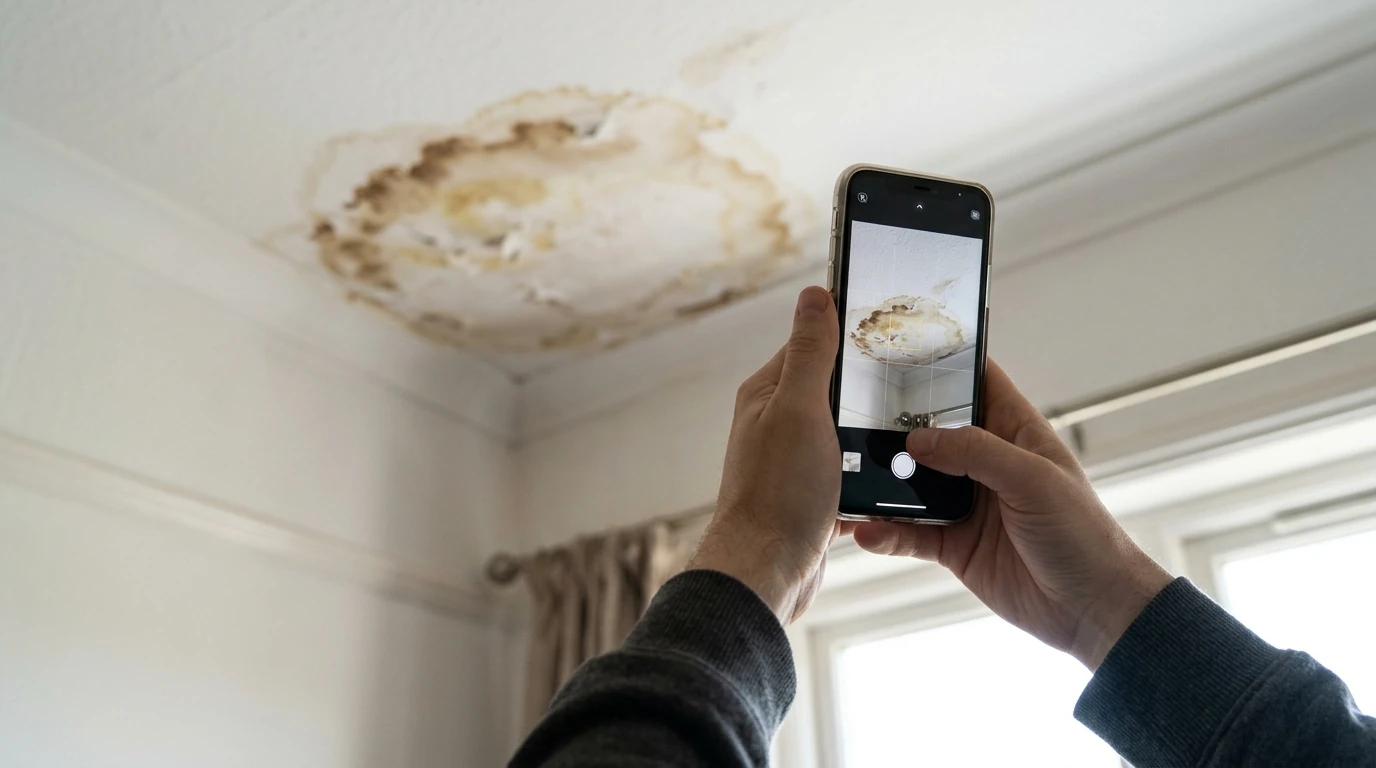
Take photos and video of the damage before anything is moved or repaired. Start outside: the full house from each side, then closer shots of the damaged area, any limbs on the roof, missing shingles in the yard, and bent gutters. Inside, photograph stains, wet insulation, damaged ceilings, and anything that got wet. Turn on the date stamp or keep the original files, which store the date. Take more pictures than you think you need. They cost nothing to take and are hard to recreate.
Write a short note while it is fresh: when the damage happened, what the weather was doing, and what you saw first. If a neighbor's tree fell, note that too. Keep damaged items rather than throwing them away until your insurer says otherwise. If you have older photos of the roof, such as from a home purchase inspection, set them aside. Pictures showing the roof's condition before the storm can help answer questions about what the storm actually did. Store copies off your phone as well.
- Wide shots of each side of the house
- Close shots of missing shingles, limbs, and bent metal
- Inside photos of stains, drips, and wet insulation
- A short written note with the date and weather
- Older roof photos from before the damage
Tarp the roof and keep the receipts
An open roof will let in the next rain, and here the next rain is rarely far away. Getting a tarp on quickly protects the decking, insulation, and ceilings from damage that grows each day. A proper emergency tarp is fastened over the damaged area and secured so wind cannot lift it. It should cover well past the hole on every side and run over the ridge if possible, so water cannot get under the top edge. Sandbags alone do not hold in an east wind.
Keep every receipt connected to the damage: tarping, tree or limb removal, water extraction, fans, and any hotel stays if the house was unlivable. Ask for itemized invoices that describe the work and the date. Many policies cover reasonable emergency measures, but you will need the paperwork. We provide a written description and photos of the emergency work we do, which you can pass along to your insurer with the rest of your records. Keep them with your photos in the same folder.
Contact your insurer and prepare for the adjuster
Call your insurance company or agent as soon as you reasonably can, and write down the claim number, the name of the person you spoke with, and what they told you about next steps. Ask how they want photos sent and whether they will send an adjuster. Read the parts of your policy that cover the roof and your deductible, so you know what to expect. If you do not understand something, ask the insurer to explain it in writing.
When the adjuster visits, it helps to have your photos, notes, and receipts ready. It also helps to have a roofer present, or at least to have a written description of the damage and the repair scope from one. A roofer can point out things an adjuster may not see from the ground, such as cracked decking under a limb strike or lifted shingles across a whole slope. The adjuster and your insurer make the coverage decision. Our role is to describe the roof accurately.
Common mistakes to avoid
The most common mistake is waiting. Small storm damage left open for weeks can turn into rotted decking and moldy insulation, and some insurers may question damage that grew because the home was not protected. Another mistake is throwing away damaged materials or making permanent repairs before the adjuster has seen the damage, unless your insurer has told you to go ahead. Temporary protection like tarping is different and should happen right away. When in doubt, ask your insurer before tearing anything out.
Be careful with anyone who knocks on doors after a storm and pressures you to sign right away. Take time to read anything before you sign it, and make sure you understand what you are agreeing to. Keep copies of every letter and message from your insurer in one folder. If a disagreement comes up about coverage, ask your insurer to explain its position in writing, and consider getting your own advice. That is a matter for you and your policy, not your roofer.
The short version
- Protect the house first, then photograph everything inside and out before cleanup.
- Tarp any opening quickly and keep itemized receipts for every emergency cost.
- Call your insurer early, keep notes on every conversation, and have a written repair scope ready for the adjuster.
Leroy Swanson edits the Roofing Library for Roof Down Remodels, turning what our crews see on Clark County and Portland-area roofs into plain guides for homeowners.