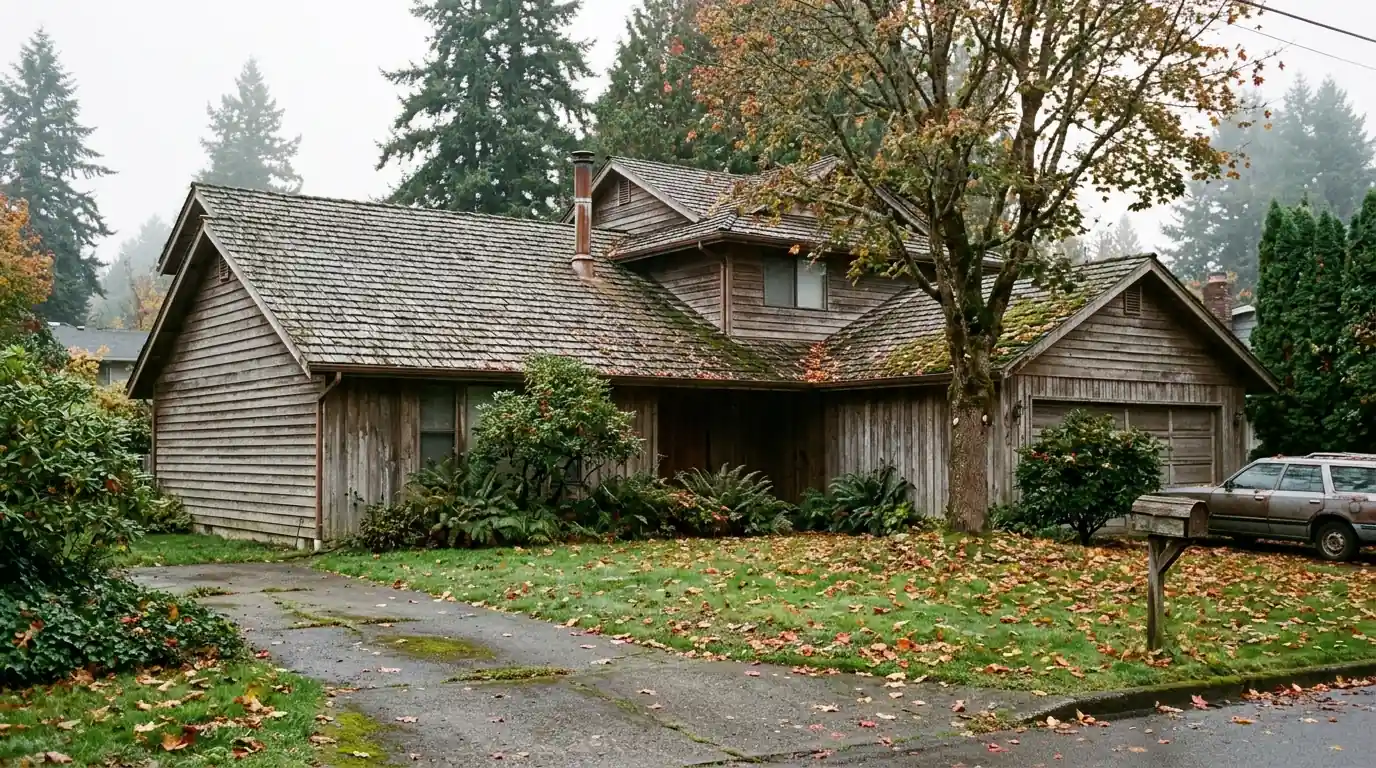
Cedar shake was the roof of choice for a lot of Clark County homes built from the 1970s through the 1990s. Drive through parts of Cascade Park, Felida, or the larger lots around Hockinson and you will still see plenty of it, much of it gray, split, and thick with moss. Those roofs are now at the end of their life, and owners face a real choice: put on new cedar, or switch to architectural composite shingles.
Neither answer is right for every house. This comparison looks at what each material costs here, how it handles our wet climate, how much upkeep it needs, and what a conversion from shake to composite actually involves. HOA rules can also limit your choice, so we cover that too. We also touch on fire risk for rural lots.
How each roof handles our climate
Cedar is a natural material, and in a dry climate a good shake roof can last a long time. Here, the problem is moisture. Months of steady rain and shade from nearby firs keep the wood damp, and damp cedar grows moss and lichen, cups, splits, and eventually rots at the butt ends. A well-maintained shake roof in full sun does fine. One tucked under trees on a north slope can wear out far sooner than its owner expected. Sun-baked shakes dry out and split too.
Architectural composite shingles shed water well and do not rot. They still grow moss in shade, but the moss sits on the surface and mostly lifts edges rather than breaking down the material itself. Modern shingles often come with algae-resistant granules that help with streaking. Composite also handles cold east winds well when installed with high-wind nailing. Its weakness is age: after many years, granules wear off and the shingles turn brittle, especially on the south slope in summer sun.
Cost of each option in 2026
New cedar shake is the more expensive roof by a wide margin. On a typical Clark County home, a full tear-off and new medium-weight shake often runs $27,850 to $46,300, depending on size, pitch, and how much sheathing has to change. Cedar prices also move with lumber markets, so bids can shift between seasons. Labor is higher too, since each shake is hand-placed and spaced, and the work is slower than laying composite. Fewer crews still do it regularly. Expect a longer wait for scheduling as well.
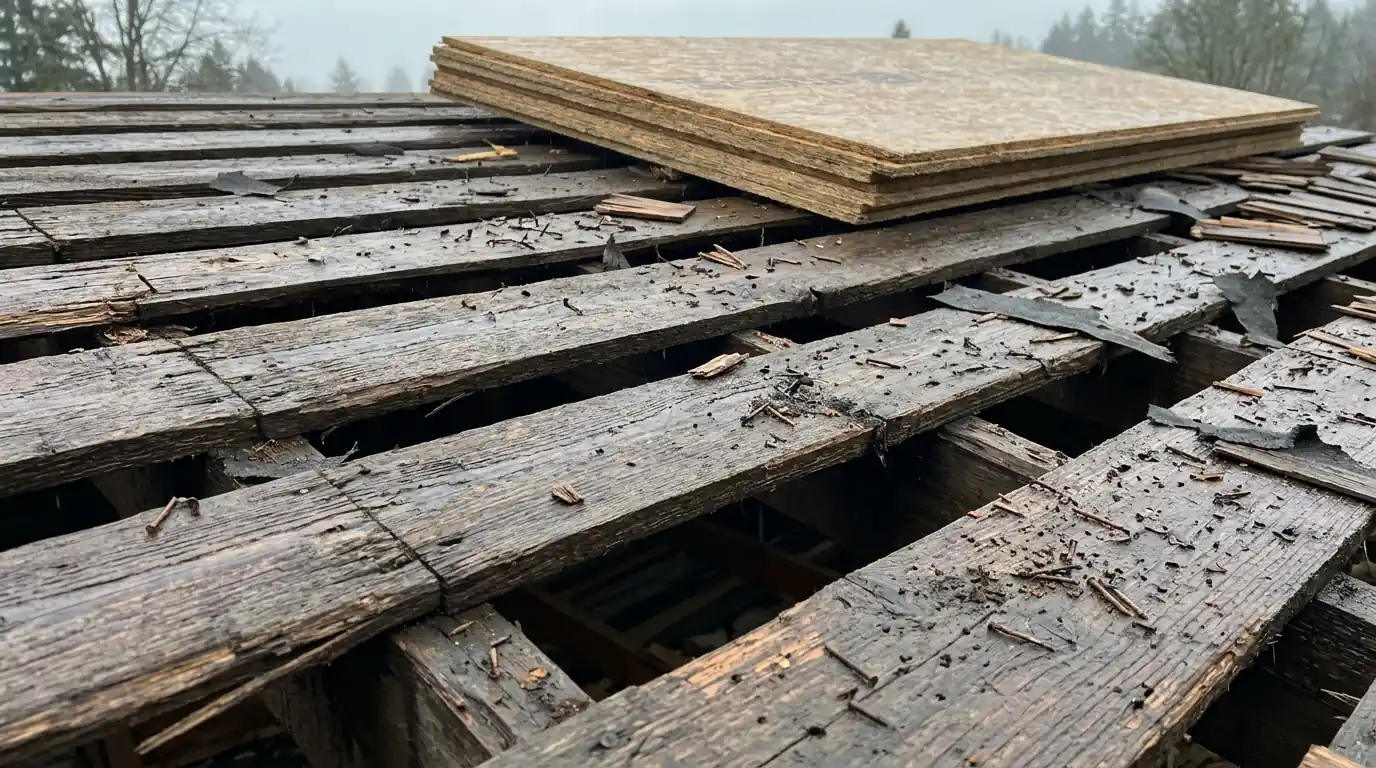
A shake-to-composite conversion on the same home typically runs $14,280 to $24,950. That figure includes tearing off the shake, adding plywood or OSB sheathing over the old spaced boards, new underlayment, and architectural shingles. These are typical ranges. The real number depends on what we find once the shake is off, especially how many of the old spaced boards are rotted, so we give you an exact figure only after looking at the roof and the attic. Most homes need at least some board replacement.
Upkeep, moss and fire risk
Cedar needs regular care to reach its full life here. That usually means clearing debris from the keyways between shakes, removing moss gently, treating the wood, and replacing split shakes as they appear. Skip a few years and the roof ages quickly. Composite needs less: keep gutters and valleys clear, deal with moss before it gets thick, and have the flashing and pipe boots checked now and then. Over the life of the roof, that difference in upkeep adds up.
Fire is another factor, especially on rural lots near trees in north Clark County. Untreated wood shakes burn more readily than composite shingles, and dry needles caught between shakes add fuel. Treated shake products are available, and some areas have specific rules about roofing near wildland. Composite shingles generally carry better fire resistance as a standard product. If you live on acreage near Yacolt or La Center, ask about fire resistance before choosing. Your homeowner's insurance company may also have an opinion.
What a shake to composite conversion involves
Shake roofs were usually installed over spaced boards, called skip sheathing, with gaps between them to let the wood breathe. Composite shingles need a solid deck. So after the shake comes off, the crew checks the spaced boards, replaces any rotted ones, and then covers the whole roof with plywood or OSB. That new deck adds strength and gives the shingles a flat, nailable surface. Next come underlayment, ice and water membrane in valleys, new flashing, and the shingles. Each step builds on the one before it.
Tear-off is messy. Old shakes break into splinters and dust that fall into the attic through the gaps, so the crew lays down tarps on the ground and cleans up thoroughly at the end. Ventilation often gets an upgrade too, since shake roofs breathe through the gaps and composite roofs do not. Adding ridge vents and making sure soffit intakes are open keeps the new attic dry. Most conversions on a typical house take two to four days, weather permitting.
- Tear off the shake and inspect the spaced boards
- Replace rotted boards and add plywood or OSB over the whole roof
- Install underlayment and ice and water membrane in valleys
- Replace all flashing and add ridge venting
- Lay architectural shingles and clean up thoroughly
How HOAs and looks factor in
Many HOA neighborhoods in east and north Vancouver approve roof color and material before work begins. Some were built with shake and have since updated their rules to allow composite, often in specific colors that look like weathered wood. Others still require shake or a shake-look product. Check your CC&Rs and get written approval before signing a contract. We can provide product samples and color sheets for an HOA submission, which tends to speed up the process. Plan for a few weeks of lead time.
If you love the look of cedar, there are middle grounds. Some heavier architectural shingles have a thick, shadowed profile that reads like shake from the street. Others come in browns and grays that suit a 1980s cedar-sided house. On a Craftsman bungalow near downtown or a rustic home on acreage, real cedar can still be the right call if you are ready for the upkeep. We will tell you plainly what each option costs to own, not just to install.
The short version
- New cedar shake in Clark County often costs close to double a composite conversion and needs more upkeep in our wet climate.
- A conversion adds a solid plywood or OSB deck over the old spaced boards, which is a big part of the cost.
- Check HOA rules and get written approval before choosing either material.
Leroy Swanson edits the Roofing Library for Roof Down Remodels, turning what our crews see on Clark County and Portland-area roofs into plain guides for homeowners.