Ice-glazing rain is not a regular part of winter in Clark County, which is why it catches people off guard. When it does arrive, it coats every branch and power line with a layer of ice. Tall firs and big leaf maples were never built to carry that weight, and limbs start coming down all over the county. Roofs take damage from above, gutters fill with ice, and power outages make it hard to see what is going on in the attic.
The urge to climb up and check is strong. Please do not. An iced roof is one of the most dangerous surfaces you can stand on. This post covers what you can safely check from the ground and from inside, what the damage usually looks like, and when it makes sense to call for help right away.
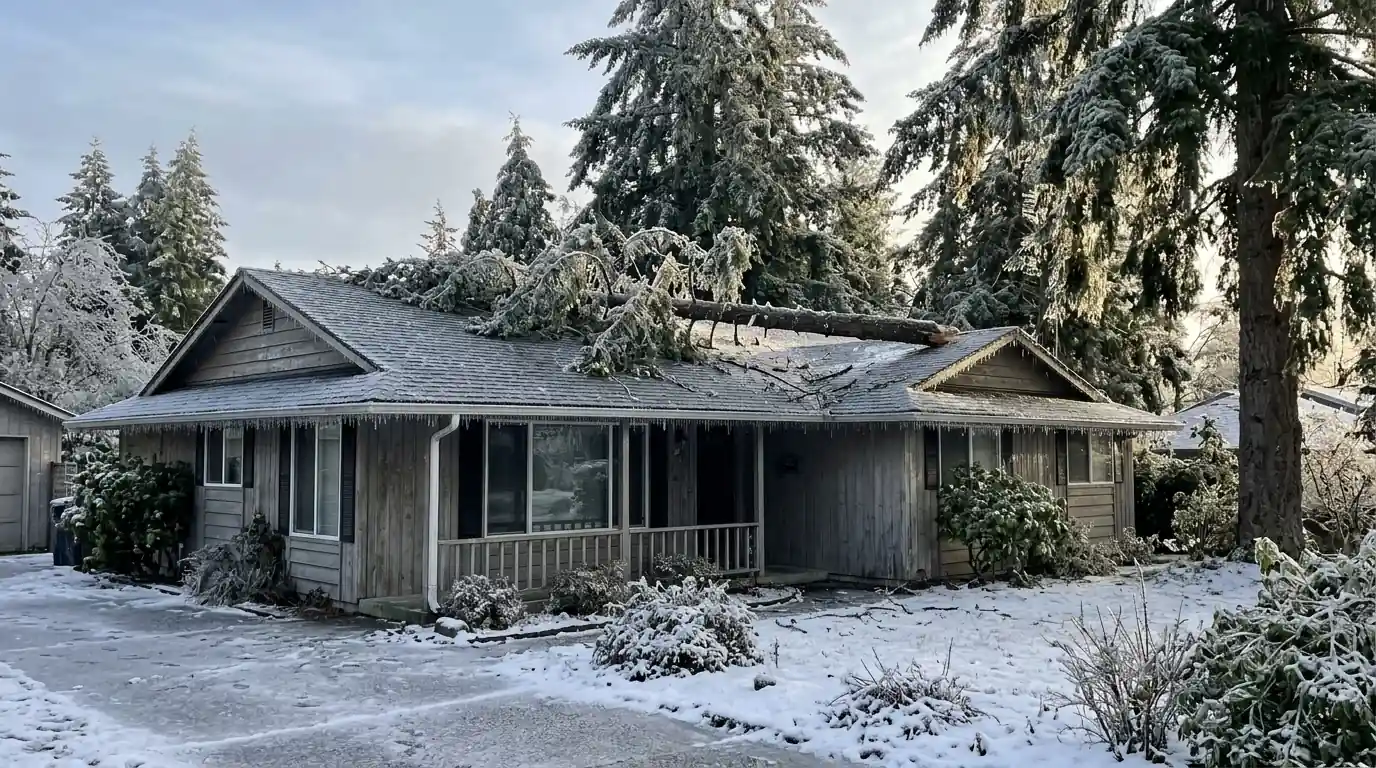
Stay off the roof and away from the edges
Ice makes shingles slicker than wet glass, and a roof covered in a thin glaze looks almost the same as a dry one. Even a low-pitched ranch roof is dangerous. Ladders slide on icy driveways and lean against gutters that may already be loaded with ice. Wait until the ice has fully melted and the surface has dried before anyone goes up, and even then, leave roof walking to people with proper footwear, harnesses, and anchors. No look at the shingles is worth a fall from the eave.
Be careful on the ground too. Ice sliding off a steep roof can fall in heavy sheets, and gutters loaded with ice sometimes tear away from the fascia without warning. Stay clear of the drip line, especially below valleys and the lower edges of steep slopes. Watch for downed power lines in the yard or across the roof. If a line is down or touching the house, stay away and call the utility before doing anything else. Limbs tangled in lines can stay live.
What to look for from the ground
Once it is safe to walk outside, circle the house slowly and look at each slope. Binoculars help. Start with the obvious: limbs lying on the roof, broken branches hanging over it, and any spot where shingles look crushed or torn. A large limb can crack the decking under the shingles even if the surface looks mostly intact. Look for sagging lines in the roof plane, which can mean a broken rafter or a cracked sheet of sheathing below. Note which slope each problem sits on.
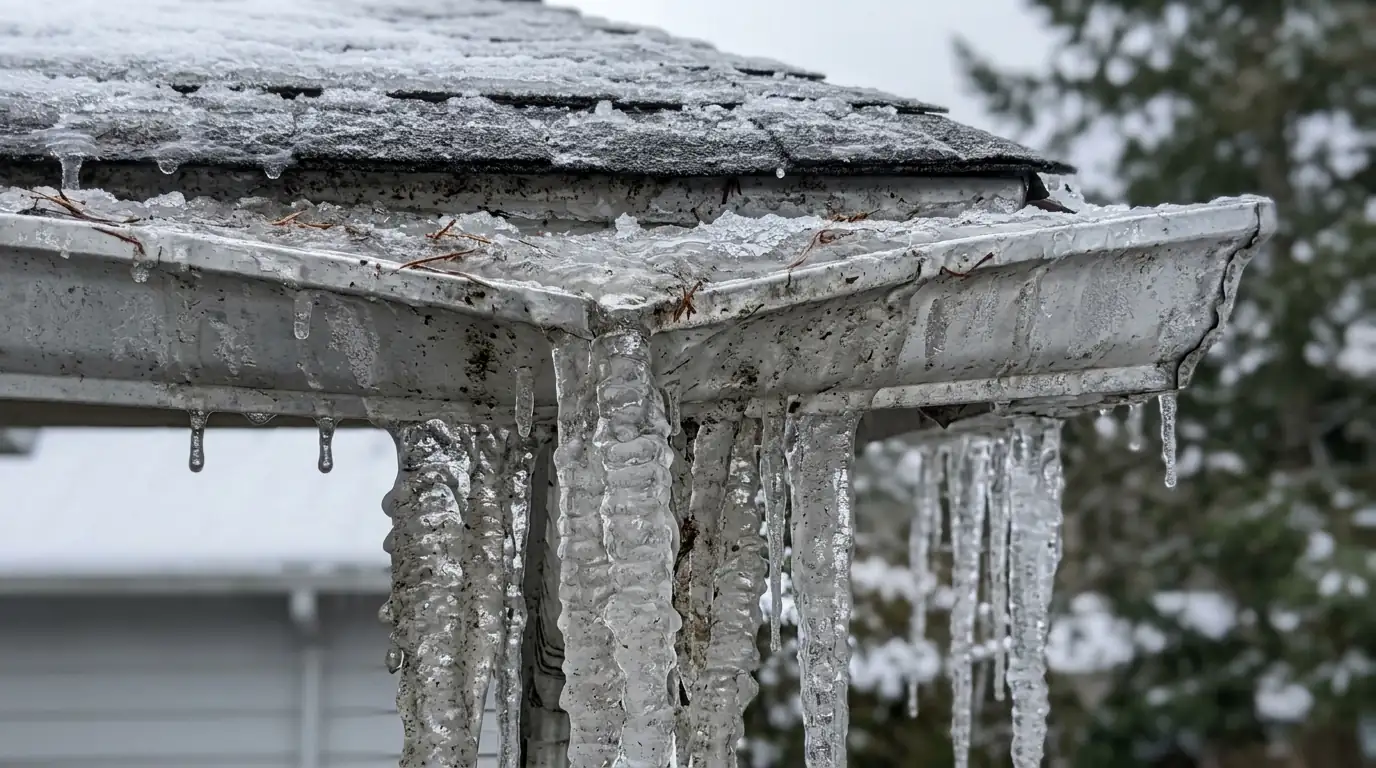
Then check the edges. Gutters bent outward or pulled away from the fascia are common after ice. Look for icicles hanging from the soffit rather than the gutter, which can mean water is getting behind the gutter. Look for damaged vents, bent flashing at the chimney, and scraped or missing shingles where branches slid off. Take photos of everything with the date, from several angles. Those pictures are useful for repairs and for any insurance claim you might file. Keep the originals unedited.
- Limbs on the roof or hanging over it
- Sagging spots in the roof plane
- Gutters bent, pulled loose, or packed with ice
- Icicles along the soffit or siding instead of the gutter
- Crushed vents and scraped or missing shingles
Checking the attic and ceilings
Go into the attic with a good flashlight once it is safe to move around up there. Look at the underside of the roof deck directly below any spot where a limb hit. Cracks, splintered wood, or nail tips that have been pushed through all point to damage that needs a repair from above. Look for wet insulation, drips from nails, or shiny frost on the decking. In an outage, the attic may be colder than usual, so condensation and frost can build up even without a leak.
Inside the living space, check ceilings below the roof edges and around chimneys and skylights. Water from melting ice often shows up a day or two after the storm, once temperatures rise. A stain along an exterior wall usually points to an ice dam at the eave. A stain in the middle of a room, under where a limb hit, points to a puncture. Write down where each stain is so it can be matched to the outside damage. That map saves time later.
Ice dams and why they are rare but real here
An ice dam builds up when heat from the house melts snow or ice on the upper roof, and the meltwater turns back to ice at the colder eave. The ridge of ice traps more water behind it, and that water backs up under the shingles. In Vancouver, true ice dams are uncommon because long hard cold snaps are unusual. When a storm brings snow followed by icy rain and several cold days, they can still build up, especially on older homes with weak attic insulation and poor ventilation.
If you see thick ice along the eaves with water stains on the wall below, do not chip at the ice with a hammer or shovel. That breaks shingles and gutters. Clearing a channel with a roof rake from the ground, used gently on snow only, can help. The lasting fix is in the attic: better insulation and ventilation keep the roof deck cold enough that snow melts evenly instead of at the warm upper roof. Ice and water membrane at the eaves, installed during a reroof, adds protection.
When to call right away
Call as soon as possible if a limb has punched through the roof, if water is coming into the house, or if you see a sag in the roof line. Those are signs of structural damage or an open hole that will let in the next rain. Removing a heavy limb safely often takes more than one person and the right equipment, especially if it is resting on the roof or wedged against the chimney. Do not try to pull a big limb off the roof with a rope from the yard.
Our crews handle tree damage and emergency tarping around the clock, including during the busy days after an ice storm when many homes are affected at once. The first step is usually removing the limb, checking the decking, and putting a tarp over any opening. The permanent repair comes once the ice melts and the weather clears. For smaller issues, like a bent gutter or a few scraped shingles, it is fine to wait until the roads are clear and schedule a visit.
The short version
- Never climb onto an iced roof, and stay away from the drip line and any downed power lines.
- From the ground and the attic, look for limb strikes, sagging, bent gutters, and stains that show up as the ice melts.
- Call right away for punctures, sags, or active leaks, and photograph everything before cleanup.
Leroy Swanson edits the Roofing Library for Roof Down Remodels, turning what our crews see on Clark County and Portland-area roofs into plain guides for homeowners.