Most of our weather arrives from the southwest, soft and wet. The east wind is different. When cold air builds up east of the Cascades in fall and winter, it rushes west through the Columbia River Gorge and spills out over east Vancouver, Camas, Washougal, Troutdale, and Fairview. The gusts are cold, dry, and steady, sometimes for days at a time. Roofs that handle months of drizzle without trouble can lose shingles in a single east wind event.
This post covers what that wind actually does to a roof, which parts give way first, and how to check your roof from the ground once it calms down. It also covers the upgrades that help when you live on the windy side of the county or plan to reroof there soon.
Why the east side takes the hardest hits
The Gorge acts like a funnel. Air squeezes through the narrow river corridor and speeds up, then fans out as it reaches the open ground near the mouth of the Gorge. Washougal and Camas sit right at that exit, and east Vancouver neighborhoods like Fishers Landing and Cascade Park are next in line. Troutdale and Fairview on the Oregon side get the same treatment. By the time the wind reaches west Vancouver or Hazel Dell it is usually weaker, though strong events reach the whole metro.
Height and exposure matter as much as location. Houses on Prune Hill in Camas, on open lots in newer subdivisions with young trees, or on ridgelines facing east take the full force of the gusts. A two-story home with a tall gable end facing the wind catches more of it than a low ranch tucked among older houses. In the same neighborhood, two roofs of the same age can come through one storm very differently. One loses a dozen shingles and the other loses none.
What fails first
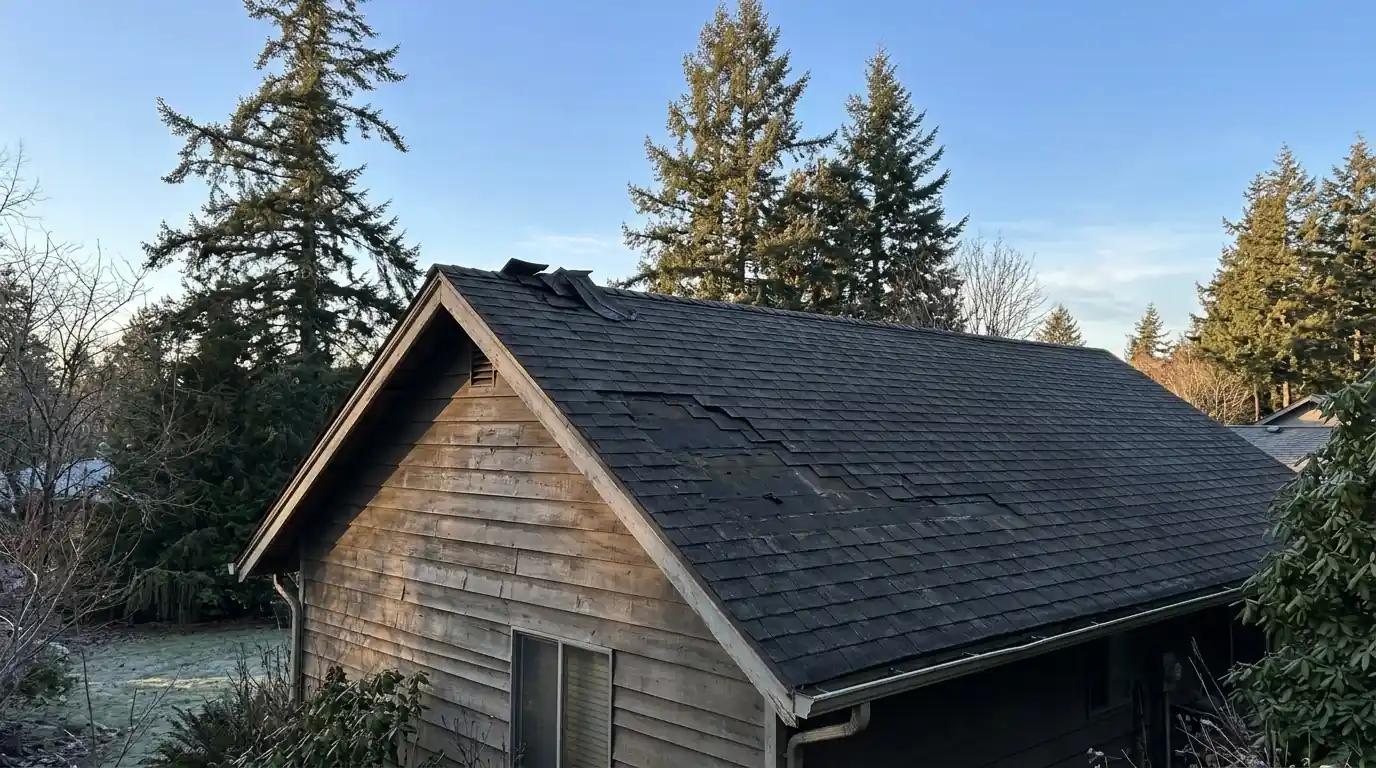
Ridge caps usually go first. They sit at the highest point, they take wind from both sides, and they are only held by a few nails each. When the sealant under a cap lets go, the wind folds it back and tears it off. Next come shingle tabs along the rakes, the sloped edges at the gable ends, where wind gets under the edge and pulls. East-facing and north-facing slopes take the most damage because the wind arrives from the east and northeast.
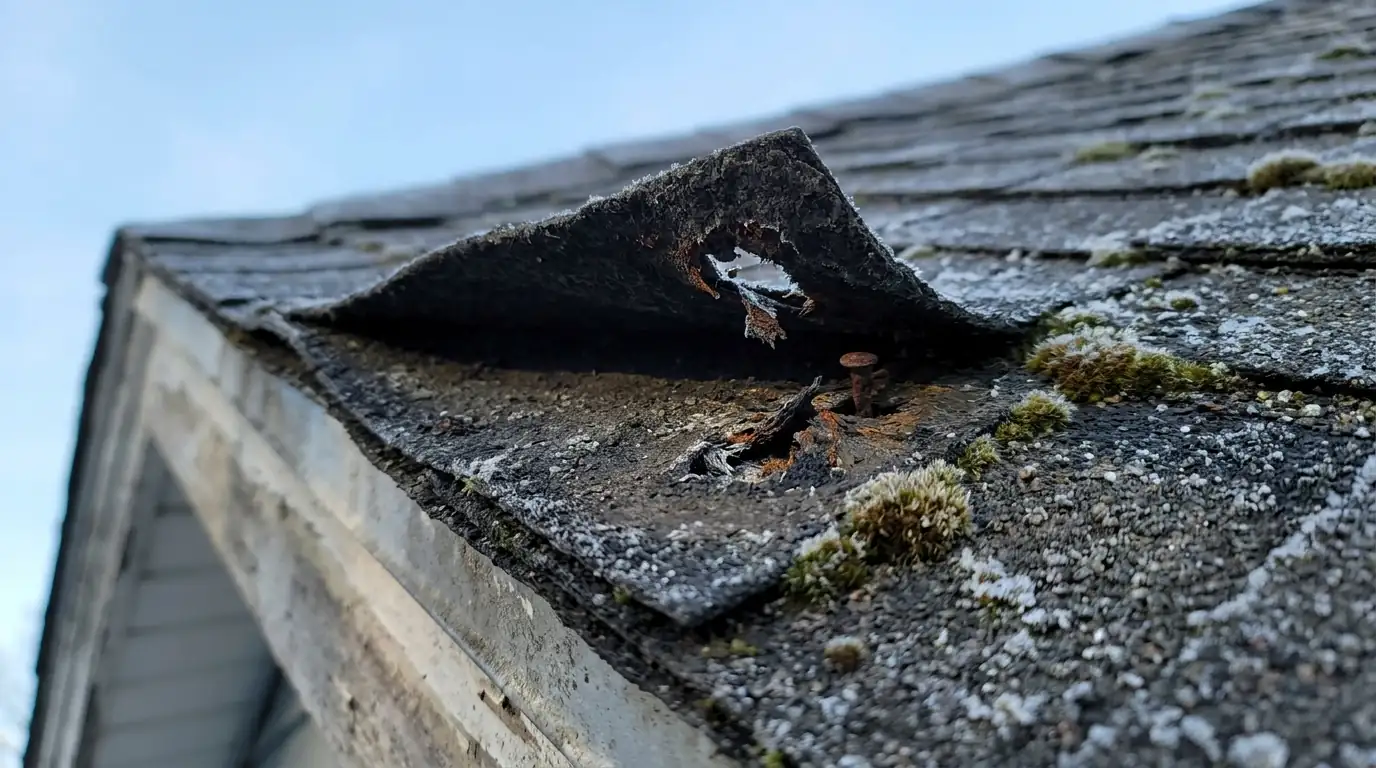
Older shingles fail sooner. As composite shingles age, the adhesive seal strip that bonds each tab to the one below gets brittle, especially on shaded slopes where moss has already lifted the edges. Cold makes it worse, since the sealant is least flexible in cold weather and east winds are always cold. Once a single tab lifts, it flaps until the nails tear through. Then the wind works on the next one, and the damage spreads across the slope. A small gap becomes a bare patch fast.
- Ridge caps folded back or missing
- Shingle tabs lifted or torn along rakes and eaves
- Exposed nails or bare strips of underlayment
- Bent flashing at chimneys and roof-to-wall joints
- Fir limbs or debris lying on the roof
Trees, limbs and the second wave of damage
Wind is only half the problem in a place with this many tall firs. Douglas firs often drop limbs during an east wind, and a heavy limb falling twenty or thirty feet can crack shingles, punch through decking, or crush a gutter. Smaller branches scrape across the roof surface and strip granules. Even needles become a problem afterward, since the storm loads valleys and gutters with debris just before the next wet system arrives from the southwest. Downspouts packed with needles overflow at the first heavy rain.
Some of the worst damage we see comes days later. A cracked shingle or a small puncture might not leak during the dry east wind itself, since that wind brings little rain. When the next Pacific storm rolls in, water finds the opening. That is why it pays to check the roof right after the wind dies down, while the weather is still dry and any repair can be done before rain. Waiting until the ceiling stains is waiting too long.
How to check your roof after an east wind
Stay off the roof. Wind-damaged shingles can be loose, and wet or icy surfaces are dangerous. Walk around the house instead and look up at every slope, especially the east and north sides. Binoculars help. Look for missing ridge caps, shingles that sit at a different angle than their neighbors, dark rectangles where tabs are gone, and shingle pieces in the yard or gutters. Check the rakes and the edges above gutters closely, since these spots fail most often, and photograph anything odd.
Then go into the attic on a dry day with a flashlight. Look for daylight through the decking, damp spots on the underside of the sheathing, or wet insulation below a slope that faces east. Check around chimneys and vent pipes, since wind can loosen flashing there. Take photos of anything you find, both outside and inside, with the date. If you see missing shingles or exposed underlayment, call before the next rain so the opening can be sealed or tarped.
Upgrades that help on the windy side
When a roof on the east side is due for replacement, a few changes make it far more wind resistant. High-wind nailing, using more nails per shingle placed exactly in the nailing strip, holds tabs down when the seal strip ages. Starter strips with factory adhesive along the eaves and rakes keep the edges from lifting. Ridge caps made for high wind areas, set with longer nails, stay on far better than the cut three-tab pieces that many older roofs used.
Edge details matter just as much. A sturdier drip edge and rake metal, fastened closely, protect the spot where wind first gets a grip. Keeping trees trimmed back from the roof cuts down on limb damage and debris. If your current roof is still in good shape, a targeted repair can hand-seal lifted tabs and replace loose ridge caps before winter. We can tell you which approach makes sense after we look at the roof in person rather than guessing from the ground.
The short version
- Gorge east winds hit Washougal, Camas, east Vancouver, Troutdale, and Fairview hardest, especially exposed and two-story homes.
- Ridge caps and rake edges fail first, and aging seal strips make every tab easier to lift.
- Check the roof from the ground and the attic right after the wind dies, before the next rain finds the damage.
Leroy Swanson edits the Roofing Library for Roof Down Remodels, turning what our crews see on Clark County and Portland-area roofs into plain guides for homeowners.