The first question on most calls is the price. It is a fair question, and a vague answer does not help anyone plan. The ranges below are typical for Vancouver and the rest of Clark County in 2026. They come from the kinds of homes we see every week: ranches in Hazel Dell, two-story houses in Cascade Park, older bungalows near downtown. Your real number comes after we walk the roof, check the decking from the attic, and measure every slope.
Think of these as a way to sanity-check a bid, not a quote. Two houses with the same square footage can land thousands of dollars apart because of pitch, layers, access, and what turns up under the old shingles. We explain each of those below so the numbers on a bid make sense before you sign anything.
Typical price ranges by roof type
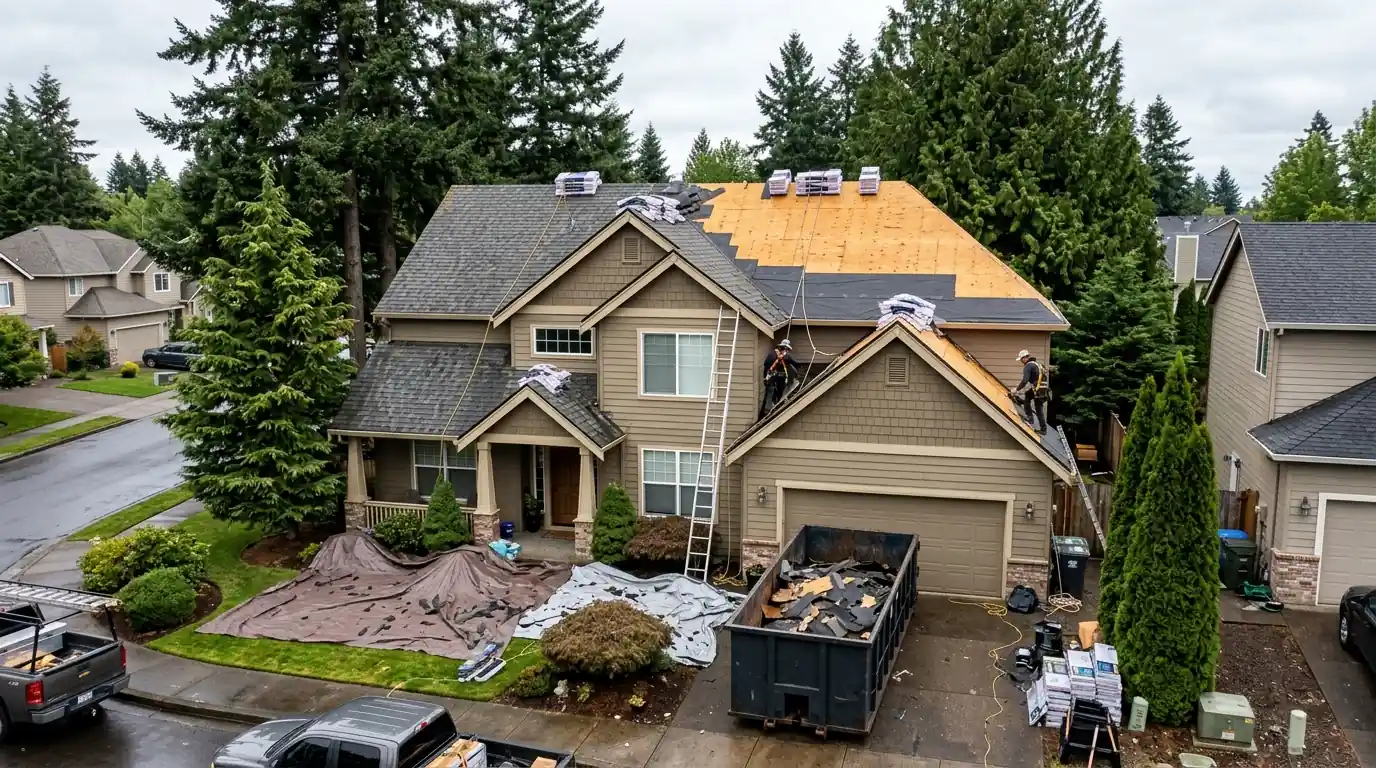
For a common single-story ranch with about 1,500 to 1,900 square feet of roof, a tear-off and new architectural composite shingles typically runs $11,650 to $17,480. A larger two-story home in east Vancouver with 2,400 to 3,000 square feet of roof and a steeper pitch usually lands between $16,920 and $26,350. Standing seam metal on that same two-story house is a different budget, often $31,700 to $52,600, because the panels, trim, and labor all cost more. Low-slope sections over a porch or addition add their own line, since they need a membrane instead of shingles.
Cedar shake tear-offs deserve their own note. Many 1970s to 1990s shake roofs around the county are at the end of their life, and removing them takes longer and fills more dump trailers than removing composite. Converting a shake roof to composite shingles often costs $14,280 to $24,950 on an average home, partly because the old shake was usually laid over spaced boards that need new plywood or OSB sheathing on top. These are typical ranges only. We give you a real figure after we look at the roof.
- Architectural composite, single-story ranch: about $11,650 to $17,480
- Architectural composite, larger two-story: about $16,920 to $26,350
- Cedar shake to composite conversion: about $14,280 to $24,950
- Standing seam metal, larger two-story: about $31,700 to $52,600
What pushes the price up
Pitch is the biggest factor most people do not expect. A walkable 4/12 roof lets a crew move fast with basic fall protection. A 10/12 roof needs roof jacks, more harness anchors, and slower work on every course. Height matters too: a third-story eave or a daylight basement on a sloped lot means longer ladders, more setup, and more time hauling bundles. Multiple layers raise the tear-off cost, and each extra layer of old shingles adds weight and disposal fees to the bid.
Then there is what nobody can see until the old roof comes off. Soft decking around a chimney, rotted sheathing along the eaves where gutters overflowed, or plank boards with wide gaps all need repair before new underlayment goes down. A good bid lists a per-sheet price for replacement decking so there are no surprises. Chimneys, skylights, dormers, and roof-to-wall joints each add flashing work. A plain gable roof with two vents costs less per square than a cut-up roof with six valleys and a turret.
What can bring the price down
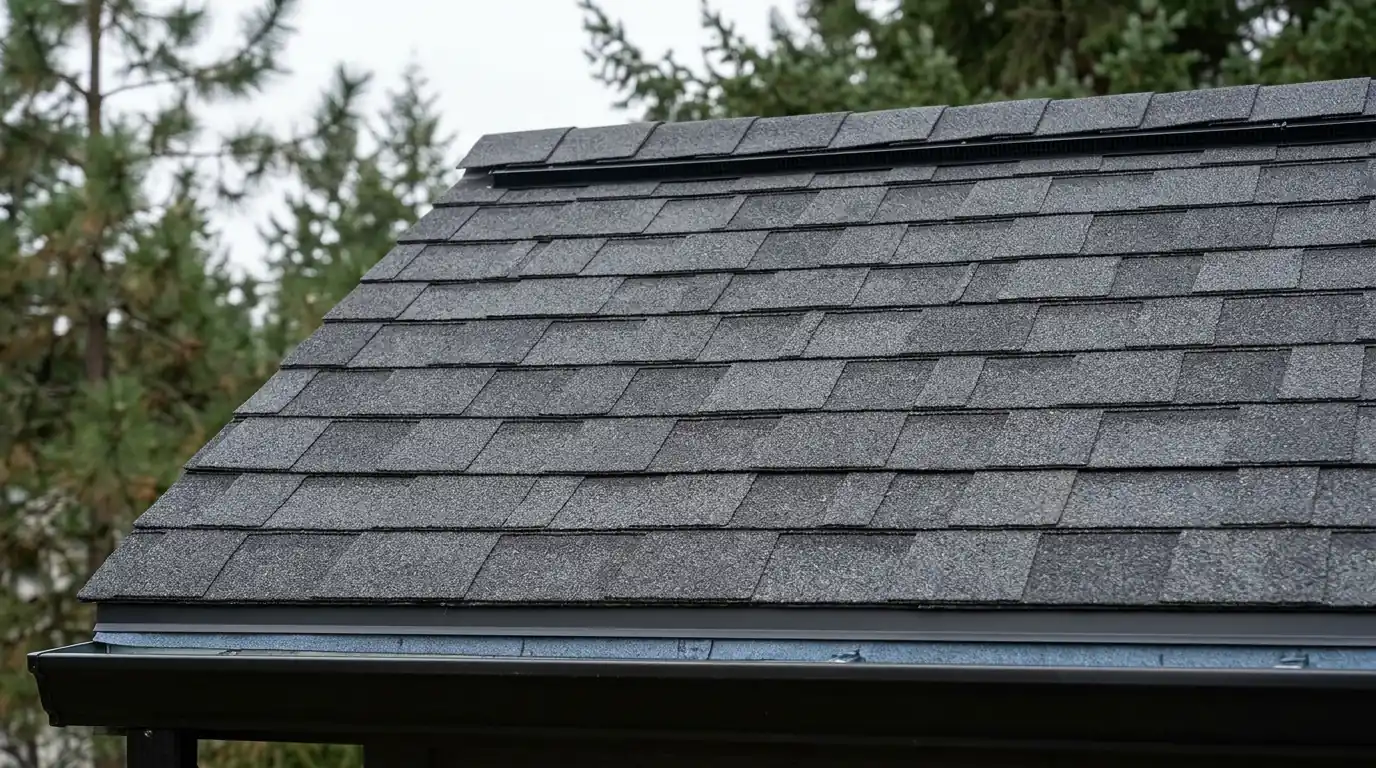
Some savings are real and some are false economy. A simple roof shape, easy driveway access for the dump trailer, and a single layer of old shingles all keep labor down. Scheduling in late spring or summer, when rain delays are rare, can help a project move without extra tarping days. Reusing sound gutters and keeping existing skylights that are in good shape also trims the total, as long as the flashing around them is redone with the new roof rather than reused.
An overlay, laying new shingles over one existing layer, costs less up front, but we rarely recommend it here. Our wet climate means trapped moisture and hidden rot are common, and an overlay hides both. It also adds weight, makes the next tear-off more expensive, and keeps you from seeing the decking. Skipping underlayment upgrades or reusing old pipe boots saves a little today and often shows up as a leak during the first long stretch of fall rain. It also voids some shingle terms.
How to read a roofing bid line by line
A clear bid should tell you exactly what is being removed and what is going on. Look for the number of squares (one square is 100 square feet), the shingle line and color, the underlayment type, and whether ice and water membrane goes in valleys and along eaves. It should list new drip edge, new pipe boots, ridge vent or box vents, and step and counter flashing at walls and chimneys. Disposal, permit handling, and cleanup should be named lines, not assumed.
If two bids are far apart, compare them line by line instead of looking only at the total. One may include new flashing and attic venting while the other quietly reuses old metal. One may price replacement sheathing per sheet while the other leaves it out, which turns into a change order later. Ask what happens if the crew finds rot, and how that cost is figured. A bid that answers those questions in writing is easier to trust. Get those answers before work starts.
- Squares of roof and the exact shingle or panel product
- Underlayment type and where ice and water membrane goes
- New drip edge, pipe boots, vents, and all flashing
- Per-sheet price for any replacement decking
- Disposal, permit handling, and magnet sweep cleanup
Extra costs Vancouver homes run into
Our climate adds a few line items you might not see in a drier city. Heavy moss on north slopes has to be cleared from gutters and nearby surfaces so the new roof does not start out seeded with spores. Tall Douglas firs often mean the crew has to protect landscaping from falling debris and work around limbs over the roof. Homes on the east side, from Fishers Landing out toward Camas, may benefit from extra nailing and wind-resistant ridge caps, which add a modest amount to the bid.
Attic ventilation is another common add. Many older Vancouver homes were built with too little intake at the soffits, and that shows up as frost on the underside of the sheathing on cold mornings. Fixing it during a reroof is cheaper than doing it later, since the roof is already open. HOA neighborhoods in Felida, Salmon Creek, and Cascade Park may need a color or product approved before work starts, which affects the schedule more than the price. Ask your board early so the start date holds.
The short version
- Most composite reroofs on Vancouver homes fall somewhere between about $11,650 and $26,350, depending on size, pitch, and layers.
- Hidden decking rot is the most common surprise, so ask for a per-sheet replacement price in writing.
- Compare bids line by line, especially flashing, underlayment, and ventilation, instead of looking only at the total.
Leroy Swanson edits the Roofing Library for Roof Down Remodels, turning what our crews see on Clark County and Portland-area roofs into plain guides for homeowners.