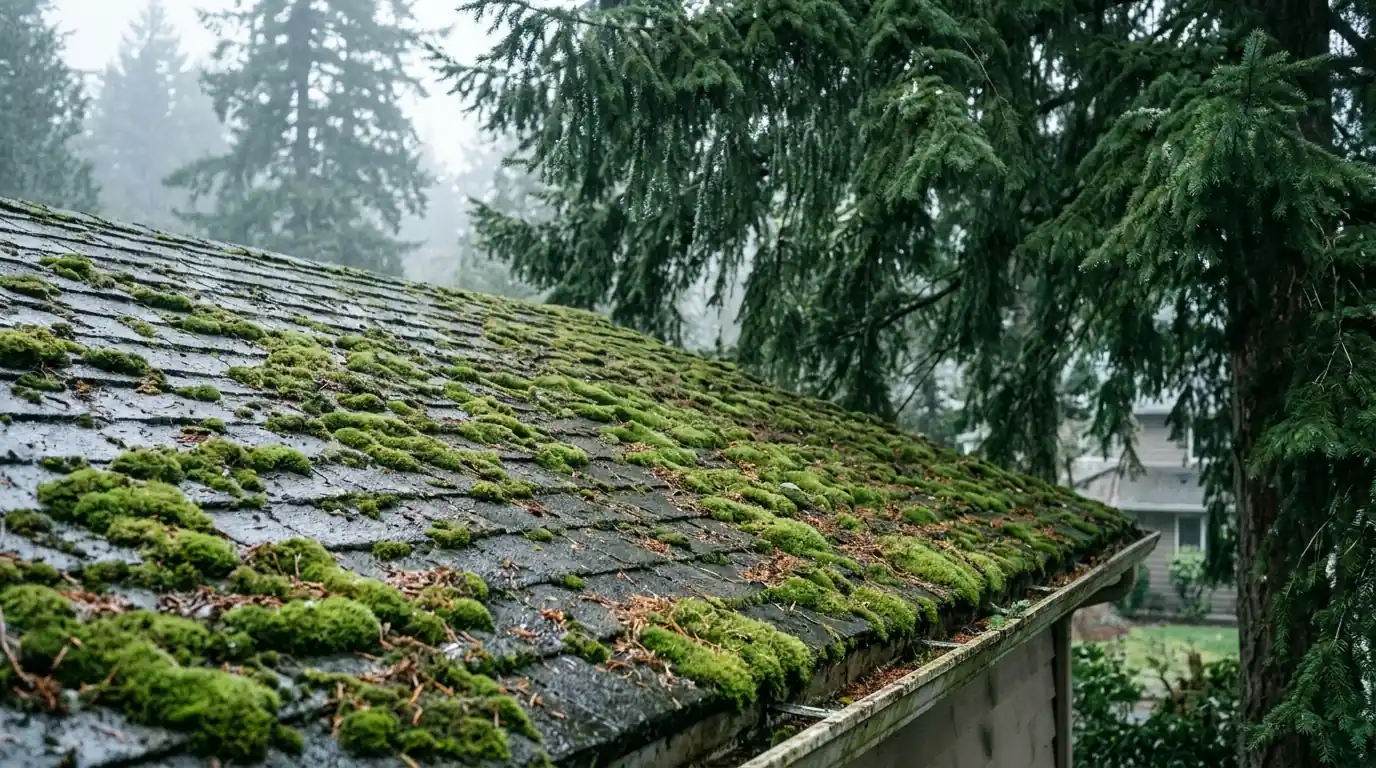
Drive through Hazel Dell or Felida in March and you will see it on almost every block: green cushions along the north slope, thickest under the firs. Moss is so common here that many people stop noticing it. That is a mistake. Moss is not sitting on top of the roof like a decoration. It roots into the grit and edges of the shingles, soaks up water, and keeps the surface wet long after the rain stops.
This post explains why our area grows moss so well, what it actually does to composite and cedar roofs, and the safe ways to remove it and keep it from coming back. It also covers the methods that cause more damage than the moss itself. Pressure washing is at the top of that list.
The conditions that feed moss here
Moss needs three things: moisture, shade, and something to hold onto. Clark County supplies all three for most of the year. Roughly 40 inches of rain falls in a typical year, and most of it arrives October through May as long, steady drizzle instead of short storms. A roof that gets wet on Monday may not fully dry until the weekend, if it dries at all. Cool temperatures slow evaporation even more, so the surface stays damp through most of the winter.
Then add trees. Tall Douglas firs and cedars shade many lots for most of the day, especially in older neighborhoods like Minnehaha and Lake Shore and on wooded acreage near Hockinson and Brush Prairie. Shade keeps the roof cool and wet. Fir needles land in valleys and behind chimneys, break down into a thin layer of organic material, and give spores a perfect bed. North-facing slopes get the least sun and almost always show moss first. The south slope of the same house may look almost clean.
What moss does to a roof
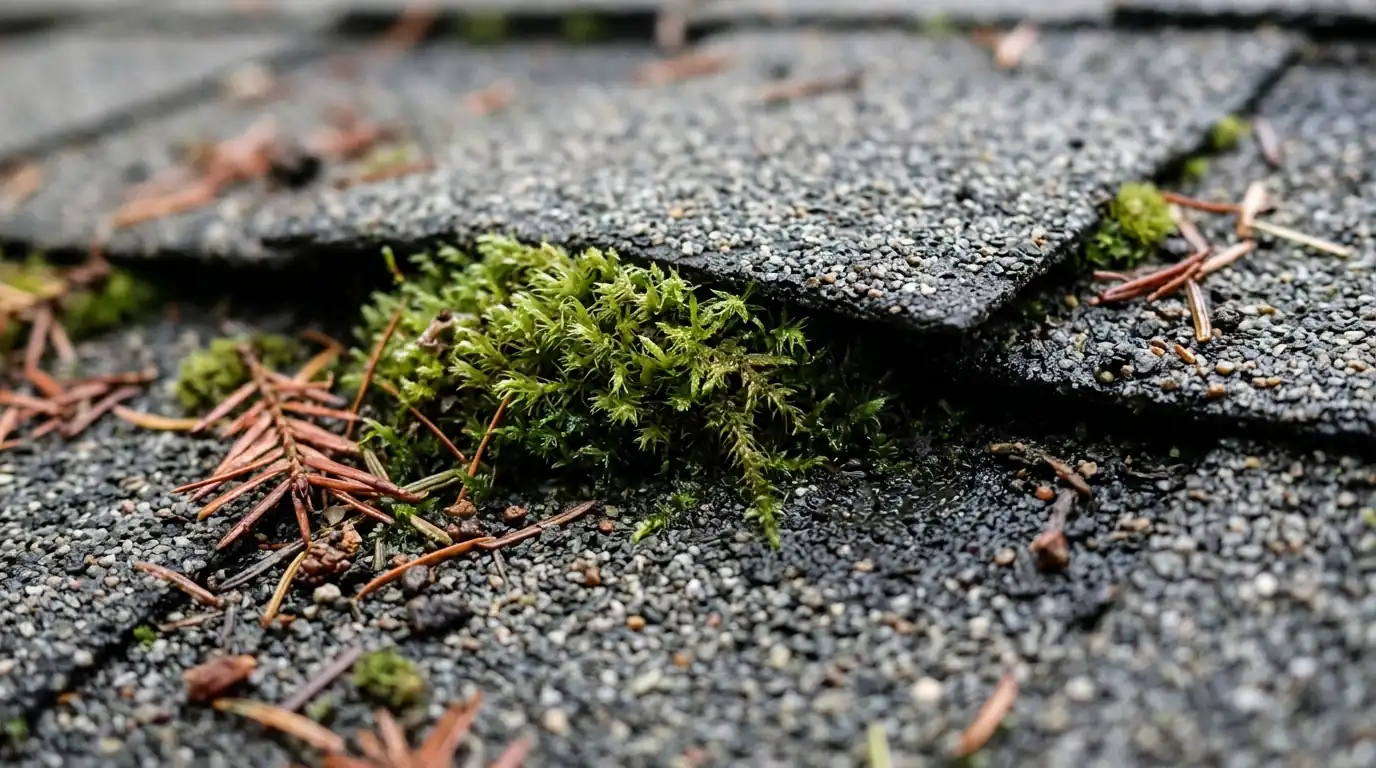
On composite shingles, moss grows in the gaps between tabs and along the bottom edges. As the clumps thicken, they lift the shingle edges slightly. That lets wind-driven rain get under the tabs, and it breaks the seal strip that holds each shingle down. Moss also holds water against the shingle surface like a wet sponge, which speeds up granule loss. Once the granules are gone, sunlight and weather break down the asphalt underneath much faster, and the shingle turns brittle.
On cedar shake, the damage is worse. Moss and lichen keep the wood wet, and wet wood rots. Shakes that stay damp split, cup, and grow soft at the butt ends. Moss also dams water in valleys and gutters. When it washes off in clumps, it clogs downspouts and causes overflow at the eaves, which can rot fascia boards and the first row of roof sheathing. A roof covered in moss for several winters often needs repairs before cleaning even starts.
Safe ways to remove moss
The right way is slower than people expect. A crew first applies a moss treatment suited to the roof material and lets it work, often for days or weeks, so the roots die and loosen. Then the dead moss is brushed off by hand from the top of the slope down, in the same direction the shingles lap, so water and debris never get pushed under the tabs. Gutters and downspouts get cleared at the end so all that material does not sit at the eave.
Pressure washing is the method to avoid. A strong jet strips granules off composite shingles in seconds and can force water up under the courses and into the attic. On cedar it tears wood fibers and leaves a fuzzy surface that grows moss again faster. Scraping with a flat shovel or metal tool can break the seal strips and crack brittle shingles. If someone offers to blast your roof clean in an afternoon, ask what it will do to the shingles.
- Treat first and give the moss time to die
- Brush by hand, top to bottom, with the shingle laps
- Skip pressure washers and metal scrapers
- Clear gutters and downspouts after the roof is clean
- Check for lifted tabs and broken seals once the moss is off
Keeping moss from coming back
Zinc or copper strips installed just below the ridge are the most common long-term step. When rain runs over the metal, it carries a small amount of zinc down the slope, which makes the surface a poor place for moss to start. Strips work best on the upper part of a slope and lose effect farther down, so on long runs a second row can help. They slow moss down a lot, but they do not replace occasional cleaning on heavily shaded roofs.
Trimming trees back from the roof is the other big step. More sun and airflow means a roof dries faster after each rain. Even raising the canopy or thinning a few limbs on the south side can make a visible difference. Keep valleys and gutters clear of fir needles, since that organic layer is where moss gets started. On a heavily shaded lot, a yearly look in late winter catches new growth before it gets under the shingles. Small habits add up over a decade.
When moss means the roof needs more than cleaning
Sometimes cleaning reveals a roof that is already worn out. Signs include shingles with most of their granules gone, tabs that crack when lifted, or bald patches where moss sat for years. On cedar, look for shakes that are thin, split, or soft enough to push a thumbnail into. If a large share of the roof looks like that, cleaning and treating will only buy a short time before leaks start. Spending money on a full treatment of a roof near the end is usually not worth it.
In those cases, it makes more sense to price a replacement or a shake-to-composite conversion and put the cleaning budget toward that. New architectural shingles with algae-resistant granules and zinc strips at the ridge give you a fresh start. We can tell you honestly whether cleaning or replacement is the better spend after we look at the roof up close, including from the attic where any water damage shows first. Wet stains on the sheathing tell more than the shingles do.
The short version
- Shade, fir needles, and months of steady drizzle make moss grow faster in Clark County than in most of the country.
- Moss lifts shingle edges and holds water, so it shortens roof life even before any leak appears.
- Treat and brush moss off by hand, add zinc strips near the ridge, and never pressure wash a roof.
Leroy Swanson edits the Roofing Library for Roof Down Remodels, turning what our crews see on Clark County and Portland-area roofs into plain guides for homeowners.